No. NAF-002
Gurob papyrus rhombos, toy of Dionysus
Egypt · Gurob · Fayum · North Africa
Restricted
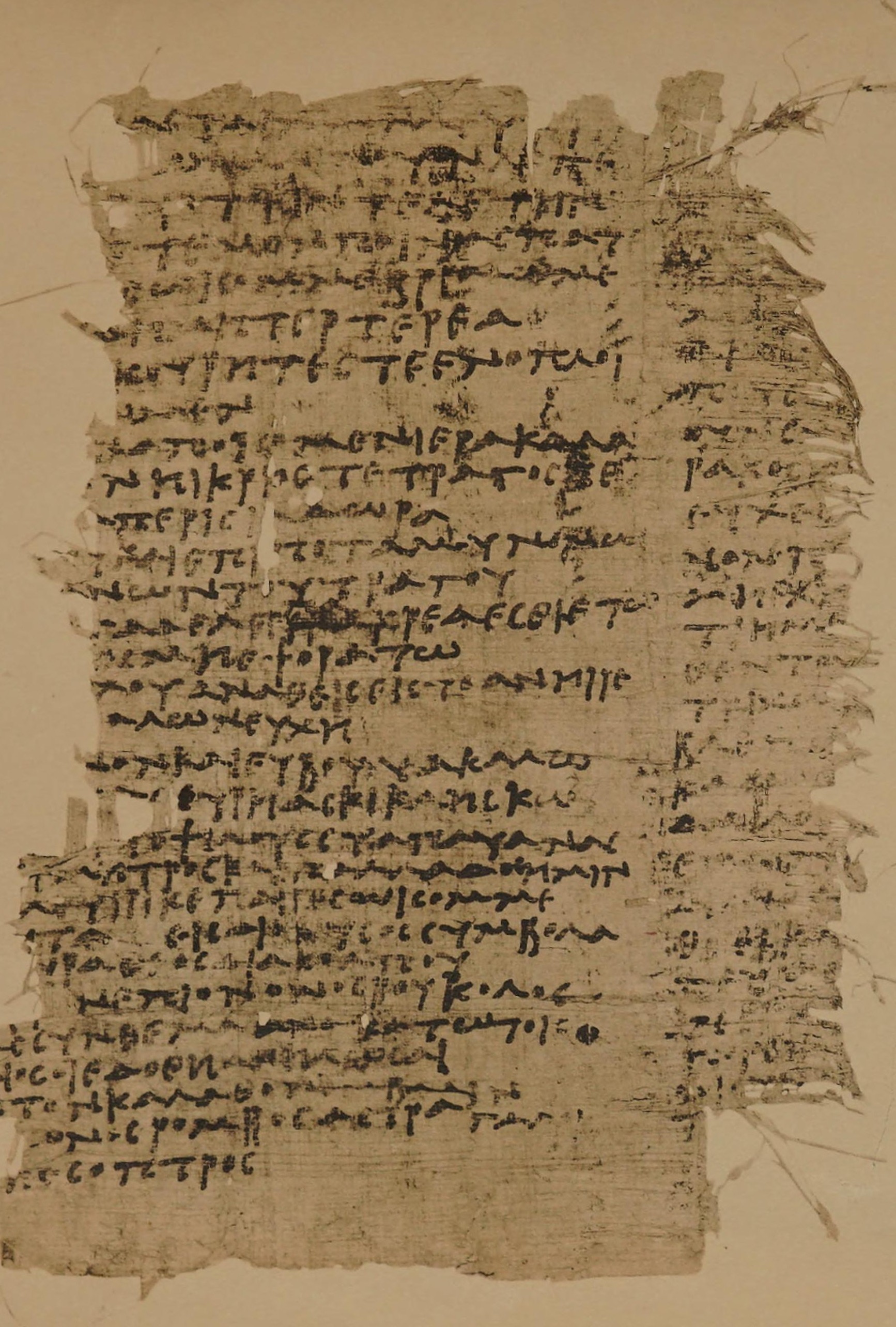
rhombos
Source term: bull-roarer
rhombos: Greek term for the bull-roarer (also a spun rhomb or magic wheel), here one of the ritual "toys of Dionysus" in an Orphic initiation.
Etymology. From rhembō, 'to turn': the rhombos is simply the thing that spins, and Greek gave the same name to a child's top and to the rhombus.
A torn Greek papyrus from Gurob in the Fayum, written in the third (probably mid-third) century BC and now the earliest surviving reference to the so-called Toys of Dionysus, preserves a Bacchic-Orphic ritual script. Near the foot of its first column, after the watchword "as an ass I drank," comes a bare list of sacred tokens to be thrown into a basket: a cone, a rhombos (bull-roarer), knuckle-bones, and a mirror. Five lines earlier the same script says "the god through the bosom" — the golden, once living, snake drawn inside the initiate's clothing and pulled back out again, which Clement names as the token of the Sabazian mysteries and glosses flatly: this god is a serpent. The tokens in the basket are the playthings of the myth the rite re-enacts, the toys with which the Titans lured the infant Dionysus away from his Kouretes guardians before tearing him apart.
]vnos rombos astragaloi / ]h esoptros
[...c]one, bull-roarer, knuckle-bones, / [...] mirror
P. Gurob 1, col. i 29-30, in Hordern 2000:135 (ZPE 129)
Particulars
- Function
- Ritual token: one of the toys of Dionysus, cast into a basket during a Bacchic-Orphic initiation.
Source
James Hordern, “Notes on the Orphic Papyrus from Gurôb”, Zeitschrift für Papyrologie und Epigraphik 129 (2000): 131–140