No. SUBSAH-038
Lala (cimwimwi), Chibale
Zambia · Chibale chiefdom, southwest Serenje District, Central Province · South-Central Africa
Sacred / spirit
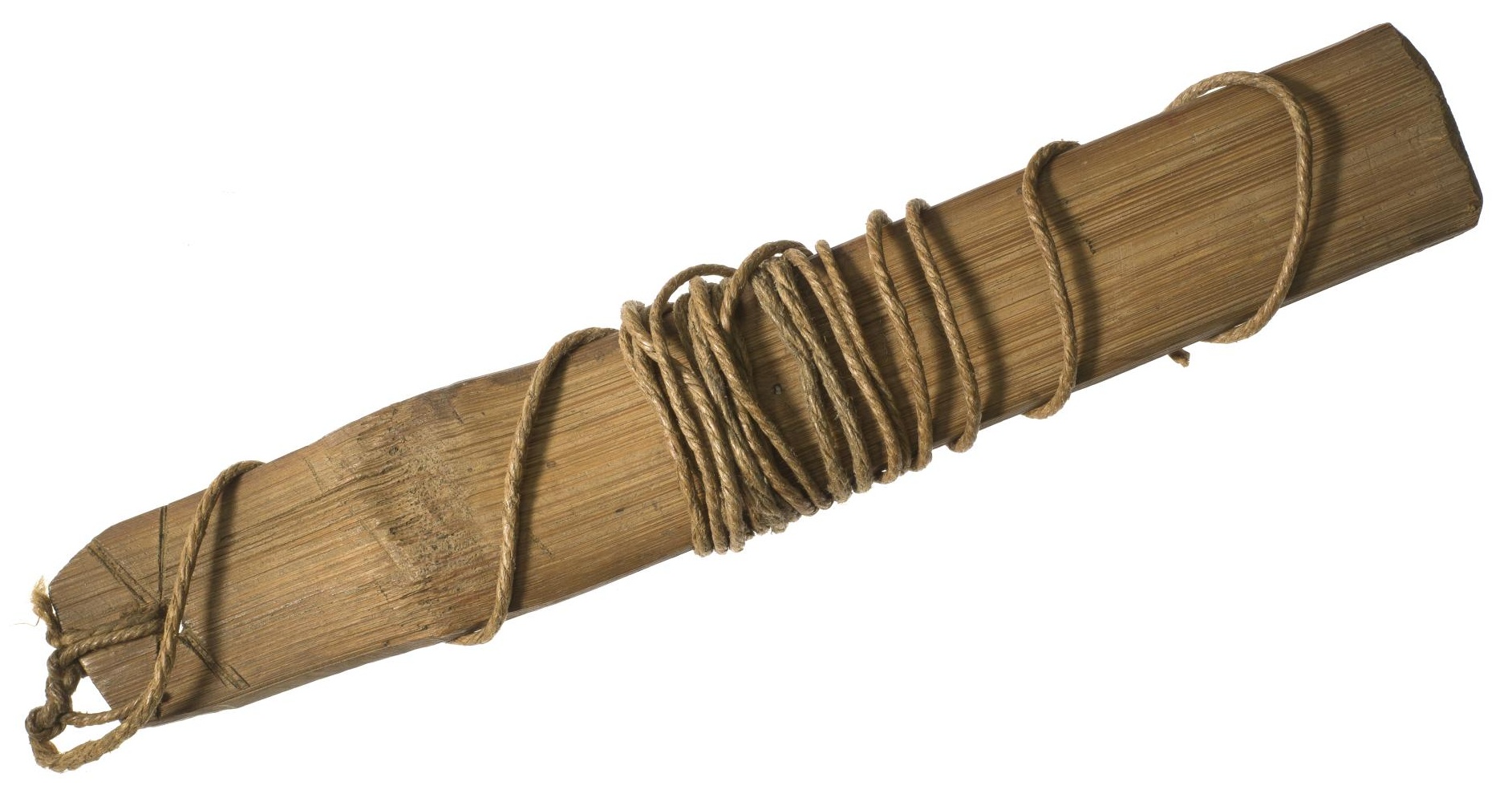
cimwimwi
Source term: cimwimwi (also cimwimwi ca musowa wa nkalamo, "lion-roarer")
cimwimwi: the Lala name for the bull-roarer; its expanded form cimwimwi ca musowa wa nkalamo means "lion-roarer." The same onomatopoeic word can also be applied to a friction drum in the district.
Etymology. The fuller name is built on musowa, a 'low sound' — the word in the funeral lament musowa wa mfwa, 'low sound of death' — so the lion-roarer is, word for word, the cimwimwi of the lion's low sound.
Among the Lala of Chibale, in the hill country of southwest Serenje, a bull-roarer called cimwimwi — "lion-roarer," cimwimwi ca musowa wa nkalamo, in its fuller name — was one of three roaring noisemakers the district remembered. A local field study sets it apart from a wound spinning top and a rubbed friction drum. By the 1980s it had drifted toward play: children sounded it, and now and then someone used it to startle people for fun. Older memories placed its voice at the chief's Cililo, the mortuary rite, where every kind of sound-producing instrument was let loose at once.
The cimwimwi is a bull-roarer. Another name was cimwimwi ca musowa wa nkalamo: 'lion-roarer'. ... In the 1980s, children played it sometimes or someone used it to scare people for fun. Some remember that it sounded at the chief's Cililo at which all kinds of sound producing instruments played.
Jan J. IJzermans, Amalimba (amalimba.org), "Roarers" page.
Particulars
- Object
- A bull-roarer, one of three roaring noisemakers in the district, beside a wound spinning top (lindya, ntandangoma) and a friction drum (cimwimwi ca ku kaole).
- Function
- A noisemaker children played and that was used to scare people for fun; also remembered sounding at the chief's Cililo (mortuary rite) amid many sound-producing instruments.
Source
Jan J. IJzermans, Amalimba: Music and Related Dance, Text & Ritual in One African Region (Chibale, Serenje District, Zambia), web edition (2026), 'Roarers'