JEFFREYS1962-001 - ethnographic attestation
Wimbum ngwarong, where the ancestors punish
Cameroon - Nkambe plateau, Donga-Mantung Division, North-West Region - Central Africa
Restricted
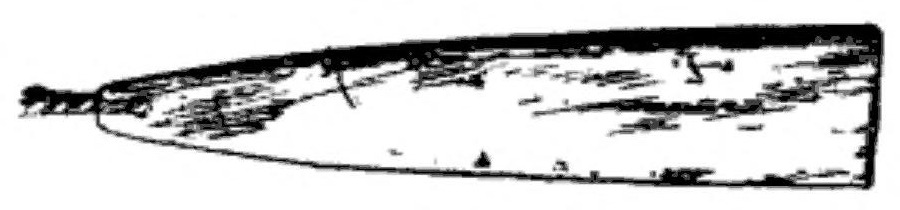
ngwarong
Source term: bull-roarer society
ngwarong: the chief's bull-roarer society, whose members are possessed by the ancestors; also spelt nggang-ngwarung, with its head ta-ngwarong.
Among the Wiya of Ndu, the punishments of the chief's bull-roarer society, ngwarong, were not the work of the living. Its members were possessed by the ancestral spirits, and in that state they seized offenders' property, whipped them, or put them to death. Because it was the ancestors who struck, no kinsman had anyone to avenge, and no blood feud was meant to follow. Ngwarong, presided over by the chief, also formed his bodyguard, and the Wiya count it among the things their forebears brought with them from their old home at Kimi.
- Object
- The bull-roarer of the ngwarong society.
- Function
- The instrument of ngwarong, the chief's bull-roarer society, whose members, possessed by the ancestral spirits, punished offenders by confiscation, whipping and execution, and formed the chief's bodyguard.
- Source
- M. D. W. Jeffreys, 'The Wiya tribe', African Studies 21 (1962): 83–104 and 174–222, abstracted by J. S. Boston, African Abstracts 14 (1963), p. 22, no. 73; E. M. Chilver (ed.), Some Materials for the Study of the Wimbum of the Western Grassfields of Cameroon: A Collection of Grassfields Working Notes (1997), p. 38
- Source location
Page references
African Abstracts 14 (1963) p. 22; Jeffreys 1962 p. 174; Chilver 1997 p. 38
- Source confidence
- medium
- Location note
- Ndu, the Wiya capital 'where the chief resides' (Jeffreys 1962 p. 174; OSM); a clan-level anchor.
Regions: Africa · Central Africa
- Spirit voice