No. LINDBLOM1920-001
Akamba (Ukamba) boy's bullroarer
Kenya · Ukamba, British East Africa
Play / practical
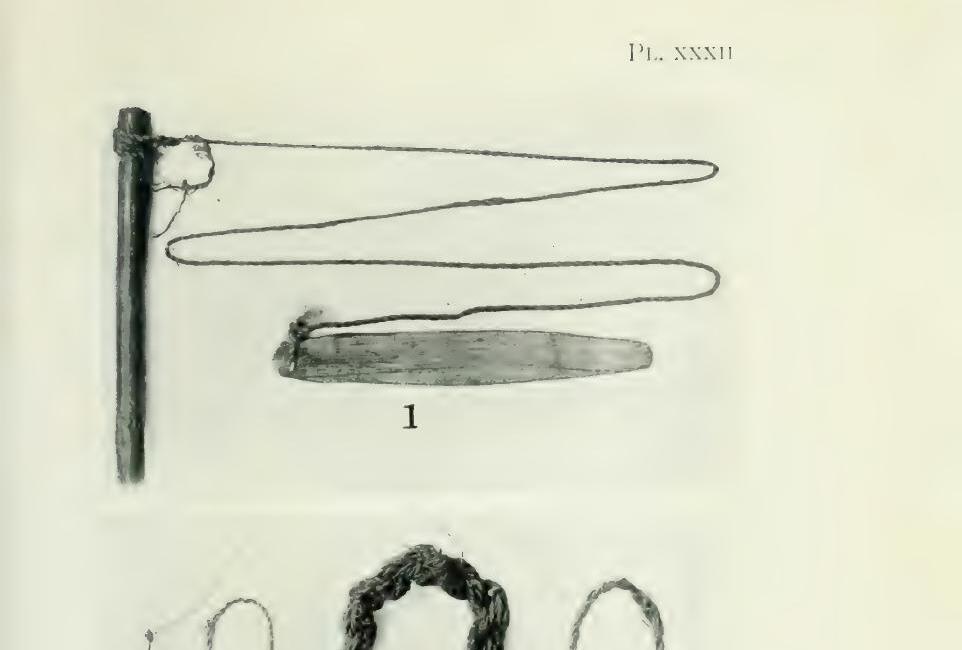
Source term: bull-roarer
A small boy in Ukamba had his own bullroarer: a rough oval slice of wood, its cord threaded through a single hole at one end, spun on its string purely for the noise. Gerhard Lindblom counted it among Kamba children's playthings -- beside peg-tops, calabash-shell wheels, and trundled hoops -- but it was the only one he ever saw in his years among the Akamba: a boy's private roar, unnamed and unceremonious, among a village's ordinary games.
Of the bullroarer I have only seen a single example in Ukamba, used by quite a small boy. It consisted of a pointed oval slice of wood, coarsely cut out, with a cord fixed in a hole at one end.
Lindblom, The Akamba in British East Africa (1920), p. 421.
Particulars
- Object
- A pointed oval slice of wood, coarsely cut out, with a cord fixed through a single hole at one end; no dimensions given.
Source
Gerhard Lindblom, The Akamba in British East Africa: An Ethnological Monograph, 2nd ed. (Uppsala: Appelbergs Boktryckeri, 1920), p. 421, section "Toys and games."