KRIGE1943-001 - ethnographic attestation
Lovedu 'seizing of the lion'
South Africa - Bolobedu, the Rain-Queen's realm (Limpopo) - Southern Africa
Restricted
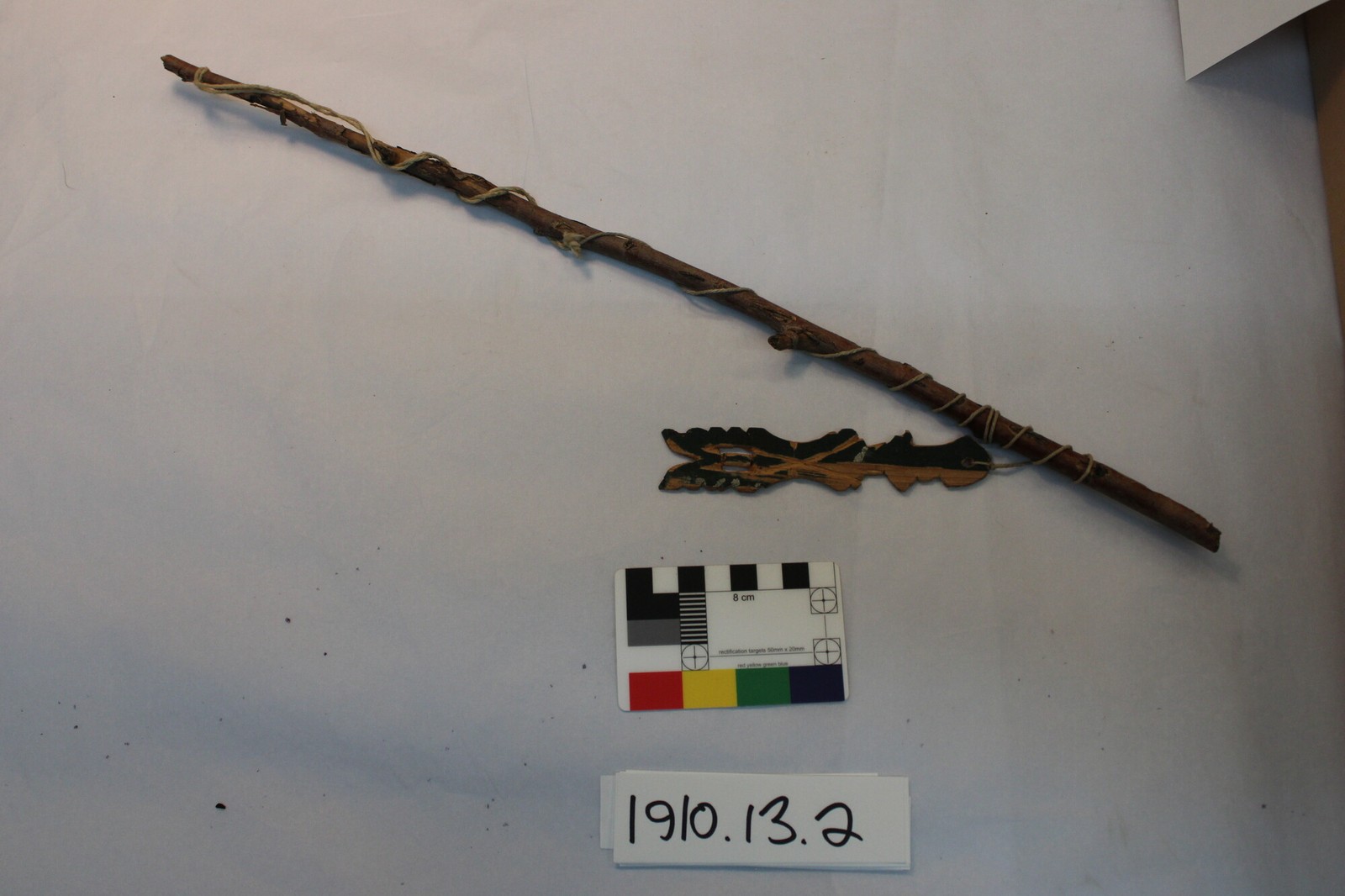
Source term: bullroarers
hu tswara dau: 'the seizing of the lion', the night chase that ends the boys' week of semi-seclusion; dau = lion.
In the realm of the Lovedu Rain-Queen, boys came out of the circumcision lodge in disguise: loincloths worn back to front, heads shaved but for a crown, a double-pointed stick carried with both ends hidden in their hands. Behind them the lodge was burnt. For a week they lived half-hidden, speaking to no woman and trading riddles at night with old women. Then came the 'seizing of the lion'. In the dark the shepherds went out whirling bullroarers, and the lion roared. The boys gave chase, and the one who caught it was praised by the old men.
One night the shepherds go out with bullroarers, the whirling of which produces the roar of the lion.
E. Jensen Krige and J. D. Krige, The Realm of a Rain-Queen (1943), p. 119
- Object
- Bullroarers whirled at night by the shepherds of the boys' circumcision school.
- Function
- Whirled at night by the lodge shepherds as the lion's roar, which the newly circumcised boys must chase down in the 'seizing of the lion' (hu tswara dau).
- Source
- E. Jensen Krige and J. D. Krige, The Realm of a Rain-Queen: A Study of the Pattern of Lovedu Society (London: Oxford University Press for the International African Institute, 1943), p. 119
- Source location
- Krige & Krige 1943 p. 119
- Source confidence
- high
- Location note
- Modjadji, the Rain-Queen's royal village in Bolobedu; the lodges were held across the Lovedu district.
Regions: Africa · Southern Africa
- Initiation rite