No. MUS2026-034
Sotho sevuruvuru against dogs
Lesotho · South Africa · Southern Africa
Play / practical
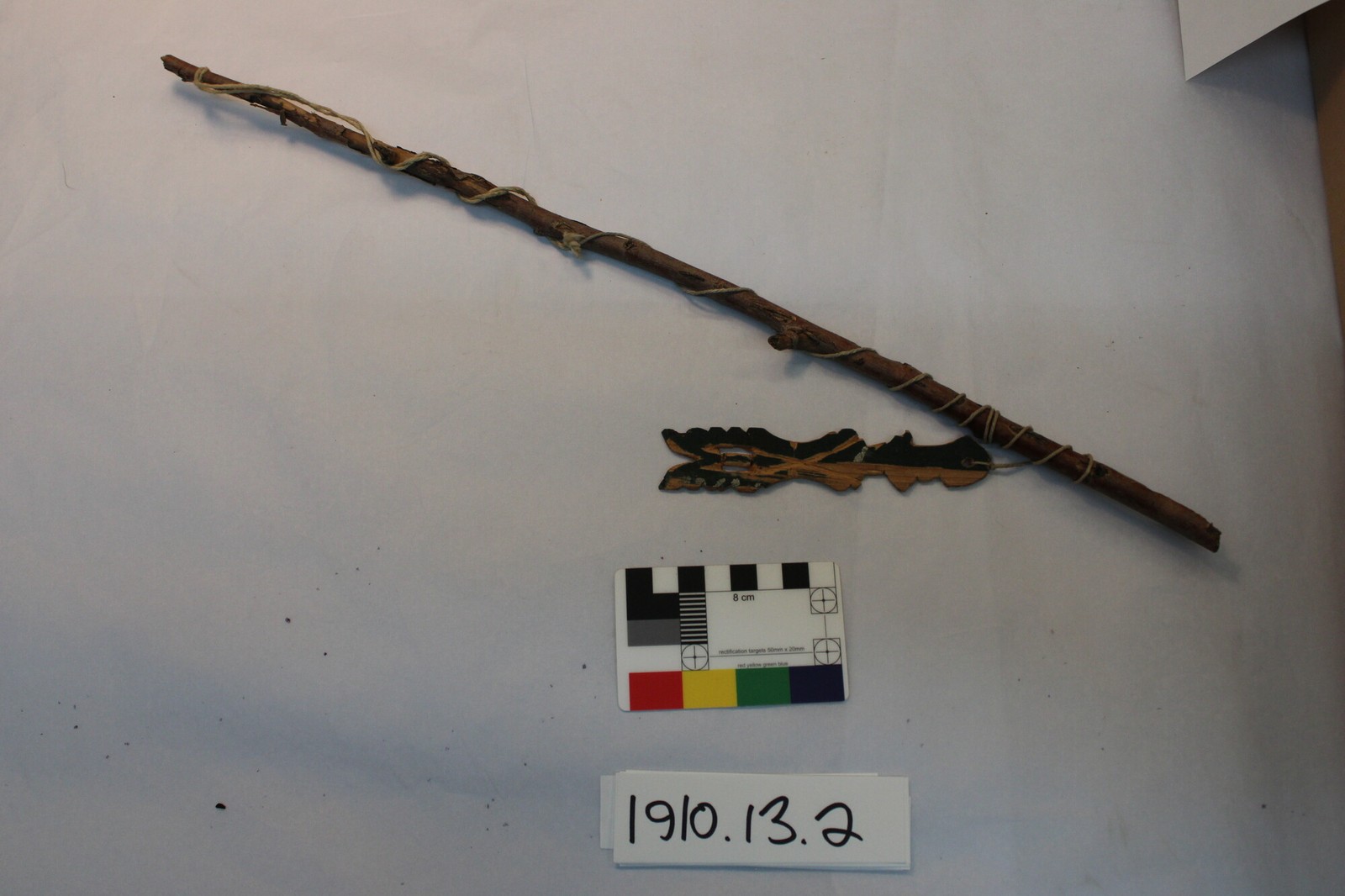
sevuruvuru
Source term: bull-roarer
Sotho children carried the *sevuruvuru* as protection against dogs and other animals. They still occasionally made it in Basutoland when Kirby travelled through the region in the 1920s and 30s. Its name rolls like the *seburuburu* of the Tswana. A Sotho specimen from the Orange Free State, collected before 1910, survives at the Pitt Rivers Museum.
The bull-roarer, or whizzing-stick, is found all over South Africa. There are to-day, so far as I can discover, no rituals in which the instrument is used, and no taboos regarding its employment. For the most part it is nowadays looked upon as a child's toy.
Percival R. Kirby, 'Bull-Roarers and Spinning-Disks', in The Musical Instruments of the Indigenous People of South Africa, 3rd ed. (2013), p. 98 — text of the 1934 first edition
Particulars
- Object
- Bull-roarer of the Sotho, Pitt Rivers Museum, Oxford (acc. 1910.13.2). Kirby records that the Sotho of Basutoland still made the instrument occasionally in his day and called it sevuruvuru - the same word, he notes, as the Tswana seburuburu.
Sources
- Percival R. Kirby, “Bull-Roarers and Spinning-Disks,” in The Musical Instruments of the Indigenous People of South Africa, 3rd ed. (Johannesburg: Wits University Press, 2013), p. 101 (text of the 1934 first edition). View · archived
- Pitt Rivers Museum, Oxford, 1910.13.2, Sotho, Orange Free State; collected by Donald Gunn before 1910. View · archived