DACHER1987-001 - ethnographic attestation
Gouin dogo, the face of God
Burkina Faso - Province de Banfora (now Comoé), southwest Upper Volta - West Africa
Restricted
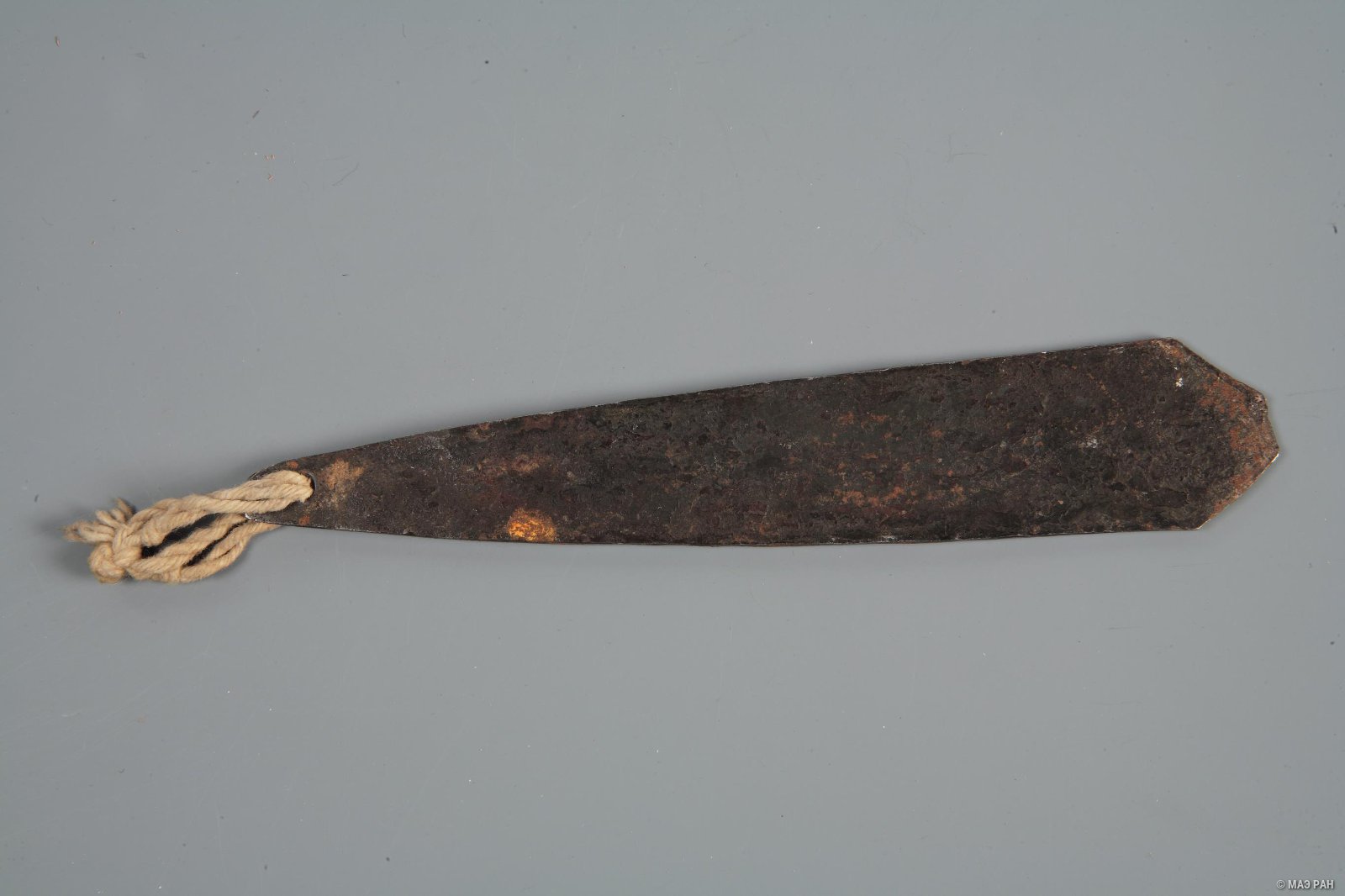
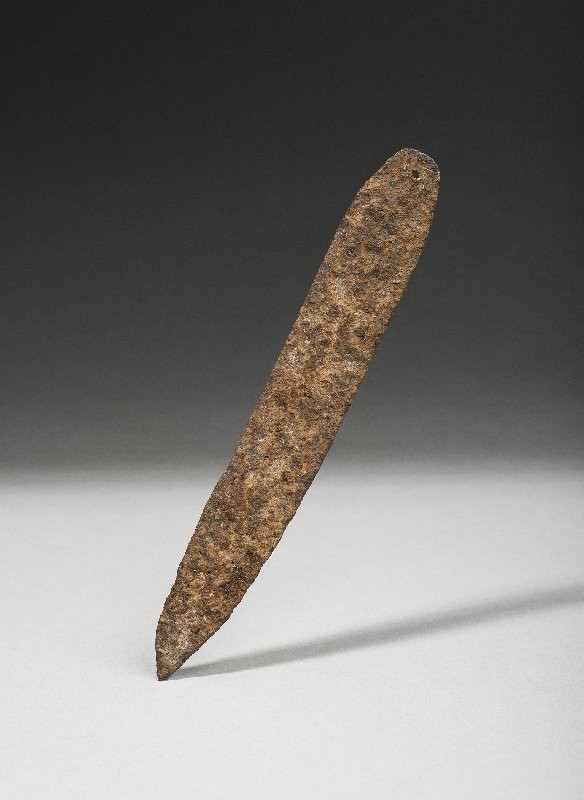
dogo
Source term: dogo; rhombe
dogo (Cerma dógò, pl. dogobaa): the Gouin initiation and the iron blade whirled at its centre; the Cerma dictionary glosses it "small iron blade used in initiation rites".
On the night of the initiation the neophytes lie face down in the dark, and over their heads the keeper of the dogo whirls a long triangle of iron until it vibrates. They must not look: it is the face of God. For the Gouin of southwest Burkina Faso, iron is the most direct road between God and people. God, Dilo, whose name also means sky and rain, made the smith and the forge before the rest of humanity; his gifts fall to earth with the lightning, and only a smith may pick them up. The dogo was the first of them, given to all the Gouin. It is the one power object that can never harm the innocent. In the old wars between villages, the earth priest or the eldest smith would step between the fighters and whirl the iron over their heads, and the fighting stopped at once.
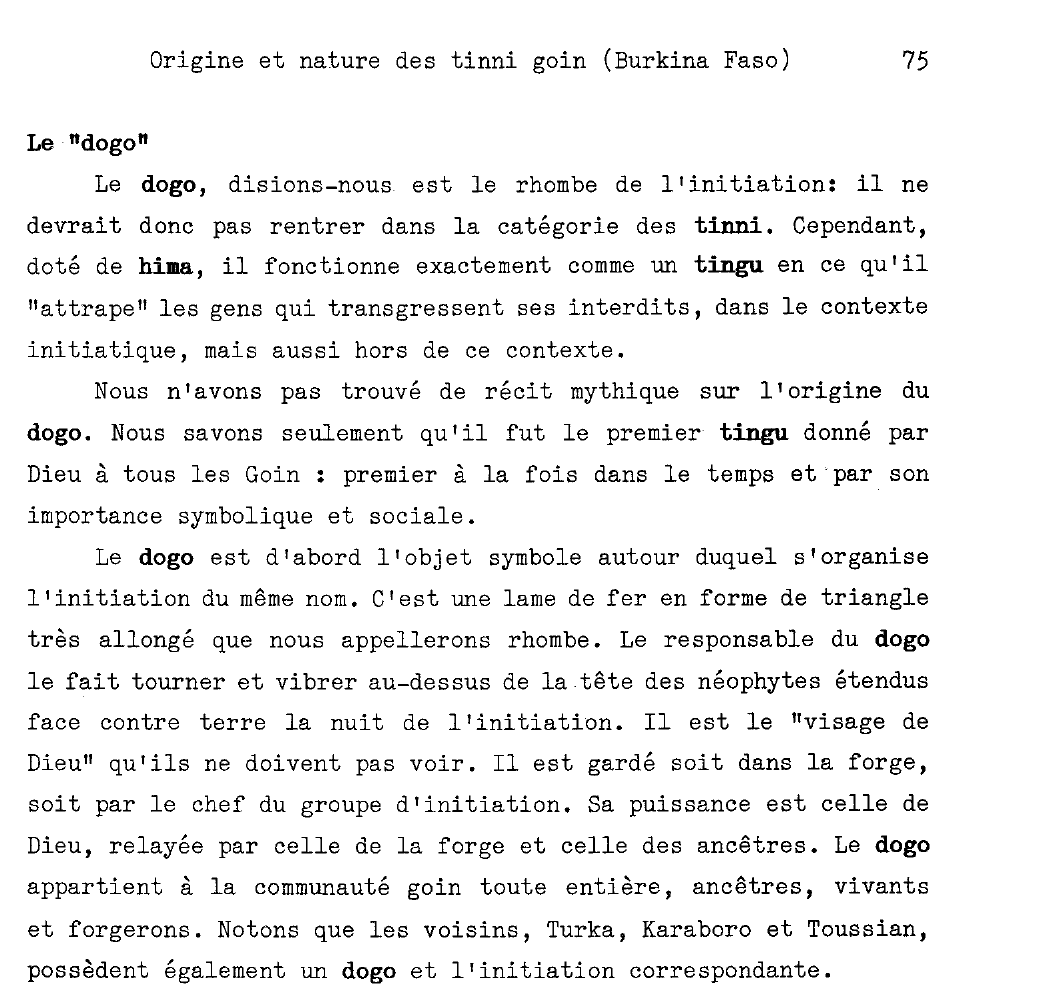
Le responsable du dogo le fait tourner et vibrer au-dessus de la tête des néophytes étendus face contre terre la nuit de l'initiation. Il est le "visage de Dieu" qu'ils ne doivent pas voir.
The keeper of the dogo makes it turn and vibrate above the heads of the neophytes lying face down on the night of the initiation. It is the "face of God", which they must not see.
Michèle Dacher, Systèmes de pensée en Afrique noire 8 (1987), p. 75
- Object
- A blade of iron in the shape of a very elongated triangle, whirled overhead until it vibrates. Smiths also forge and consecrate miniature dogo about ten centimetres long.
- Function
- The object around which the Gouin initiation of the same name is organised: on the night of the initiation its keeper whirls it over the neophytes, who lie face down and must not see it, for it is the face of God. Kept at the forge or by the head of the initiation group; betraying its secrets brings impotence or illness. It was also whirled over warring villages to stop the fighting, sworn on at the forge to settle disputes, and copied in miniature as charms against theft and witchcraft.
- Source
- Michèle Dacher, '« Dans le malheur on ne peut pas être seul avec Dieu »: De l'origine et de la nature des tinni goin (Burkina Faso),' Systèmes de pensée en Afrique noire 8 (1987): 69-110, at pp. 74-77 and 96
- Source location
Page references
pp. 74-77 (§§12-24), p. 96 (§72), n. 2
- Source confidence
- high
- Location note
- Glottolog Cerma (Goin) language centroid, cerm1238, south of Banfora; Dacher places the Goin in the province de Banfora and names no single village for the rite.
Regions: Africa · West Africa
- Spirit voice
- Initiation rite
- Women-linked