FROBENIUS1924-001 - ethnographic attestation
Billai, the Diarra's roarers against crocodiles
Mali - Niger between Sansanding and Diafarabé, Cercle de Macina (Ségou Region), French Sudan - West Africa
Restricted
Billai
Source term: Schwirrholz; Billai; Doogu
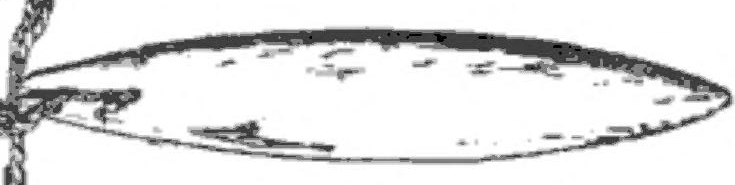
Billai: the bullroarers of the Diarra society, and the name of its two great shrine roarers; Doogu: the bamboo roarer used by all three Bozo men's societies.
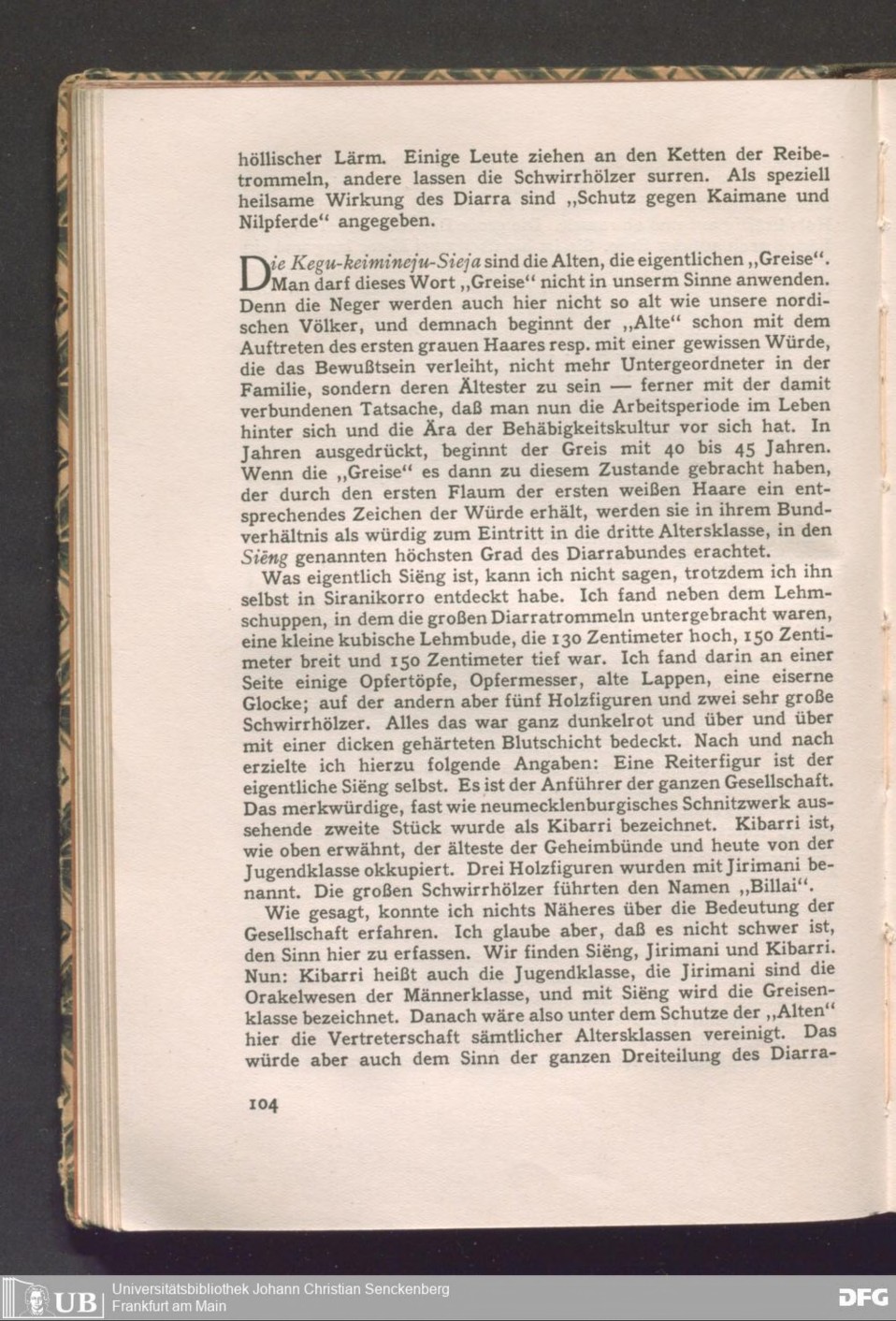
The people of Siranikorro, Bozo fishermen on the Niger famed far and wide for the power of their Diarra society, explain why its town house holds nothing but a drum and some bullroarers. Once the whole household of the Diarra stood there, and the women and children lived in fear of it, until fire swept the village and it burned like any other wood. "The Diarra is nothing but wood and straw!" the women jeered. At that the real Diarra fled headlong into the river, and there it stays, coming out only now and then. When it plays the noise is hellish: some men haul on the chains of the friction drums, others whirl the roarers, the Billai. Its gift is protection against crocodiles and hippopotamuses. In the elders' shrine stood five carved figures and two huge Billai, crusted all over in blood.
Als speziell heilsame Wirkung des Diarra sind „Schutz gegen Kaimane und Nilpferde“ angegeben.
The particular healing power of the Diarra is given as "protection against crocodiles and hippopotamuses."
Leo Frobenius, Atlantis VII: Dämonen des Sudan (1924), p. 104
- Object
- Wooden bullroarers kept with the friction drums in the Diarra shrine; a Siranikorro blade is a slender wooden lens 34 cm long. The two largest, in the elders' shrine, were crusted with hardened blood. All three Bozo men's societies also use a bamboo roarer, the Doogu.
- Function
- The voice of the Diarra, the Bozo men's society, whirled with friction drums at its dry-season rites; its particular benefit was protection against crocodiles and hippopotamuses.
- Source
- Leo Frobenius, Atlantis: Volksmärchen und Volksdichtungen Afrikas, Bd. VII: Dämonen des Sudan (Jena: Diederichs, 1924), pp. 89, 102–104; Leo Frobenius, Und Afrika sprach…, Bd. III: Unter den unsträflichen Äthiopen (Berlin: Vita, 1913), p. 297 fig. 7
- Source location
Page references
Atlantis VII pp. 89, 102–104; Und Afrika sprach III p. 297 fig. 7
- Source confidence
- high
- Location note
- Siranikoro, Cercle de Macina (OSM), the village Frobenius names for the shrine and the plate specimen; on the Niger between Sansanding and Diafarabé, the Diarra's range.
Regions: Africa · West Africa
- Spirit voice
- Women-linked