No. SCHEBESTA1948-001
Kinombe's two initiation voices
Democratic Republic of the Congo · Beni–Penge road, Ituri forest, Belgian Congo · Central Africa
Restricted
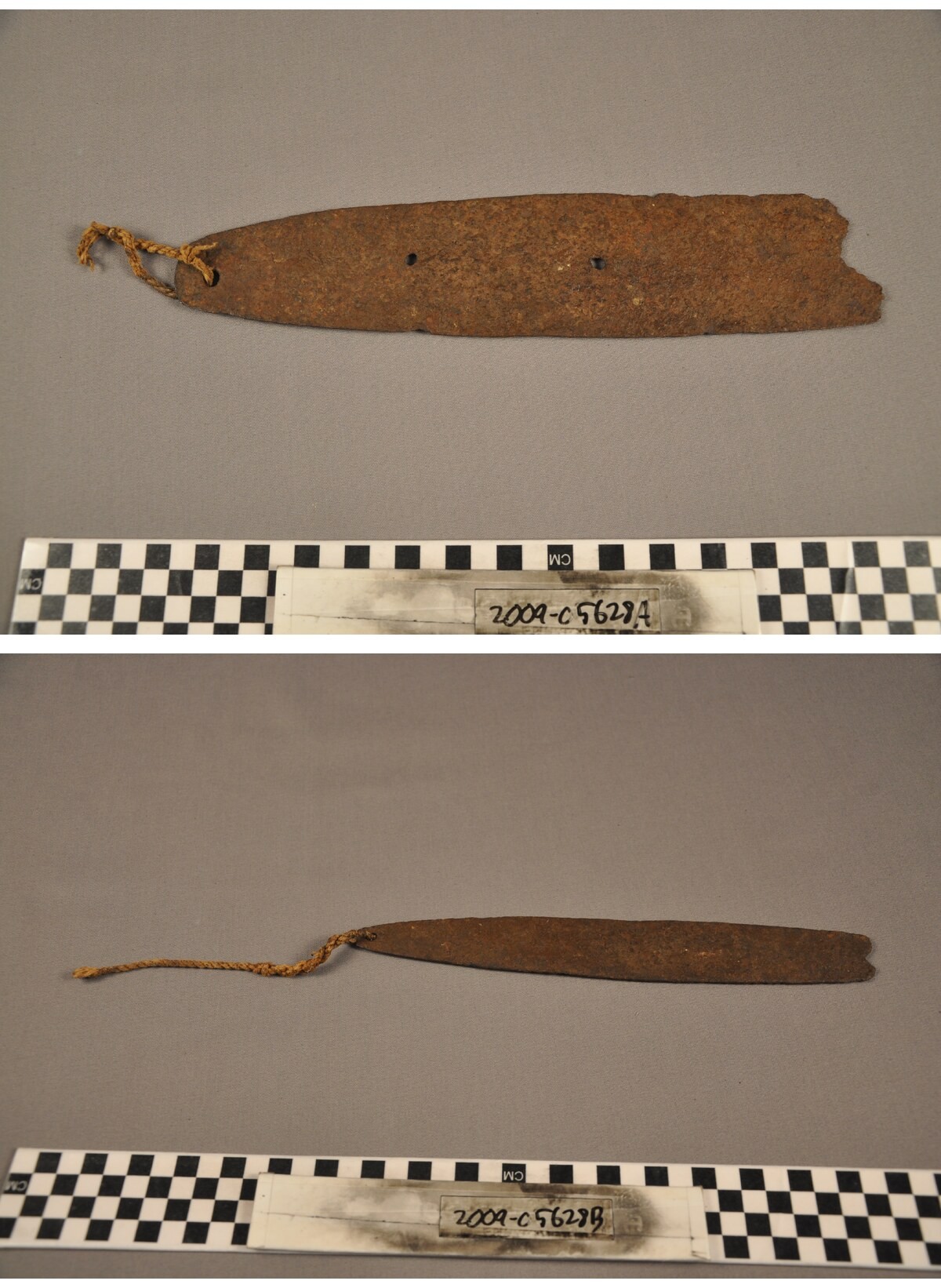
Source term: Schwirrholz
Schwirrholz: German, 'whirring wood', the bullroarer; no local name recorded. Lusomba: the wooden initiation trumpet. Muema: the forest god of the Basua, called Mungu by the Babira.
Near Kinombe, on the old forest road from Beni to Penge, Basua boys were initiated to two sounds only: the bullroarer and a wooden trumpet. Neighbouring peoples brought out droning pots as well; the Bambuti here had none. The trumpet, Lusomba, led. Every clan owned its own, each with its own name — just as, the Basua explained, every animal is simply nyama, yet every kind of animal has a name of its own. They were forest hunters. An old man told how the heart of a fresh kill was laid in a hollow tree with the words “This is for Muema”: the god who lives in the forest and gave them everything.
als Lärminstrumente der Initiation nur das Schwirrholz und die Holztrompete
as the noise instruments of initiation, only the bullroarer and the wooden trumpet
Paul Schebesta, Die Bambuti-Pygmäen vom Ituri II-2 (1948), p. 483
Particulars
- Object
- Not recorded.
- Function
- One of only two noise instruments of the local Nkumbi initiation, sounded with the wooden trumpet Lusomba; no sounding pots were used.
Sources
- Paul Schebesta, Die Bambuti-Pygmäen vom Ituri, vol. II-2 (Brussels, 1948), p. 483 View
- Paul Schebesta, Die Bambuti-Pygmäen vom Ituri, vol. IV-1: Die Religion der Ituri-Bambuti (Brussels, 1950), p. 75