No. FROBENIUS1925-002
Dakka Sama Mum Langa ancestral-voice bullroarer
Nigeria · Sugu · Tsugu · Ganye LGA · Adamawa State · Africa
Restricted
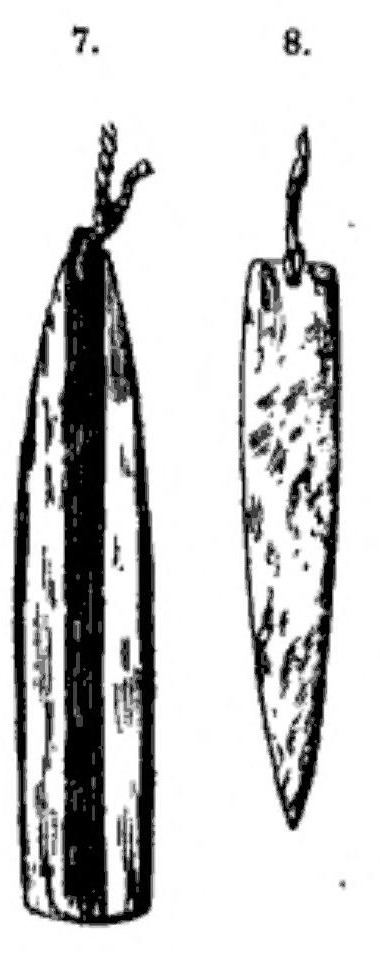
Langa
Source term: Schwirrholzer
Langa: Dakka name for the sacred bullroarers; the same term includes silent iron forms and sounded wooden instruments
Among the Dakka, wooden Langa were swung on sacred days while iron examples rested silent in a shrine urn. Their sound was the voice of the fathers: at harvest women and children hid indoors, while boys at circumcision were told that the old grandfathers were crying.
Dagegen werden die Schwirrholzer an den entsprechenden heiligen Tagen geschwungen.
The wooden bullroarers are swung on the corresponding sacred days.
Frobenius 1925:42
Particulars
- Object
- Wooden bullroarers explicitly swung on sacred days; iron forms remained in a shrine urn.
- Function
- Swung on sacred days as the voice of the fathers; sounded at harvest, circumcision, and the death of a king or Kameni.
Source
Leo Frobenius, Dichten und Denken im Sudan (1925), pp. 42, 44-45, 54 and 67