No. ALUEDE2006-001
Esan Alimin-Otor land-spirit bullroarer
Nigeria · Esanland · Edo State · West Africa
Restricted
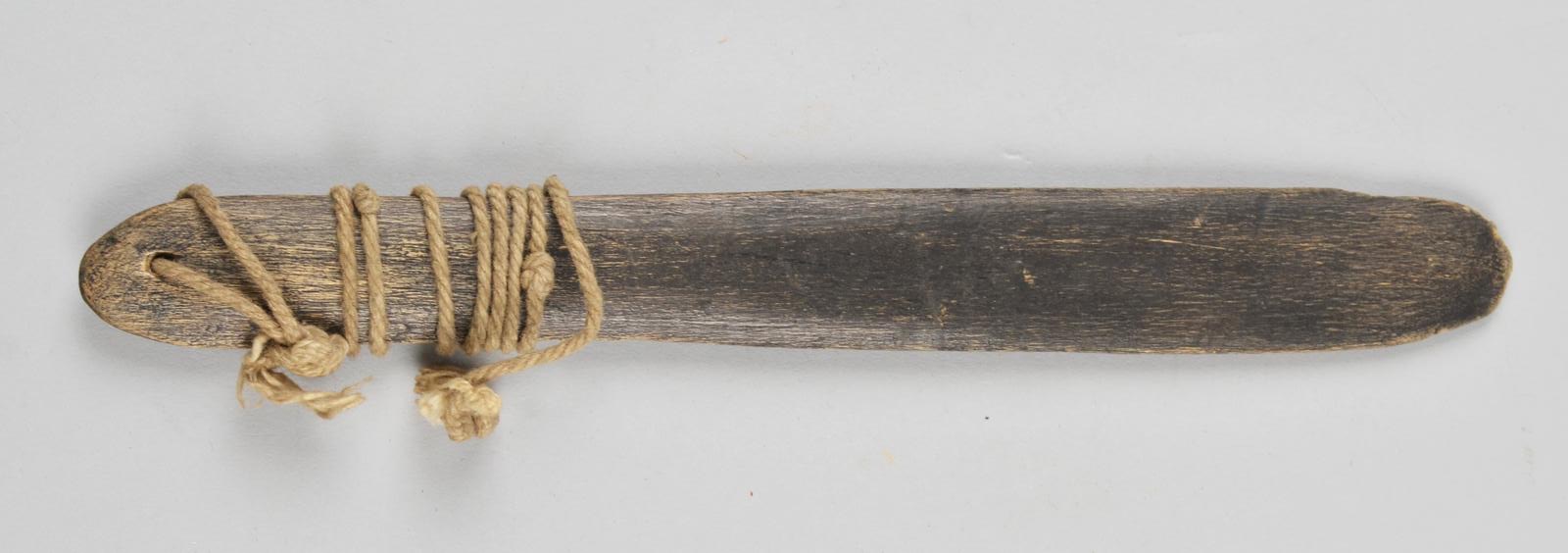
Alimin-Otor
Alimin-Otor: Esan for "land spirits," the name of the bullroarer itself.
At midnight in Esanland, the land spirits announced their procession with the roar of Alimin-Otor. Aluede describes a carved piece of wood tied to a cord and whirled through the air; women and children stayed indoors while the spirit company moved.
a carved bob of wood attached to a cord which, when whirled through the air produces a terrifying roar.
Charles O. Aluede, The Anthropomorphic Attributes of African Musical Instruments: History and Use in Esan, Nigeria, The Anthropologist 8(3) (2006): 159.
Particulars
- Object
- Carved wood attached to a cord and whirled through the air; exact profile unstated.
- Function
- Midnight land-spirit procession; the sound conveys the presence of spirits; women and children remain indoors.
Source
Charles O. Aluede, 'The Anthropomorphic Attributes of African Musical Instruments: History and Use in Esan, Nigeria,' The Anthropologist 8(3) (2006): 157-160, p. 159