No. SCHAEFFNER1964-001Africa
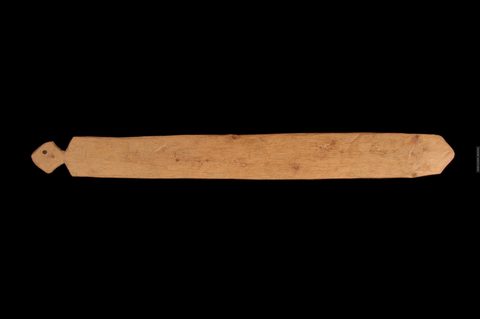
Monchon's rhombe in the treetop
Guinea · Rio Pongo coast, Préfecture de Boffa, Lower Guinea · West Africa
Restricted
- Snake-linked
- Initiation rite
- Death and rebirth
- Forbidden to women
- Women-linked
- Agriculture / crops
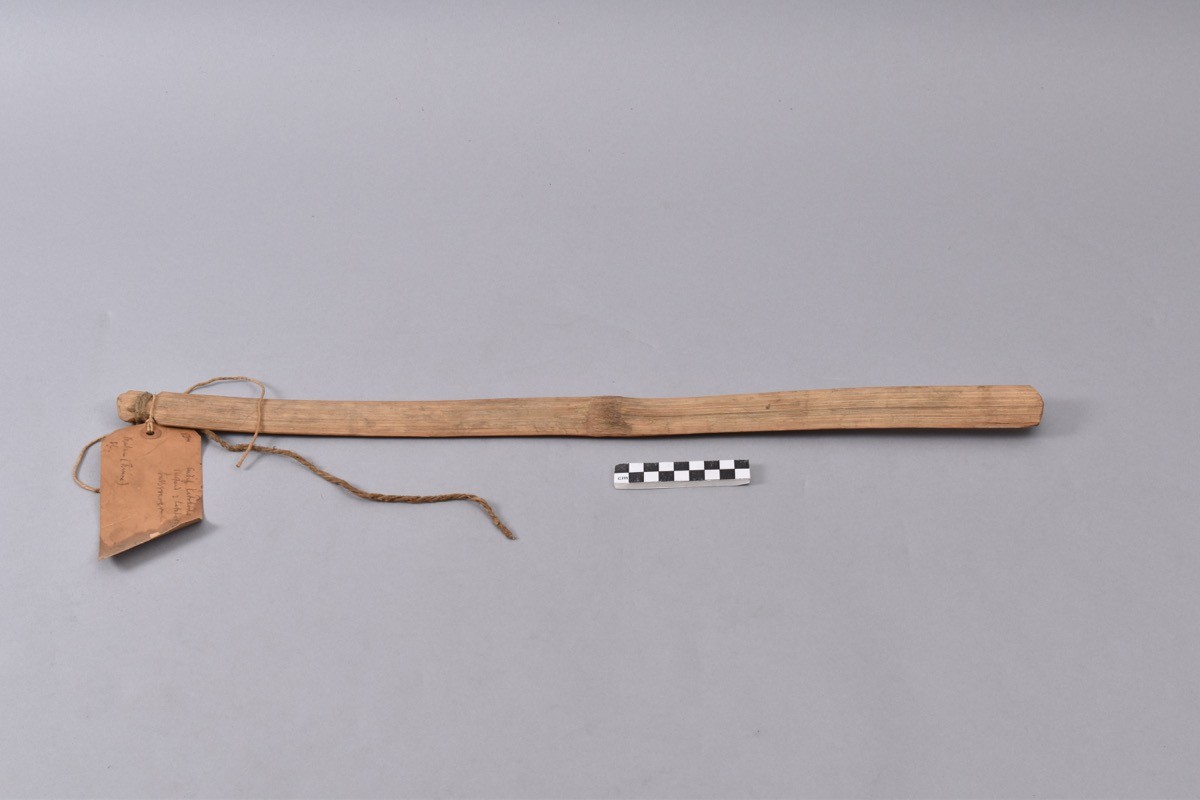
Source term: rhombe
Among the Baga of the Guinea coast the great ritual of the forest had two halves. The first belonged to Abul, a spirit and the wife of Bansonyi, the great serpent; the second, the circumcision, was Bansonyi's own. After three months of secret rites in the forest, the men of Abul might invade the village, announced by a crier carrying a palm and by a rhombe whirring from the top of a forest tree. At once women, children and strangers fled into their houses: doors shut, streets empty, a deathly silence, the village plunged into mourning. Out of the forest came a file of men dressed as women, skirts tight at the ankle, scarves on their heads, shaking the sistrum-rattles of excised girls and simpering as they danced. Life returned only when they reached the centre of the village, and the rite turned to carnival. At the first sowing Abul herself came out into a rice field, as a huge tortoise shell carried by a dozen men hidden under a curtain of fibre.
Le rhombe n'est pas tourné au sol mais du haut d'un arbre de la forêt.
The rhombe is not swung on the ground but from the top of a tree in the forest.
André Schaeffner, Le sistre et le hochet (1990), pp. 174-175
Particulars
- Object
- A rhombe, not described, swung from the top of a tree in the forest beside the village.
- Function
- Announces the men of Abul as they come out of the forest dressed as women to invade the village; at its sound women, children and strangers shut themselves in and put out every light.
Discussed in one essay
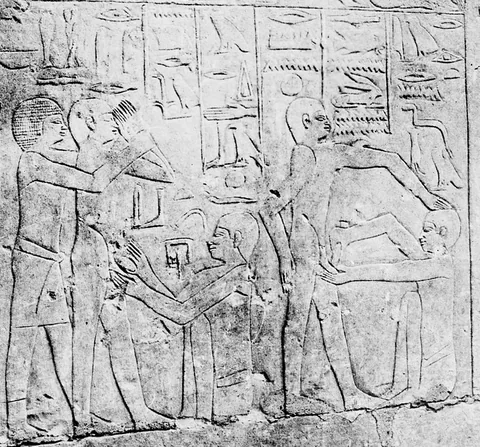 The Bridegroom of Blood
Sources
- André Schaeffner, Le sistre et le hochet (Paris: Hermann, 1990), pp. 171-172, 174-175. View · archived
- André Schaeffner, in VIe Congrès international des sciences anthropologiques et ethnologiques, Paris 1960, t. II, vol. 1 (Paris: Musée de l'Homme, 1964), p. 124.
- Denise Paulme, "La notion de sorcier chez les Baga", Bulletin de l'IFAN, sér. B, 20 (1958), p. 413.
Nearby in the atlas
 Kono (gueyoumo)Guinea · Guinee forestiere (Lola region), Haute-Guinee francaise · Restricted
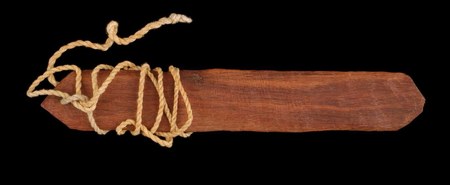 Bokoré night roarersGuinea · Bokoré village group, Koundara prefecture (Guingan and Termessè sub-prefectures), Guinea–Senegal border hills · Restricted
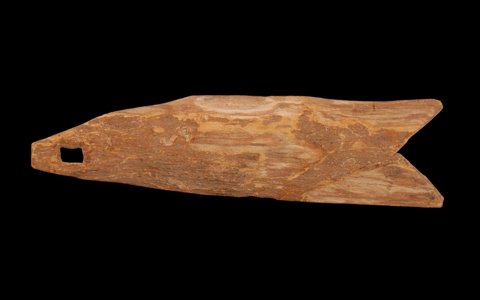 Coniagui child's rhombeGuinea · Youkounkoun, Koundara (Guinea-Senegal border) · Play / practical
 Guri, a voice of AfwiGuinea · Nzerekore · Restricted
 Kissi initiation and ancestor-voice bullroarerGuinea · Kissidougou-Guéckédou / Forest Guinea · Restricted
 Ovia, the river queen's voiceNigeria · Benin Kingdom / later Edo State · Restricted