No. MBENDJE2016-001
Banzèbi roarer of the Chaillu hills
Gabon · Southern Massif du Chaillu, Ngounié and Ogooué-Lolo (Koulamoutou–Pana to Mbigou–Lébamba) · Central Africa
Restricted
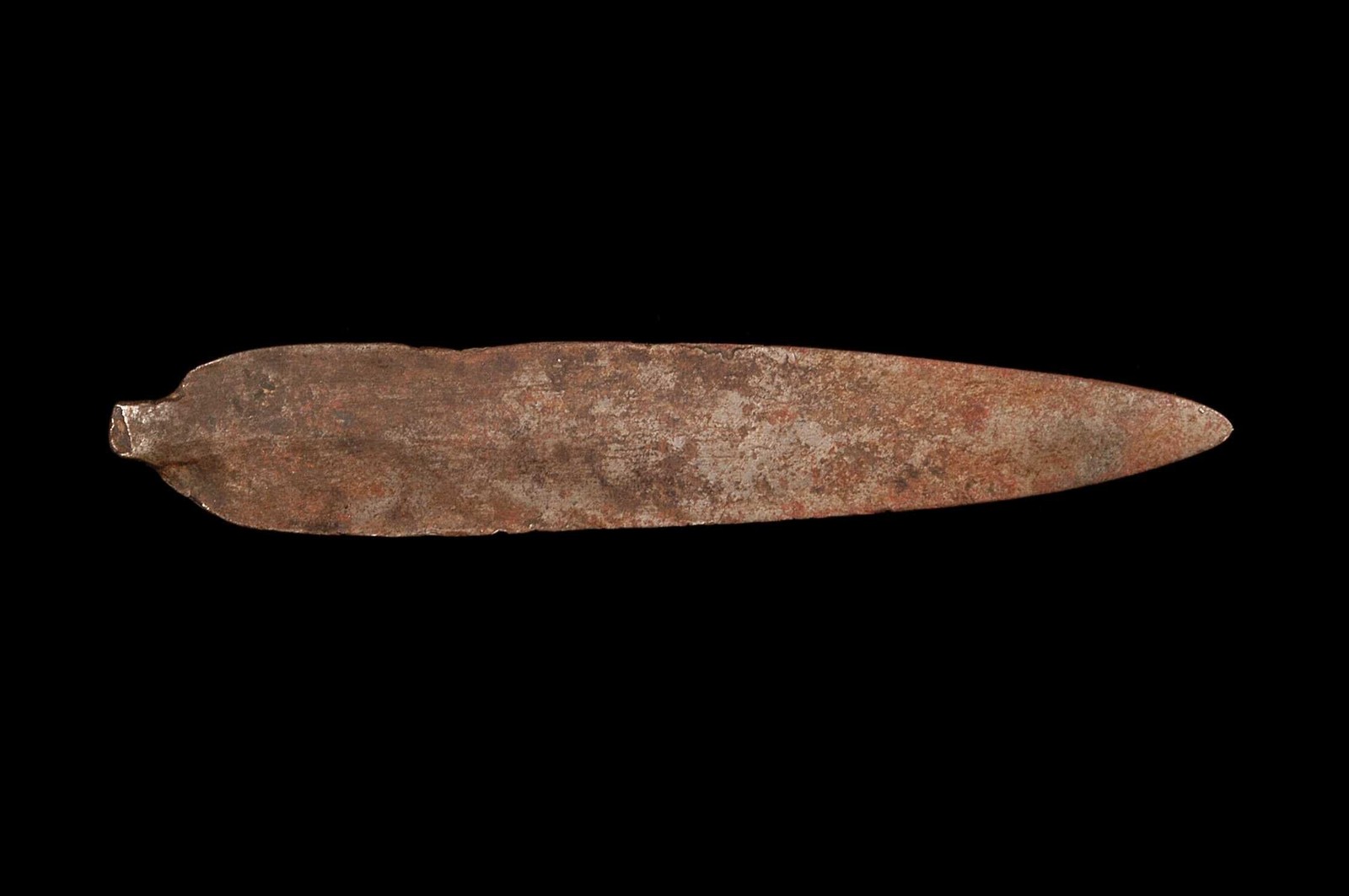
Source term: rhombe; joamiala
joamiala: the inventory's heading name for the Gabonese rhombe; the Banzèbi word is not recorded. bongoja: the secret truth-finding dance at which the instrument sounds.
Spun round on its cord, a wooden blade the length of a hand gives a drone meant to frighten. Among the Banzèbi, as among their Mahongwé, Bekwil and Pové neighbours, it sounded at bongoja, a secret dance held to get at the truth; while it lasted, anyone with no part in the matter stayed indoors. The Banzèbi live in the steep forest of the southern Chaillu massif, under peaks above a thousand metres, from Koulamoutou down to Mbigou and across the border into Congo. Their account of how the world began is the story of the seven sons of Nzèbi.
Particulars
- Object
- A wooden blade about 15 cm long on a cord, whirled to give a drone.
- Function
- Shared with the Mahongwé, Bekwil and Pové: frightens by its noise and is sounded at the secret bongoja dance, held to get at the truth, while anyone not concerned stays at home.