No. FROBENIUS1925-003
Bokko Voko Longto Uonatonajo ancestor-voice bullroarer
Cameroon · Voko · Gormaaya · Poli · Faro Department · North Region · Africa
Restricted
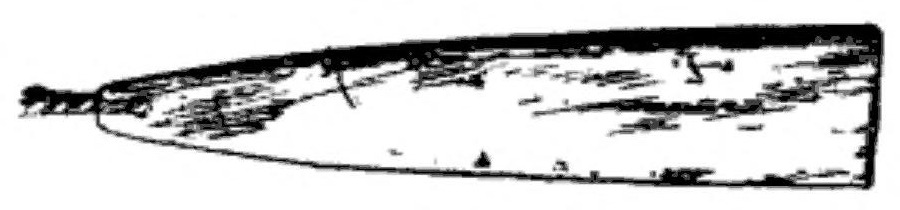
Uonatonajo / Wonatonajo
Source term: Holzerne Schwirren
Uonatonajo / Wonatonajo: Bokko name for the wooden bullroarers. Women were told their noise was made by the Wuonatona, 'spirits of the dead'.
Step through the gatehouse of a Bokko homestead and on the right stood a little shrine, the Nahurga, where the wooden Uonatonajo hung: the voices of the ancestors. When they sounded at the start of harvest, at the circumcision of the boys or at an old man's death, the women were told it was the Wuonatona, the spirits of the dead, the old fathers crying for food and tobacco, and they hurried to cook; a messenger carried the dishes out to the men in their holy house beyond the village. A grandfather's skull, lifted from the grave after a year, was kept in the same shrine. When a daughter of the house was to marry, her father mixed sorghum meal in the skull, dabbed it on her body and asked the old father to give her a child. That child was the ancestor reborn and took his name. Each time the rite was made, the young wife brought a hen, and it was sacrificed to the bullroarer.
Die Bokko haben holzerne Schwirren und nennen diese Uonatonajo.
The Bokko have wooden bullroarers and call them Uonatonajo.
Frobenius 1925:120
Particulars
- Object
- Wooden bullroarers hung in a small household shrine called Nahurga. Frobenius's 1913 plate draws one, about 30 cm long.
Source
Leo Frobenius, Dichten und Denken im Sudan (1925), pp. 120-122