No. MUS2026-095
Rorata, the leopard's cry
Ethiopia · Gondar, Amhara · Africa
Weather / fertility magic
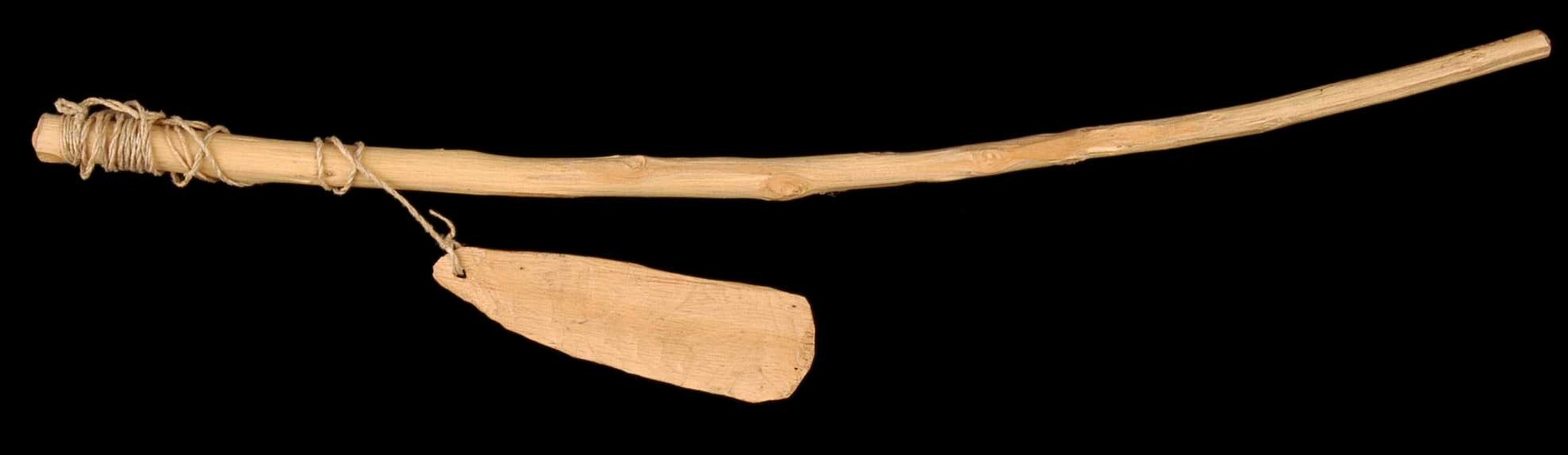
Rorata / Furrit; zezzeta (Amhara children, Messing)
Source term: bull-roarer
Rorata / Furrit: names of the Gondar rhombe. Zezzeta: Messing's onomatopoeic name for an Amhara children's bullroarer used to frighten younger children.
The leopard's cry could protect a flock or imperil it. In Choa, goat-herders swung the roarer to keep leopards away; at Gondar, people believed the noise drew them in. Amhara shepherd boys trusted it against hyenas too. In parts of Choa it was thought to bring rain. Cypress was the preferred wood. Boys put the sound to work in the fields, scaring birds from seed and ripening crops, and when the rainy season kept them indoors they amused each other and frightened younger siblings. The children's onomatopoeic name zezzeta catches that growling voice.
Rorata, Furrit
local names recorded for the rhombe
Musée du quai Branly – Jacques Chirac, 71.1931.74.2995
Particulars
- Object
- Amhara rhombe from Gondar, called Rorata or Furrit; goat-herders preferred cypress for this instrument.
- Function
- Leopard deterrence in Choa and rain belief in some districts; boys also scare birds from crops, ward off hyenas, and frighten younger siblings.