BRINDLE2017-001 - lexical attestation
Tebinsɪgmaa, the night dirge of the Sigmaa
Wa East District, Upper West Region, Ghana - West Africa
Restricted
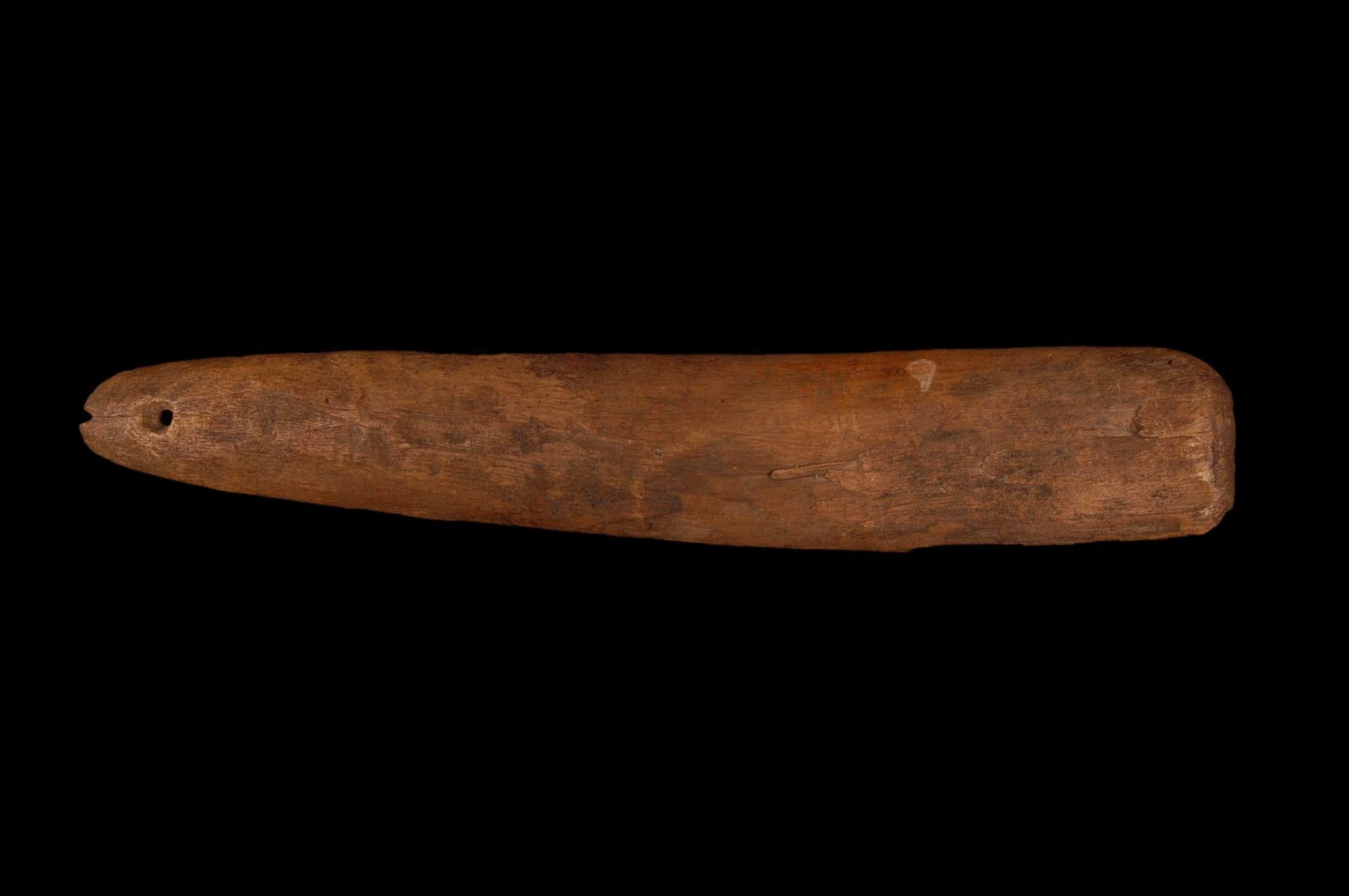
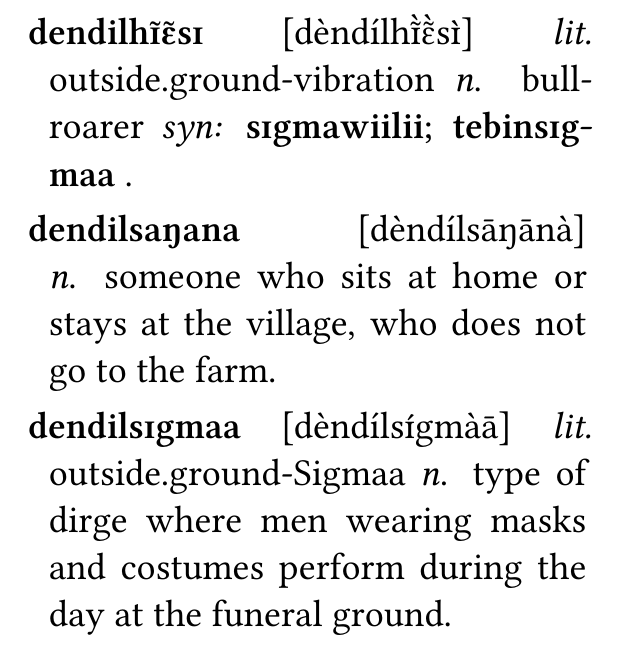
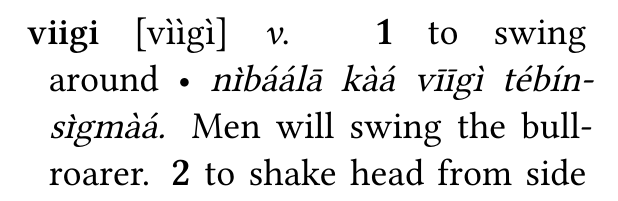
dendilhɪ̃ɛ̃sɪ / sɪgmawiilii / tebinsɪgmaa
Source term: bullroarer
dendilhɪ̃ɛ̃sɪ (lit. "outside.ground-vibration"), sɪgmawiilii (from sɪgmaa, the funeral masquerade) and tebinsɪgmaa ("night funeral performance, type of dirge usually associated with the bullroarer"): three Chakali names for the bullroarer.
At a Chakali funeral the Sigmaa comes out. By day masked men in fibre costumes dance a dirge on the funeral ground. By night comes tebinsɪgmaa, the night dirge, and with it the bullroarer that bears the same name, swung by men; another of its names is dendilhɪ̃ɛ̃sɪ, "outside-ground vibration." The dirges and the praises of the ancestors are sung in Sigu, a language kept for them, and every year the men make and mend the costumes and ritual things at a place of their own. A girl may see a masquerade only after an initiation of her own.
nɪ̀báálā kàá vīīgì tébínsɪ̀gmàá.
Men will swing the bullroarer.
Jonathan Brindle, A dictionary and grammatical outline of Chakali (2017), p. 176, s.v. viigi
- Object
- Not described; named as a bullroarer and swung by men.
- Function
- The voice of the Sigmaa, the Chakali funeral masquerade: the night funeral performance tebinsɪgmaa, a dirge "usually associated with the bullroarer", shares the instrument's name, while masked, costumed men perform the matching dirge by day at the funeral ground. Girls may see a masquerade only after an initiation of their own.
- Source
- Jonathan Brindle, A dictionary and grammatical outline of Chakali (African Language Grammars and Dictionaries 2; Berlin: Language Science Press, 2017), CC BY 4.0: entries dendilhɪ̃ɛ̃sɪ and dendilsɪgmaa (p. 42), ɲʊasɪ (p. 125), sigu (p. 143), sɪgmaa, sɪgmawiilii and sɪnlɔg (p. 145), tebinsɪgmaa (p. 154), viigi (p. 176); Sigu names (p. 361)
- Source location
- pp. 42, 125, 143, 145, 154, 176, 199
- Source confidence
- high
- Location note
- Glottolog Chakali language centroid (chak1271), inside the seven-village Chakali area of Wa East District; Ducie, Brindle's main site, is not independently geocoded.
Regions: Africa · West Africa