No. LEMOAL1980-002
Silékoro’s rhombe from the field
Silékoro, Bobo country, western Burkina Faso · West Africa
Sacred / spirit
Dwo
Source term: rhombe
Dwo: the Bobo god whose personification is the rhombe. Kwele Dwo: the smiths’ Dwo, whose myth entitles them to make masks. Patamaso Dwo: the figure of Dwo the Silékoro blade was found to be. forkoma: a dignitary of the sibe cult.
Early in 1960 Ñinivya Traore found a rhombe in his field at Silékoro and hid it in a house. Soon three of his family were dead, and the deaths were laid on the blade, which had been given none of its due sacrifices. On the diviner’s advice the Sanu smiths of Kurumani came on 19 May, bringing a mask that carried a rhombe of their own god, Kwele Dwo. The mask walked straight into the room where the found blade lay and took it. On the road toward Lya the two blades were laid together, the smiths’ on top of the new one, and sacrifice after sacrifice drew out its harm. Then the diviners worked for four years before declaring it, at the end of 1964, a new appearance of Patamaso Dwo. No masks had come out of the ground with it, so the smiths, the only men entitled, began carving new ones for the Traore in 1965.
Au début de l’année 1960, un villageois de Silékoro, nommé Ñinivya Traore, trouvait un rhombe dans son champ.
Early in 1960 a villager of Silékoro named Ñinivya Traore found a bullroarer in his field.
Guy Le Moal, Les Bobo (1980), p. 296
Particulars
- Object
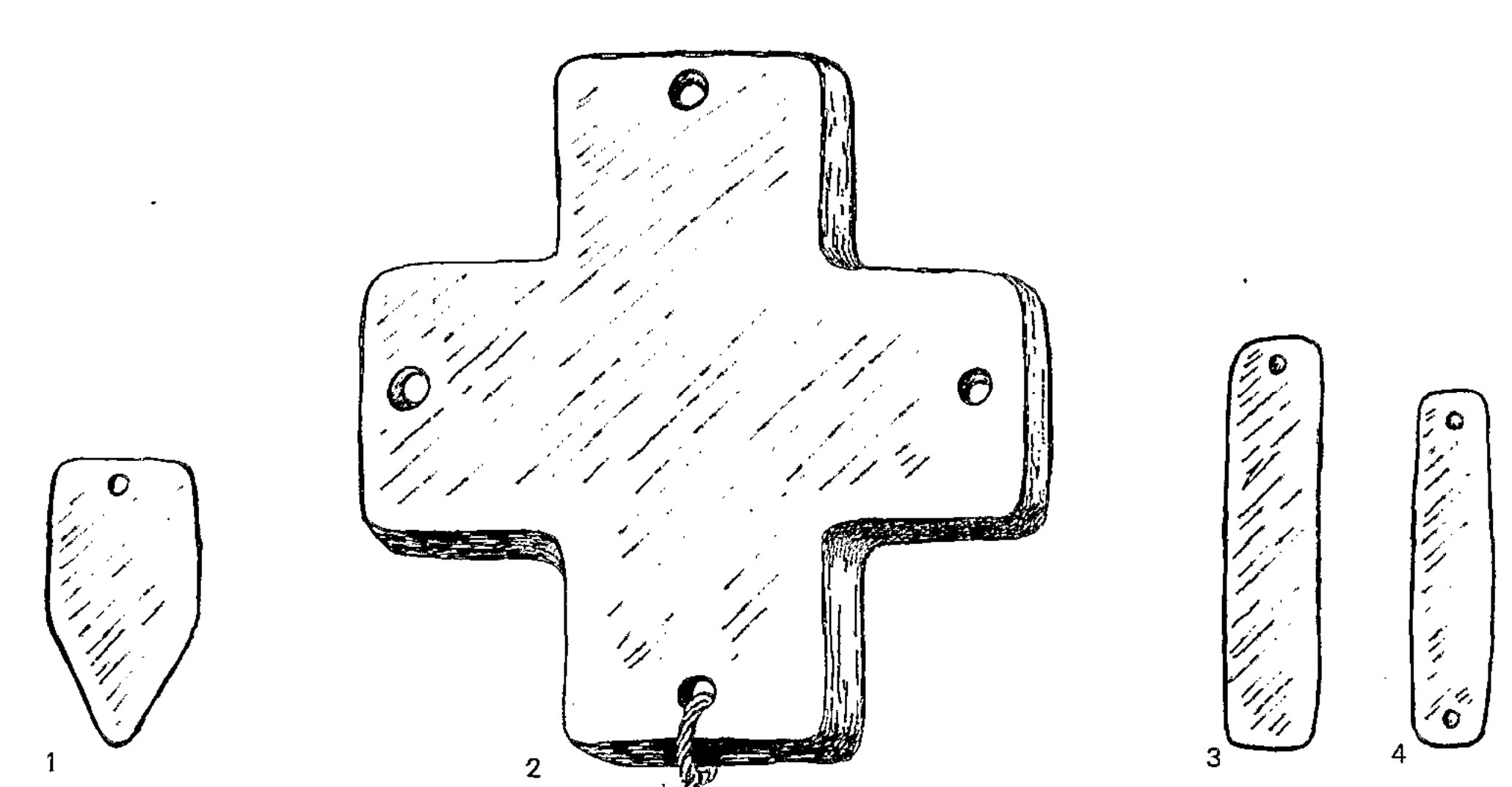
- A rhombe found in a cultivated field in 1960; its form is not described.
- Function
- Found blade blamed for three family deaths until the Kurumani smiths neutralised it by laying their own Kwele Dwo rhombe on it during sacrifices; identified by divination in 1964 as a new manifestation of Patamaso Dwo, around which a new cult and masks were made from 1965.
Source
Guy Le Moal, Les Bobo: nature et fonction des masques, Travaux et Documents de l’ORSTOM 121 (Paris: ORSTOM, 1980), pp. 296-297