No. KUBIK1971-001Africa
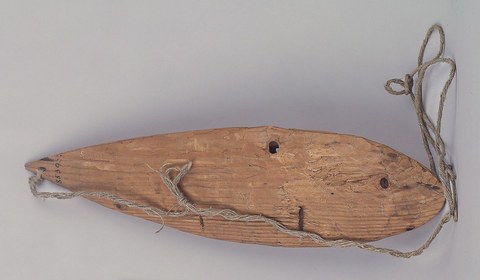
Luchazi ndumba mwelela at the genet-cat rite
Zambia · Kabompo District, North-Western Province, near the Angola border · South-Central Africa
Restricted
- Initiation rite
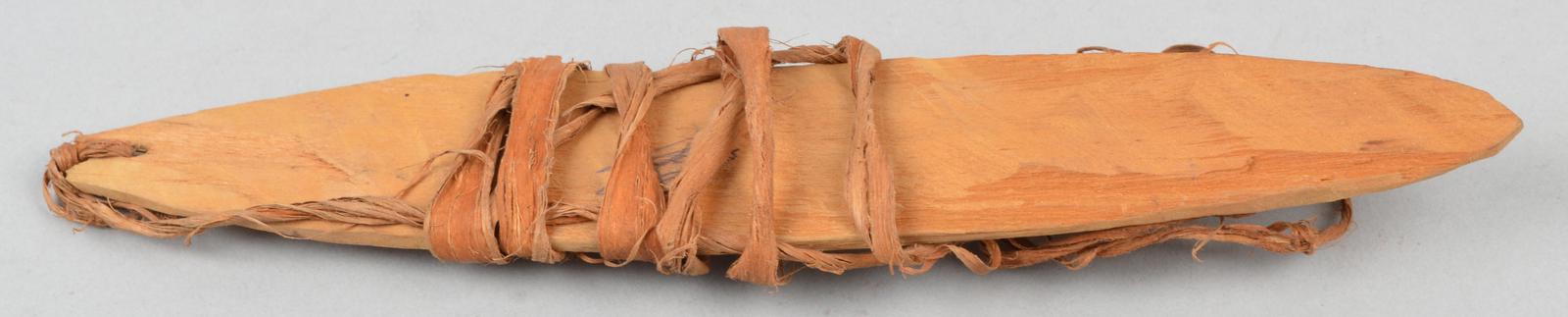
ndumba mwelela
Source term: Schwirrholz; bull-roarer
ndumba mwelela: Luchazi name of the mukanda bullroarer; ndumba = 'lion' across the Upper Zambezi mukanda belt (Chokwe ndumba mwela, Luvale ndumbamwelela, Ndembu ndumba mwila).
Luchazi boys went into the mukanda lodge to be circumcised and schooled in seclusion. When every boy's wound had healed came kulonda ntsimba, 'the climbing of the genet cat': the initiates were nimble as genets again, and the first stage of their schooling was over. The rite had its kukuwa songs, men's and women's choirs and solo singers over clapping sticks, leg rattles and a struck idiophone, and above them roared the ndumba mwelela, the bullroarer whose name calls up the lion. Its strange voice was meant to frighten the secluded boys.
Particulars
- Object
- Bullroarer sounded in the mukanda lodge; its construction is not described.
- Function
- Sounded with the kukuwa songs at kulonda ntsimba, 'the climbing of the genet cat', the mukanda rite held when the circumcised boys' wounds have healed and marking the end of their first stage of seclusion; its strange sound frightens the secluded initiates.
Discussed in one essay
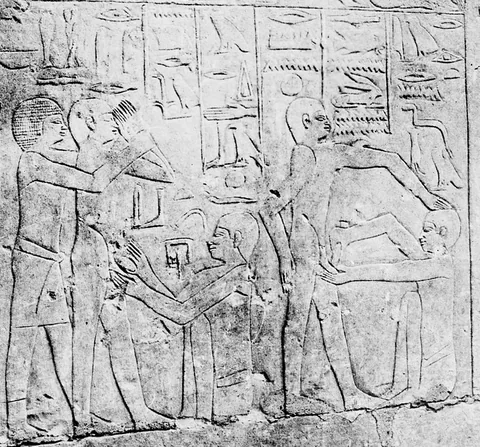 The Bridegroom of Blood
Sources
- Gerhard Kubik, field recording 'Kukuwa: songs in the mukanda at the celebration of Kulonda ntsimba', Luchazi, Zambia, 10 September 1971 (Phonogrammarchiv, Vienna). View · archived
- Gerhard Kubik, Theory of African Music (Chicago: University of Chicago Press, 2010). View · archived
- In the Presence of Spirits: African Art from the National Museum of Ethnology, Lisbon (2000). View
Nearby in the atlas
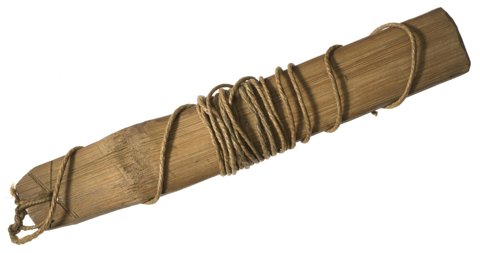 Luvale ndumbamwelela, the ancestor before MukandaZambia · Solochi Village, Chavuma / former Zambezi District, North-Western Province · Restricted
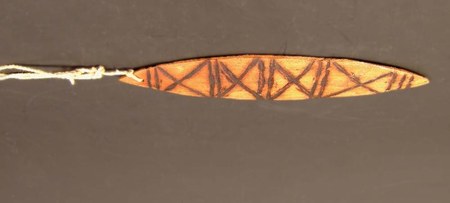 Ndumba mwila, the fish-shaped monsterZambia · Wukengi Farm / Nyaluhana vicinage, Mwinilunga District, North-Western Province · Restricted
- Lala (cimwimwi), ChibaleZambia · Chibale chiefdom, southwest Serenje District, Central Province · Sacred / spirit
 LambaZambia · Copperbelt / Lambaland, Zambia-Katanga border · Play / practical
 Making the lion roar on the Barotse plainZambia · Upper Zambezi, Barotseland (Western Province) · Play / practical
 Mbunda ndumba, the ancestor at nightZambia / Angola · Mbunda country, upper Zambezi (western Zambia and eastern Angola) · Restricted