ZERRIES1942-003 - ethnographic attestation
Konso owubata, a rite forgotten
Konso highlands - southern Ethiopia - Africa
Play / practical
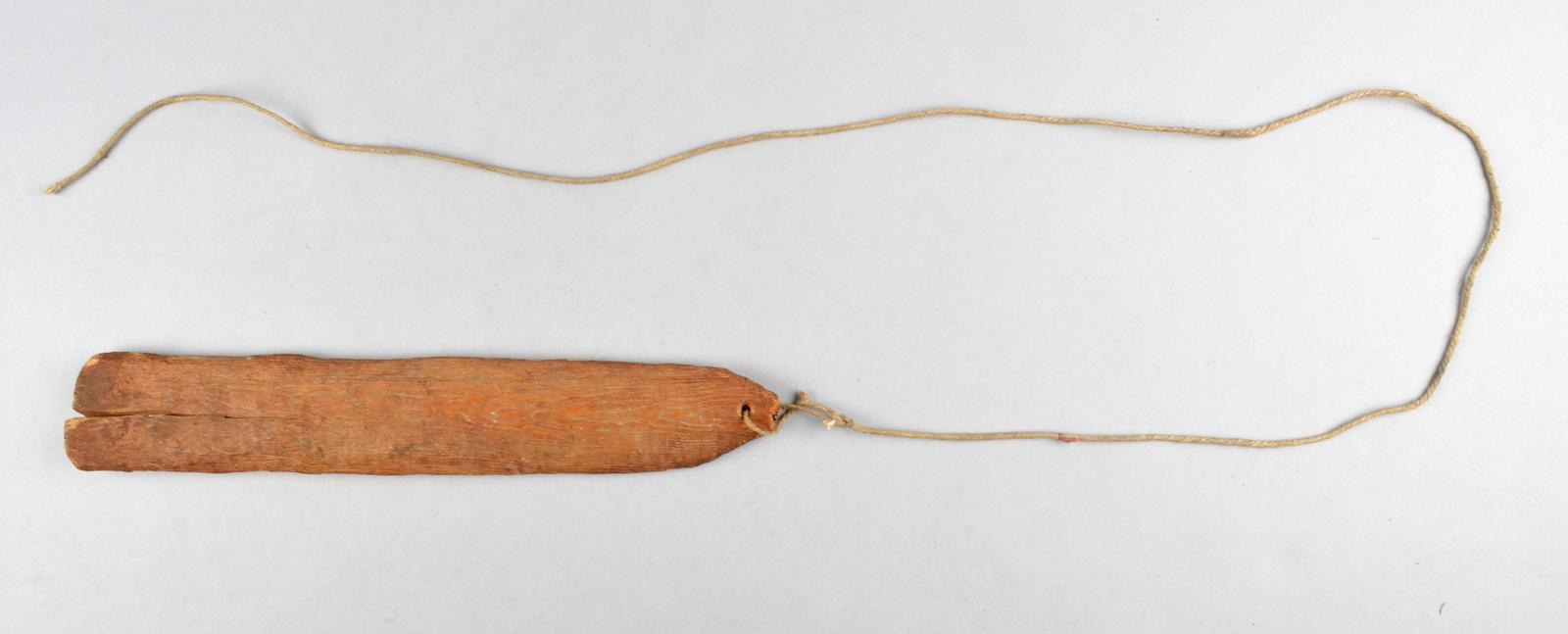
owubata; Owuwubato
Source term: Schwirrholz
owubata (Nowack 1954) / Owuwubato (Zerries 1942): the Konso name for the bullroarer; no literal gloss recorded.
By the 1930s the Konso bullroarer, the owubata, had outlived its rite. Whatever the whirled board had once meant in cult was forgotten; it survived only as a sound, counted with the gallaga flutes and the kehaita, a kind of guitar, among the ordinary instruments of a people who wall their towns in dry stone on the hilltops of southern Ethiopia and terrace whole hillsides below.
Es heißt in der Sprache der Konso Owuwubato. Seine kultische Bedeutung ist hier verlorengegangen.
In the Konso language it is called Owuwubato. Its cult significance has been lost here.
Zerries, Das Schwirrholz (1942), p. 31
- Object
- Bullroarer (Schwirrholz), a board whirled on a cord; no dimensions or figure published.
- Function
- Kept as a sound instrument beside flutes and a guitar-like lute; its cult meaning had been lost by 1934-35.
- Source
- Otto Zerries, Das Schwirrholz; Untersuchung über die Verbreitung und Bedeutung der Schwirren im Kult (Stuttgart: Strecker & Schröder, 1942), p. 31, citing Wohlenberg in Ad. E. Jensen, Im Lande des Gada (Stuttgart, 1936), pp. 178, 213, 402; Ernst Nowack, Land und Volk der Konso (Süd-Äthiopien), Bonner Geographische Abhandlungen 14 (Bonn, 1954), p. 52
- Source location
Page references
Zerries 1942:31; Nowack 1954:52; ZfE 70 (1938):275
- Source confidence
- medium
- Location note
- Karat (Bakawle), administrative centre of the Konso highlands, as a people anchor; no village or findspot recorded. Kept separate from the Gato anchor of JENSEN1936-002 (5.54, 37.42).
Regions: Africa
- Toy / secular survival