No. NODJITOLABAYE2019-001Africa
Sar nguebadge, the chief of the dead
Chad · Kingdom of Bédaya, Mandoul, southern Chad · Africa
Restricted
- Spirit voice
- Initiation rite
- Death and rebirth
- Forbidden to women
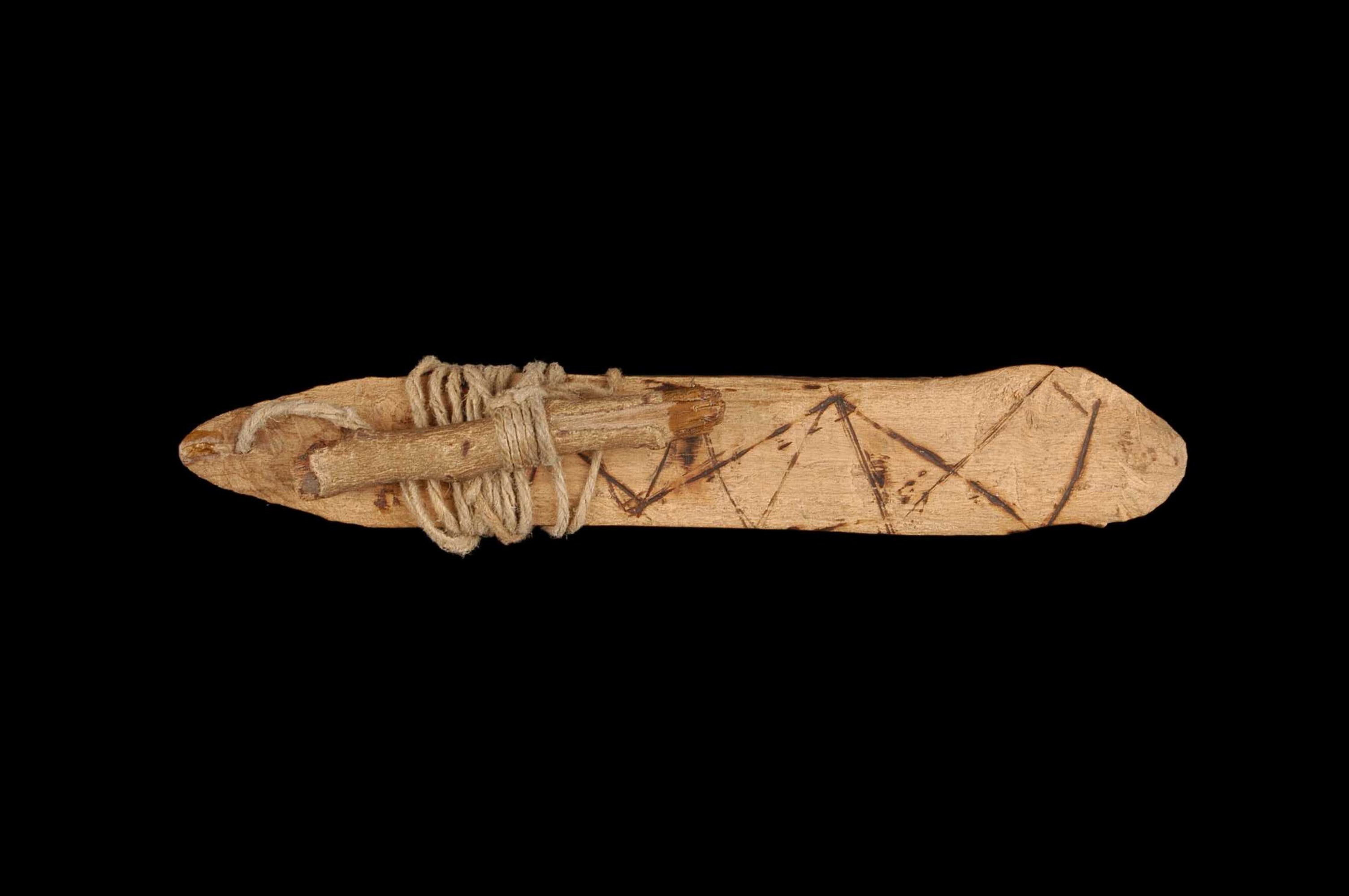
nguebadge
Source term: rhombe
nguebadge: the bullroarer or its voice, called “chief of the dead” and “voice of the ancestors”.
Through the whole of the Sar initiation a voice sounds that women and children must never meet. It is called the chief of the dead, or the voice of the ancestors, and it comes from a small wooden board whirled on a cord by the muù, the priests who lead each band of boys and hold every secret of the rite. Their office passes down the lineage, and at its head stands the king of Bédaya himself, the Mbang, so sacred that he may not touch the ground. The boys are “killed”, and once home they must behave so that the women believe the death was real. The Sar say the secret of the initiation came to them from the Mbay.
Le son du rhombe ou le nguebadge, encore appelé « chef des morts » ou « voix des ancêtres » va retentir durant toute l’initiation, fait peur aux femmes et enfants.
The sound of the bullroarer, the nguebadge, also called “chief of the dead” or “voice of the ancestors”, rings out through the whole initiation and frightens women and children.
Nodjitolabaye Kouladoumadji, Annales de l’Université de Moundou 6(1) (2019), p. 342
Particulars
- Object
- A small wooden board tied to a cord and whirled.
- Function
- Held by the muù, the hereditary initiation priests headed by the king, and sounded through the whole of the boys’ initiation as the voice of the ancestors; women and children must not meet it.
Discussed in one essay
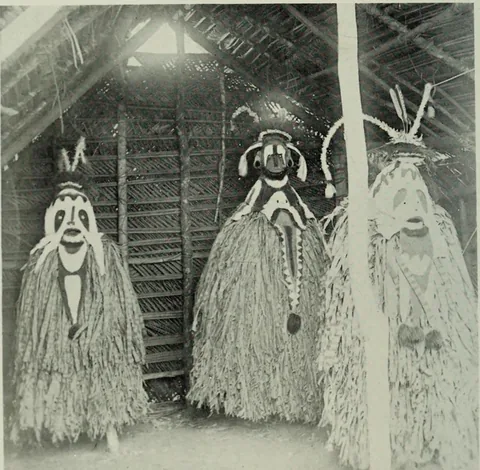 The Relay
Sources
- Nodjitolabaye Kouladoumadji, “Manifestation du sacré en milieu Sara Madjingaye au Tchad,” Annales de l’Université de Moundou, Série A (FLASH) 6(1) (2019), pp. 321-350, at pp. 337-338, 342, 345 View
- W. Konrad, Sara-M’Bai (Zentralafrika, Mittlerer Schari): Herstellen einer Maske für die Knaben-Initiation, Encyclopaedia Cinematographica E 1519 (Göttingen, 1973), p. 6 View · archived
- Fortier, Le couteau de jet sacré (1982), pp. 213-233, at p. 216, via Nodjitolabaye 2019, p. 342
- Jaulin, La mort sara (1967), p. 258, quoted in German in Konrad 1973, p. 6
Nearby in the atlas
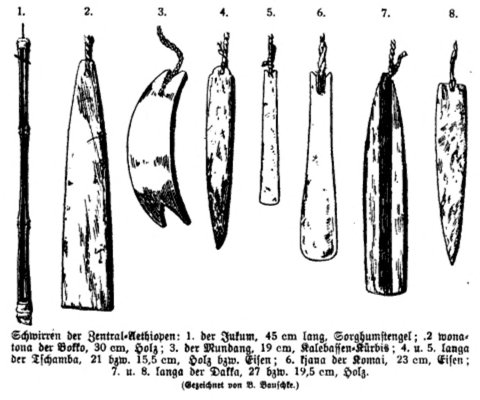 Mbay kinga-muru-mbi, which silences the owlsChad · Mbay (Sara-Mbai) country of Moïssala, Nadili canton, Mandoul, southern Chad · Restricted
 Do fulla, mother of the Musey initiationChad · Mayo-Kebbi Est, Gounou Gaya (Musey country, extending into northern Cameroon) · Restricted
- Laka gandu b(i)jae, iron voices of the harvestChad · Laka country between Lamé (North Cameroon) and the western Logone, Logone Oriental, southwestern Chad · Restricted
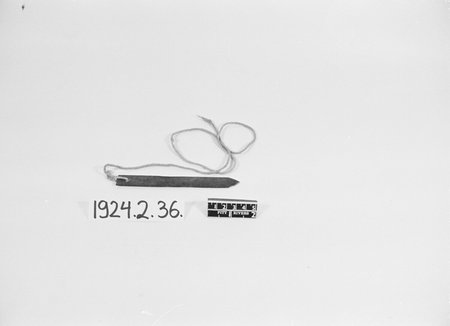 Goula Iro Yontô bullroarer, Boum KabirChad · Boum Kabir, north shore of Lake Iro, southeastern Chad · Restricted
- Mundang roarers, one rite per reignChad · Lere region, SW Chad / N Cameroon · Sacred / spirit
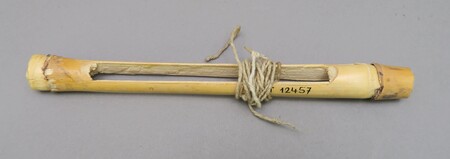 Tupuri (Toupouri)Chad · SW Chad / N Cameroon (Mayo-Kebbi) · Function not recorded