No. EXH2026-023
Gwari (Gbagyi) oath rite
Nigeria · Gbagyi homeland (Niger State · FCT Abuja) · West Africa
Sacred / spirit
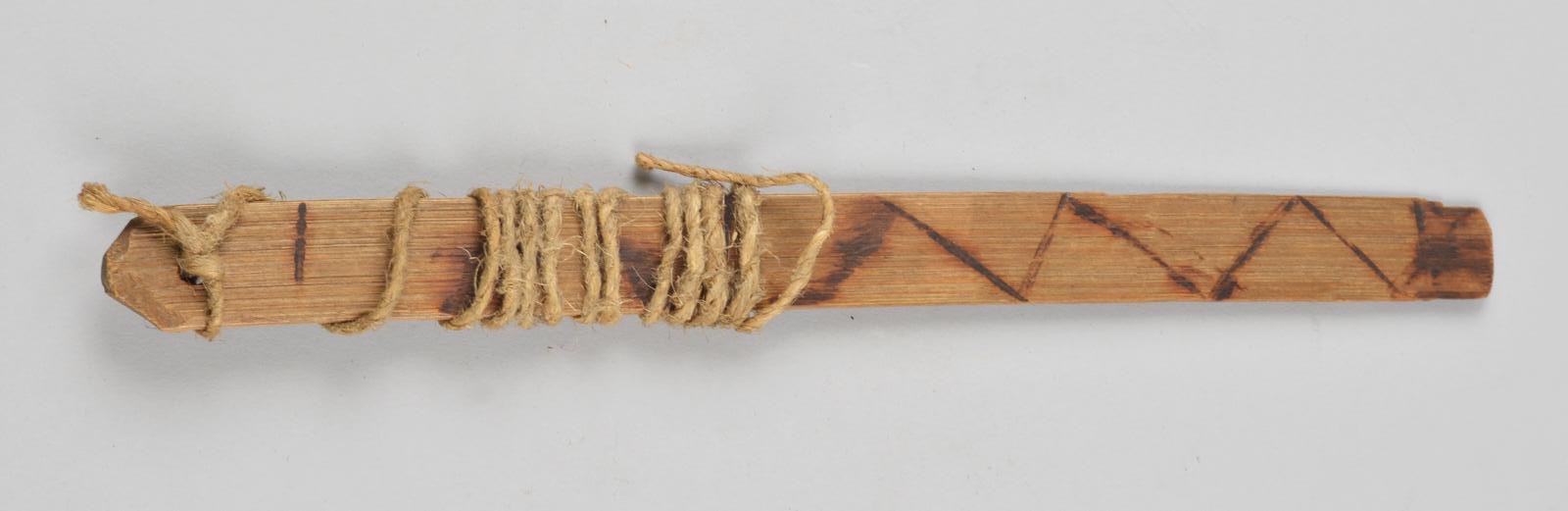
Source term: bull-roarer
Among the Gwari, a judicial oath was a self-imprecation given punishing force. The priest addressed the fetish on the swearer's behalf: "If this man is lying, then may he die, but if not may his life be secure." As he spoke, his attendant whirled a bull-roarer round his head. A sacrifice followed, and its blood was let to run into a hole in the ground; the hole was then covered over with a stone, the act standing, in C. K. Meek's account, for "the covering up" or burial of a perjurer. Elsewhere in northern Nigeria men swore on swords, neolithic axes, blacksmith's pincers and the leaf of the sacred shea-tree; the Gwari swore beneath a whirling bull-roarer.
Even the actual swearing of the oath may be deferred, e.g. it may not be taken at the trial at all but be postponed (as commonly among the Gwari) to the time of the annual festival.
C. K. Meek, The Northern Tribes of Nigeria (1925), vol. 1, p. 264
Particulars
- Object
- Bull-roarer whirled round the head by the priest's attendant.
- Function
- Judicial oath rite: while the priest administers the oath before the fetish, his attendant whirls the bull-roarer round his head; sacrifice follows (Meek).
Source
C. K. Meek, The Northern Tribes of Nigeria (London: Oxford University Press, 1925), vol. 1, pp. 264-265