No. HOBLEY1922-001
Kikuyu kiburuti child-toy survival
Central Kenya · Southern Kikuyu · East Africa
Play / practical
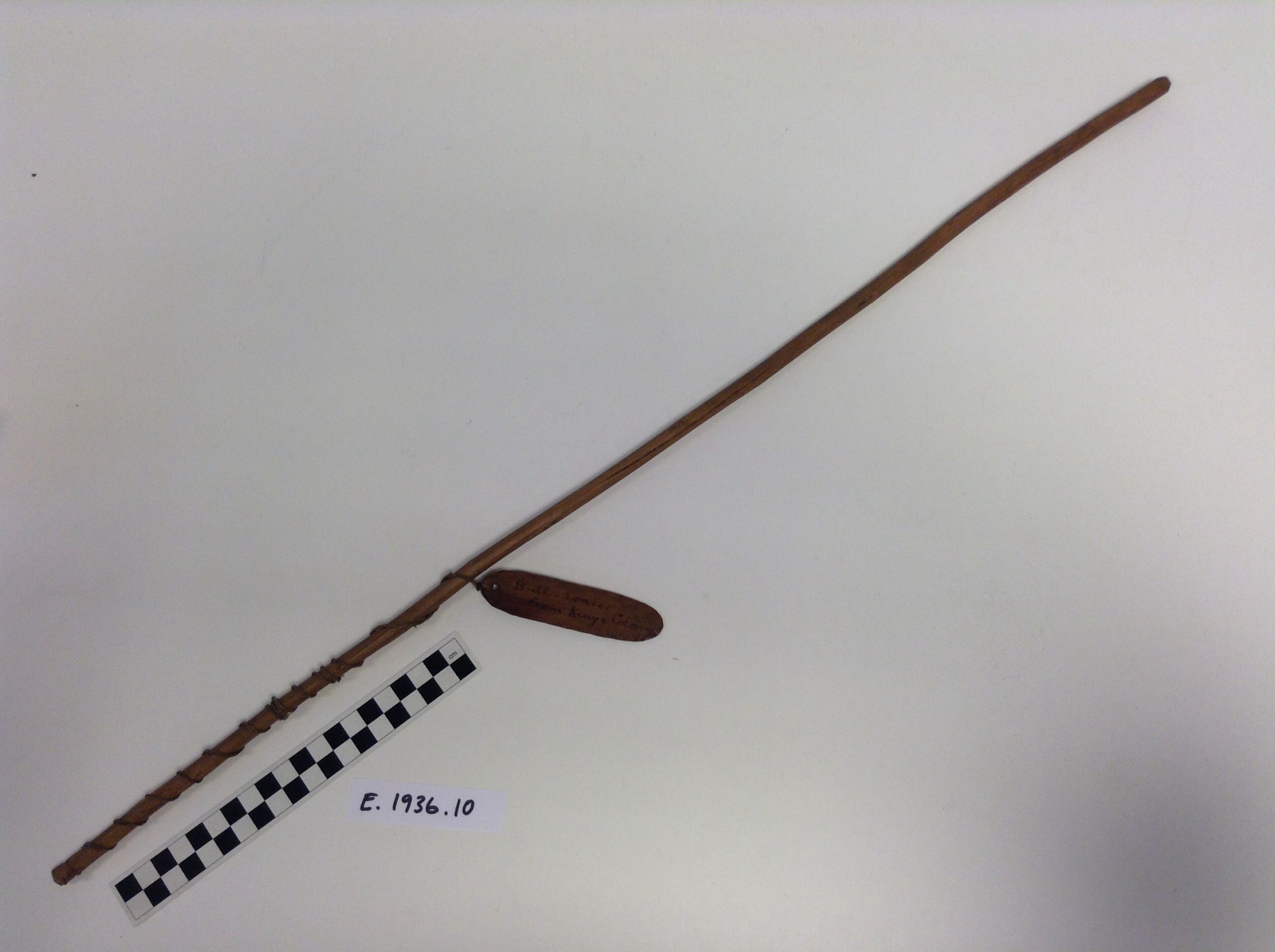
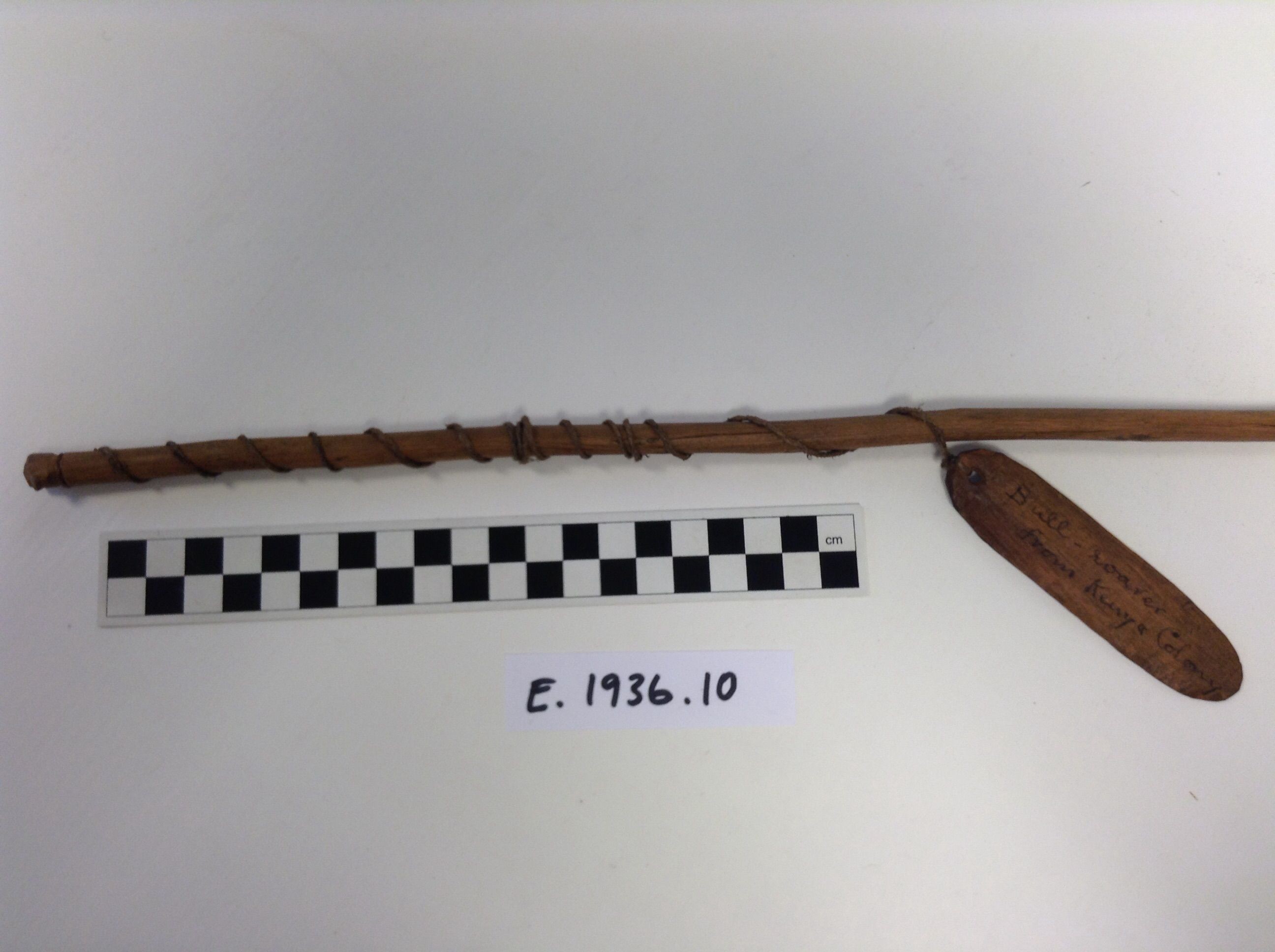
kiburuti
Source term: bull-roarer
kiburuti — the Kikuyu name for the bull-roarer, recorded by Hobley as surviving locally only as a child's toy.
Among the Kikuyu the bull-roarer, the kiburuti, had passed to the children: in Southern Kikuyu, where the old circumcision ceremonial was rapidly dying out, the whirling toy was kept going by boys. One kiburuti, collected in just those decades by the missionary Marion Scott Stevenson, survives in Glasgow with its whirling rig intact — the small blade still tied by its cord to the pole, 'Bull-roarer from Kenya Colony' inked across the wood.
Inquiries were made as to whether the bull-roarer, which is well known in Kikuyu as kiburuti, was used in these ceremonies, but curiously enough it appears to survive only as a child’s toy, whereas in many of the neighbouring tribes it and its first cousin, the friction drum, are regularly used in initiation ceremonial.
Hobley 1922, Bantu Beliefs and Magic, p. 87
Particulars
- Object
- Hobley records the bull-roarer as well known in Kikuyu under the name kiburuti, but says it appears to survive there only as a child's toy.
- Function
- In a circumcision-context discussion, Hobley says the Kikuyu kiburuti is known locally but seems to survive as a child toy, contrasting it with unnamed neighboring tribes where bullroarers and friction drums are used in initiation ceremonial.
Source
Hobley 1922, Bantu Beliefs and Magic, p. 87; Project Gutenberg