LEBEUF1938-001 - ethnographic attestation
Kotoko gẹlẹō of the circumcision feast
Afadé, Logone-et-Chari, Lake Chad plain, Far North Cameroon - Africa
Sacred / spirit
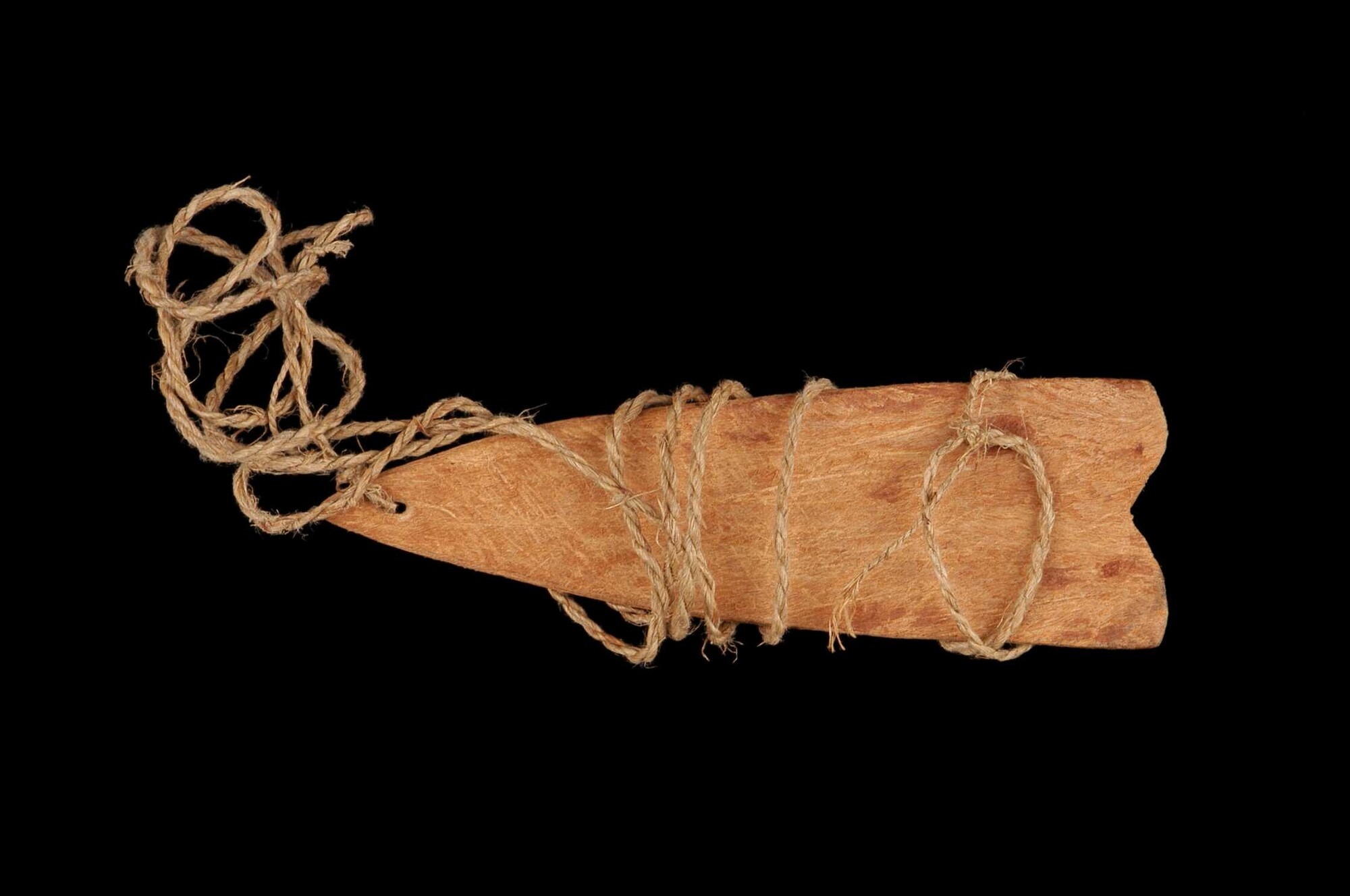
gẹlẹō
Source term: rhombes (gẹlẹō)
gẹlẹō: the Afadé Kotoko name for the bullroarers of the circumcision feast.
At Afadé, south of Lake Chad, boys were circumcised on a Wednesday and spent fifteen days apart, a forked stick tied between their knees. When the wounds had healed they were washed and dressed in trousers for the first time, and the feast began. An ox was killed, and all day the boys, circumcised and uncircumcised together, whirled gẹlẹō cut fresh for the occasion from hɔrr wood. The Kotoko live in walled towns on raised mounds in the old country of the Sao, and they said these were Sao things, left from an ancient rite of fertility.
On mange, on boit toute la journée, les garçons circoncis de l’année et des années précédentes et les non-circoncis font tourner les rhombes (gẹlẹō) fabriqués en cette occasion en bois de hɔrr.
They eat and drink all day long; the boys circumcised this year and in earlier years, and the uncircumcised, whirl the bullroarers (gẹlẹō) made for the occasion from hɔrr wood.
Jean-Paul Lebeuf, Journal de la Société des Africanistes 8 (1938), p. 5
- Object
- Bullroarers cut new for each circumcision feast from hɔrr wood.
- Function
- Whirled all day at the feast that ends the boys’ circumcision retreat, by boys circumcised that year and in earlier years and by uncircumcised boys alike.
- Source
- Jean-Paul Lebeuf, « La circoncision chez les Kotoko dans l’ancien pays Sao », Journal de la Société des Africanistes 8(1) (1938): 1-9, pp. 1, 3-6
- Source location
Page references
pp. 1, 3-6; rhombes p. 5 (n. 3) to p. 6
- Source confidence
- high
- Location note
- Afadé village, Makary, Logone-et-Chari (OSM/Nominatim populated-place point); Lebeuf sets the gẹlẹō passage at Afadé. The ready note’s 12.08, 14.63 lay about 17 km south of the village and is not used.
Regions: Africa · Central Africa
- Initiation rite