No. MOELLER1936-003
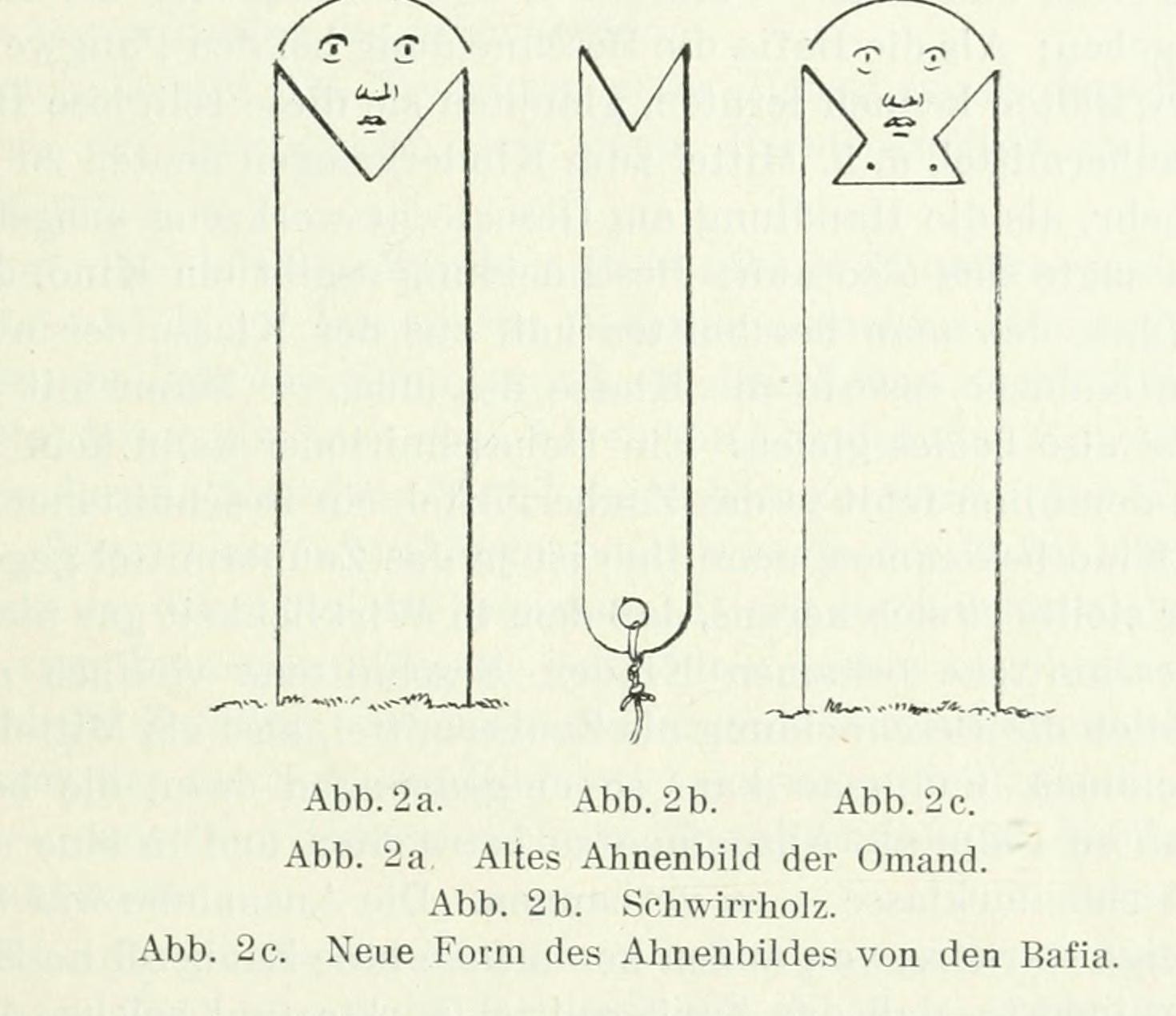
Warega (Lega) tuamba circumcision bullroarer
Democratic Republic of the Congo · Maniema · eastern forest, Province Orientale · Central Africa
Restricted
tuamba
Source term: Tuamba (rhombe)
tuamba: the Warega (Lega) name for the circumcision bullroarer, paired with the whistle kabili -- the same pair the Bakumu and Bamanga use as tuambi + kabili, and cognate with Bapere atuamba.
Among the Lega of the eastern forests, the bullroarer sounded at circumcision was the tuamba, and it went out with a whistle called kabili and a pipe, the lokumu. To the uninitiated it was a spirit; in the hand it was an oblong plank of wood tied to a string, whirled until it roared like an engine. The right to open a circumcision camp, musimbi, was owned by certain families or bought from another clan. To begin one, its holder sent a boy to a neighbouring camp; the boy came home circumcised, carrying a wooden token of transfer, a kazoo and a bullroarer, and only then could the new camp open. Bullroarers sounded too in Bwami, the graded society that ordered Lega life, in the small orchestra of drums, slit drum, kazoos and rattles that accompanied the sung sayings of its moral code, while preceptors danced the beggar, the gambler and the wealthy braggart. "There can be no initiation without harmony," and the harmony had to be kept.
Partout une même crainte superstitieuse leur est attachée.
Everywhere the same superstitious fear attaches to them.
Moeller 1936:552
Particulars
- Object
- A simple oblong plank of wood fixed to the end of a string and whirled.
- Function
- Sounded at the boys' circumcision rite alongside the whistle kabili and the pipe lokumu; one of the three 'spirits of initiation' that initiates were forbidden to discuss with the uninitiated, in a rite whose shared features included seclusion, a ban on speaking to women, and the exclusion of women. A bullroarer travels with the right (musimbi) to open a new circumcision camp, and rhombos play in the Bwami orchestra that accompanies the sung moral aphorisms.
Source
A. Moeller, Les grandes lignes des migrations des Bantous de la Province Orientale du Congo Belge (Mémoires de l'Institut Royal Colonial Belge, Section des Sciences Morales et Politiques, t. VI; Brussels, 1936), pp. 551-552 (table, p. 552); Daniel P. Biebuyck, Sense and Non-Sense in Understanding Lega Culture (author's manuscript, posted 2019), pp. 10–12; Marco Campagnolo (ed.), Catalogo dei manufatti culturali dei popoli del Kivu–Maniema (Parma, 2017), p. 20