No. SUBSAH-022
Kipsigis
Kericho highlands, Kenya · East Africa
Restricted
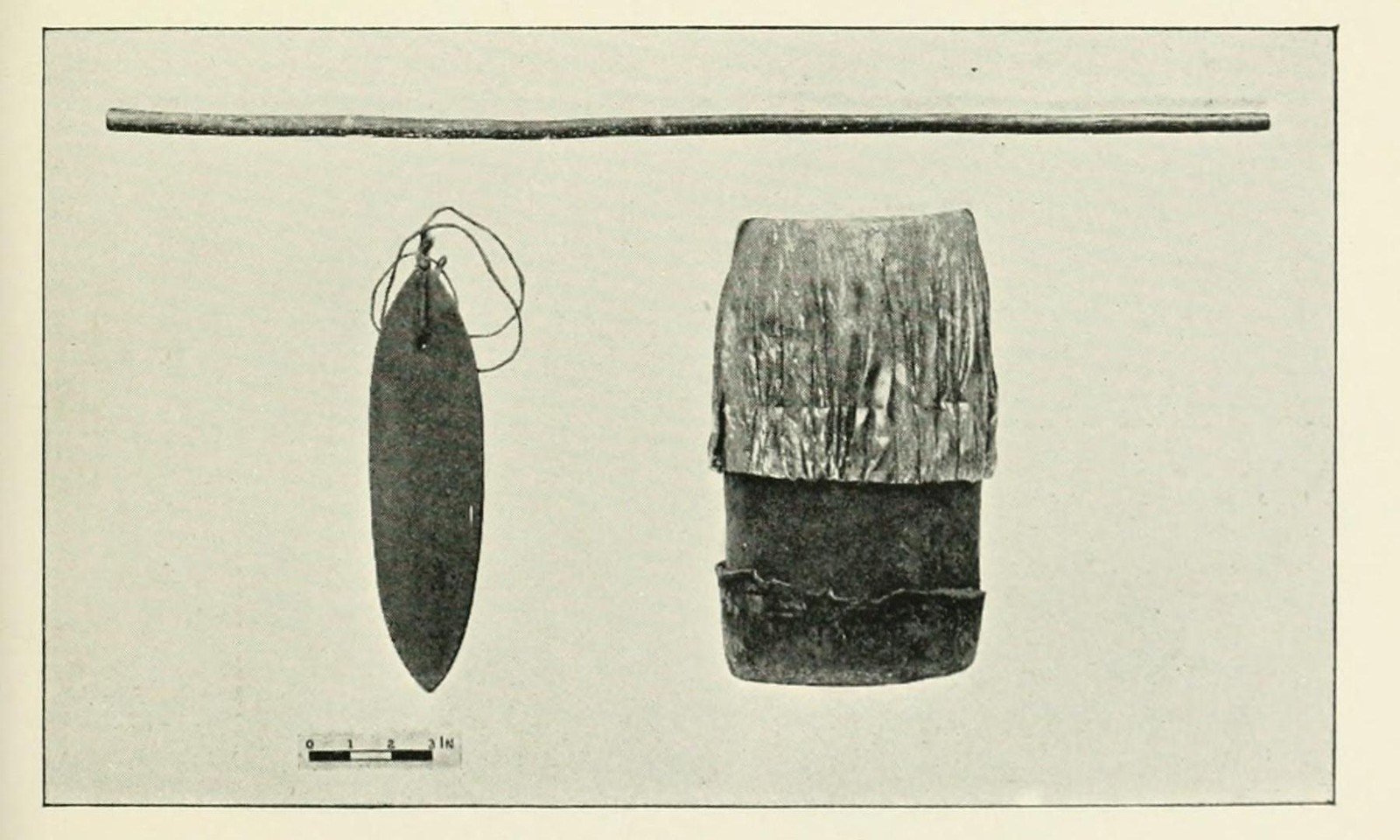
Among the Kipsigis of the Kericho highlands, boys newly circumcised and shut in the seclusion hut, the menjo, are warned that an animal will come to take them in the night, much like Chemosit, the monster invoked to frighten naughty children. They are told they can keep the animal away by singing the kayandaet song. Outside in the dark, young men whirl a bull-roarer near the hut and shake its roof; the sound is the animal. A few of the secluded boys are frightened, but most recognize the trick at once, and one man, out hunting during his seclusion, found the roarer hidden in the bushes not far from the menjo. Herdboys make small ones of their own from a flat seed pod and a length of sisal fiber, though any man who catches a boy at this takes it away immediately. Later the initiands are taught to whirl the bull-roarer themselves.
Some young men make a bull roarer and whirl it near the menjo at night and shake the roof.
Daniels, "Male Initiations" (Kipsigis rites of passage), danielsanthropology.com, ch. 3
Particulars
- Object
- A whirled slat swung near the initiation seclusion hut (menjo); young herdboys' small versions were cut from flat seed pods on sisal-fiber cords.
- Function
- Whirled outside the seclusion hut at night to frighten the boys shut inside, then revealed to the initiands; part of male initiation.
Source
Robert E. Daniels, By Rites a Man (PhD dissertation, University of Chicago, 1970; rev. online ed. 2020), ch. 3, 'Male Initiations'; J. G. Peristiany, The Social Institutions of the Kipsigis (London, 1939)