No. MUS2026-366Africa
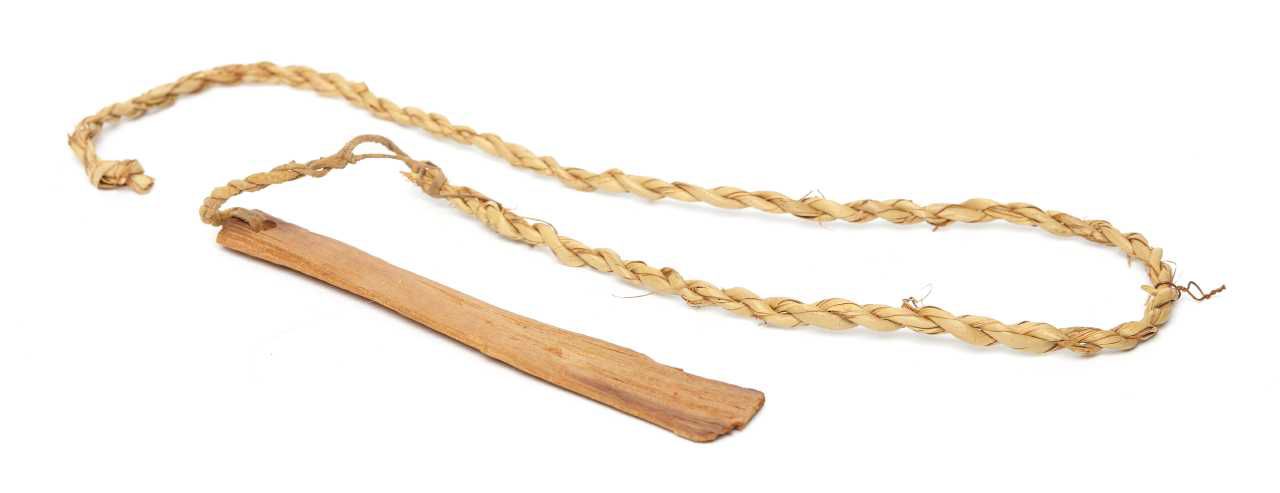
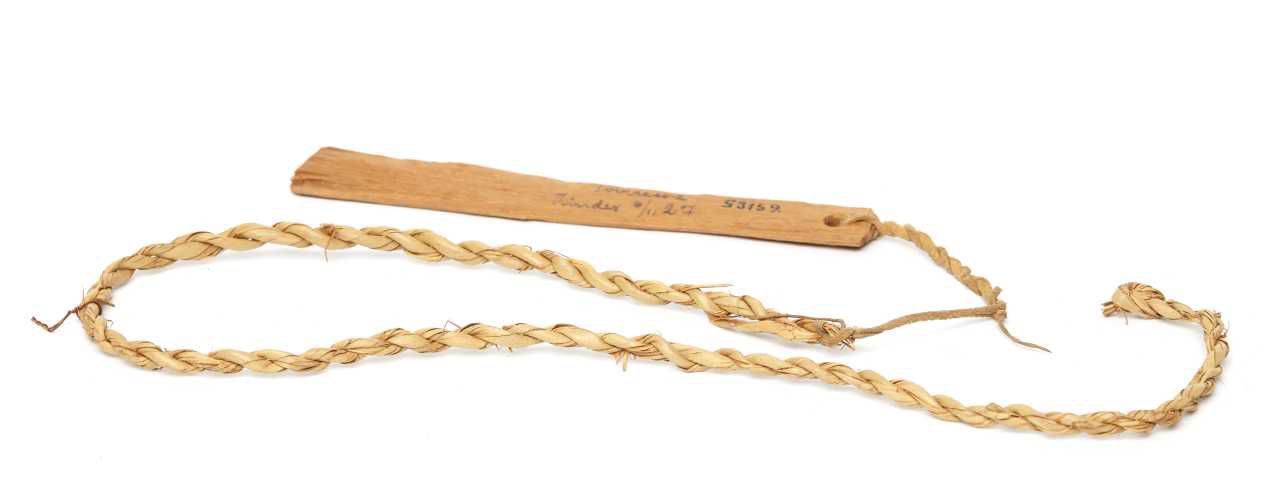
Zinder blade on a plaited leaf cord
Zinder (Damagaram), Niger · West Africa
Function not recorded
Source term: svingtræ
Sixteen centimetres of plain wood, split rough at the butt and bored once at the broad end, knotted by a leather thong to a long cord plaited from strips of leaf. Nothing on it is carved or coloured; it is finished only far enough to bite the air. It left Zinder, seat of the old Hausa sultanate of Damagaram, with Ole Olufsen’s Niger expedition, the date 9 November 1927 written on its back. Elsewhere in Hausaland bullroarers called in the hunting dogs at Katsina and were boys’ playthings at Daura, where the spirit Uwar-Dawa answered the old men at sowing time and no bullroarer was allowed to speak for her.
svingtræ
swing-wood: bullroarer
Nationalmuseet, object 75984 (G.3159)
Particulars
- Object
- Plain flat wooden slat, 16.5 × 3.6 × 0.3 cm, uncarved and unpainted, split rough at the butt and bored once at the broad end; a short leather thong ties it to a long cord plaited from strips of leaf.
Source
Nationalmuseet, Etnografisk Samling (Copenhagen), inv. G.3159, object 75984; Ole Olufsen's Niger Expedition, 1927–1928