No. SUBSAH-037
Mbuti (BaMbuti), Ituri Forest
Democratic Republic of the Congo · Ituri Forest, northeastern Congo (Ituri Province), DRC · Central Africa
Restricted
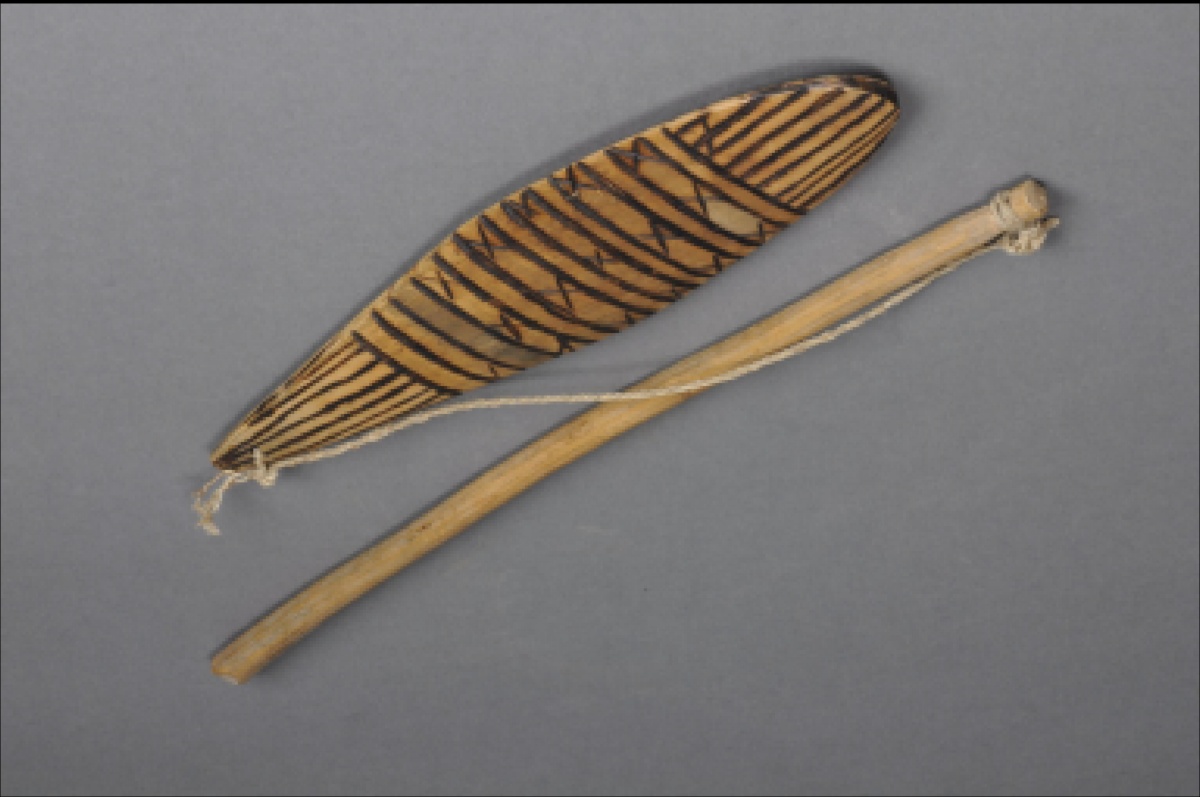
In the Ituri Forest, Colin Turnbull watched a bullroarer roar through the nkumbi, the boys' circumcision rite of the village farmers to whom the Mbuti send their sons: its sound 'was meant to be the voice of a forest demon, and the boys had to show due respect and terror when they heard it.' The terror was performance. Each night, when the village instructors left, the boys leapt from their beds to eat forbidden foods with their fathers — one boy 'jumped onto a log and swung his arms around in imitation of someone swinging a bull-roarer, which of course he should never have seen.' The Mbuti's own religion had no demons in it. The forest 'is a father and mother to us,' and when someone dies the men wake it by singing; the voice of their own molimo trumpet — once, to Turnbull's astonishment, a length of metal drainpipe — mattered only for its sound, and its songs said simply that the forest is good.
The villagers not only forbade the candidates to get wet, even by washing, but they smeared them constantly with white clay, from head to foot, as a sign of their death as children.
Turnbull, The Forest People (1961), p. 223
Particulars
- Object
- A flat slat of wood whirled on the end of a single cord to produce a strange whirring roar.
- Function
- Whirled during the nkumbi boys' circumcision-initiation as the voice of a forest demon, before which the initiates must show respect and terror.
Source
Colin M. Turnbull, The Forest People (New York: Simon & Schuster, 1961), pp. 21, 222-223, 227