No. SUBSAH-018
Mundang (Moundang)
Lere region, SW Chad · N Cameroon · Central Africa
Sacred / spirit
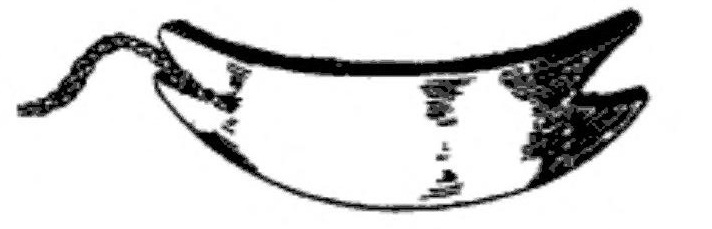
ban-mafali / Mafalli / Falliku / Mafalli-serre
Moundang name of the clan de la Rhombe (bullroarer clan), a totemic founding lineage of the Lere kingdom; a clan/emblem name, not a physical bullroarer.
Etymology. The Moundang name of the clan de la Rhombe, the bullroarer clan, one of the founding lineages settled at Léré. The recurring ban- in the parallel names ban-se (Buffalo), ban-ju (Birds) and ban-bale (Lions) reads as "clan of X."
After a Mundang king's death, older men sounded three bullroarer registers during circumcision: iron Mafalli, notched wooden Falliku, and sorghum-stem Mafalli-serre. The instrument also entered the kingdom's social body as ban-mafali, the bullroarer clan, named beside the Buffalo, Bird, and Lion lineages already at Lere when the king Damba came. Almost everywhere else the bullroarer speaks for a clan; here, uniquely, it names one.
Einige haben sich aus Furcht vor dem heiligen Tosen der Schwirren frühere Gelegenheiten entgehen lassen und so kommt es, daß neben jungen Burschen Männer auftreten, die schon Kinder haben.
Some, for fear of the holy roaring of the bullroarers, have let earlier occasions slip by, and so it comes about that men who already have children turn up beside the young lads.
Leo Frobenius, Dichten und Denken im Sudan (1925), p. 78
Particulars
- Object
- Three kinds: iron Mafalli, the mighty whirrers; wooden Falliku notched at the front, for the middle voices; and Mafalli-serre, whirring tubes cut from sorghum stalk, for the high notes.
- Function
- Older men swung the three forms during circumcision after a king's death; the bullroarer also endures as the emblem-name of a founding clan.
Source
Alfred Adler, La mort est le masque du roi (Paris: Payot, 1982); Leo Frobenius, Dichten und Denken im Sudan (1925), pp. 78-81