No. SUBSAH-007
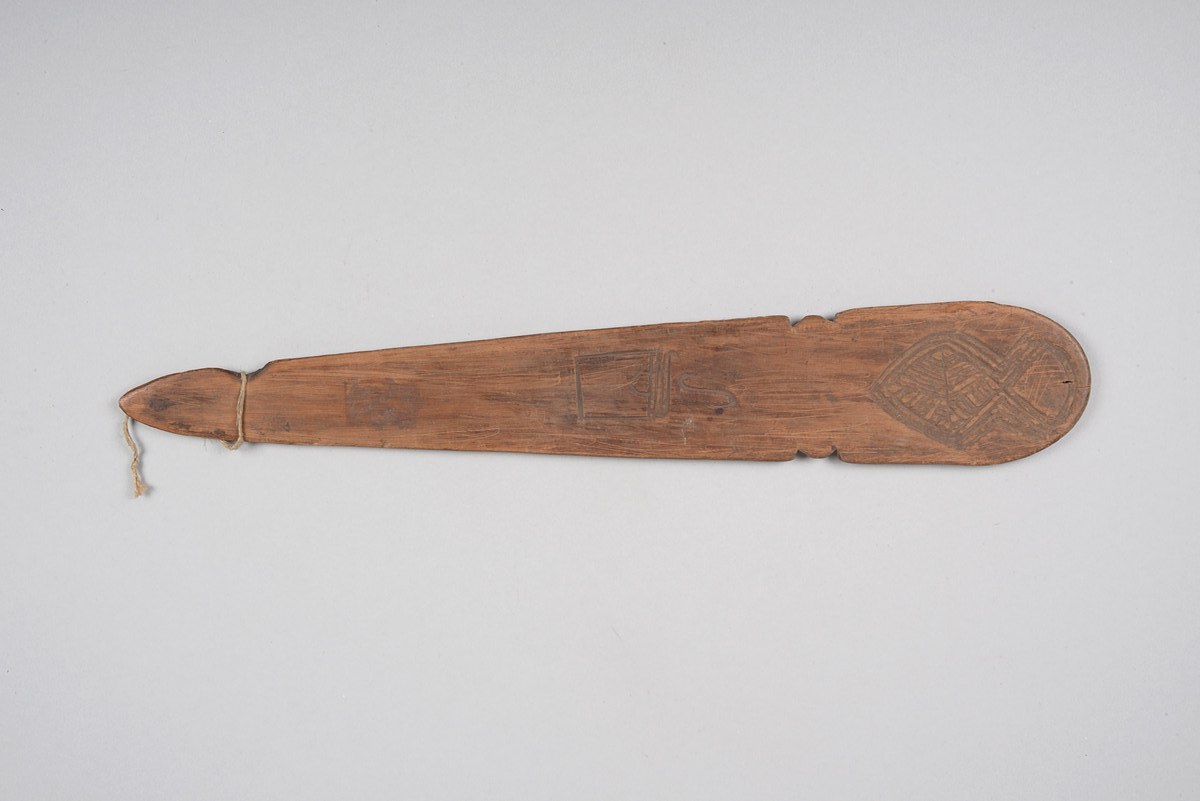
Basa roarers of Ko and the war masks
Southern Cameroon · Basaa Centre-Littoral region · Central Africa
Sacred / spirit
mbam um
Source term: Bull roarer of wood with fibre thongs (mbam um)
mbam um: the Basa (Basaa) name for these bullroarers. Um is a Basa institution associated with judicial authority and funerary rites — a confraternity within the Mbog complex.
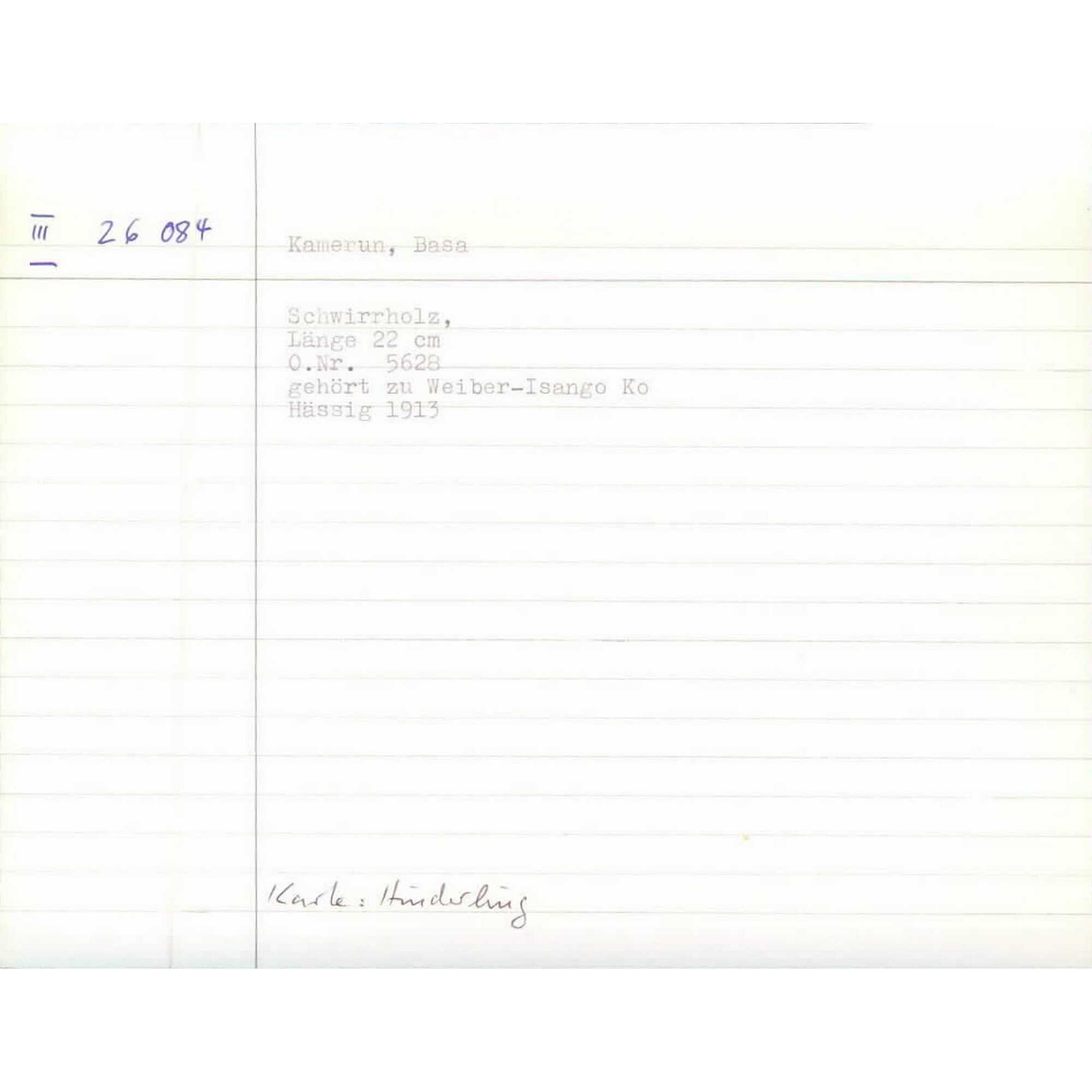
Ko was a women’s association whose leader served as midwife. Its medicines treated women’s illnesses and sought the blessing of children; men’s abdominal ailments were treated too. Its greatest sacred thing was the inside of a termite mound, a sign of fertility. A small, 22-centimetre blade belonged to Ko. Another Basa roarer was used by medicine men at mask dances before war, to confuse the enemy. At Harvard, two more Basa roarers from George Schwab's collection keep only their name, mbam um.
Particulars
- Object
- Two Basa mbam um roarers at Harvard are carved wooden sticks with twisted fibre cords; Sarasin's 1915 Mawn inventory from Sakbayeme lists a small corded bullroarer.
- Function
- One Basa blade served medicine men at mask dances before war to confuse opponents; another belonged to the women’s Ko association. The separate mbam um specimens have no described use.
Sources
- Fritz Sarasin, 'Bericht über die Sammlung für Völkerkunde des Basler Museums für das Jahr 1914', Verhandlungen der Naturforschenden Gesellschaft in Basel 26 (1915), pp. 250–251 View · archived
- Museum der Kulturen Basel
- Peabody Museum of Archaeology and Ethnology, Harvard, 35-31-50/1176 (George W. Schwab collection, 1934–1935) View