No. MINE2026-085
Luvale ndumbamwelela Mukanda bullroarer, Solochi Village
Zambia · Solochi Village, Chavuma · former Zambezi District, North-Western Province · South-Central Africa
Restricted
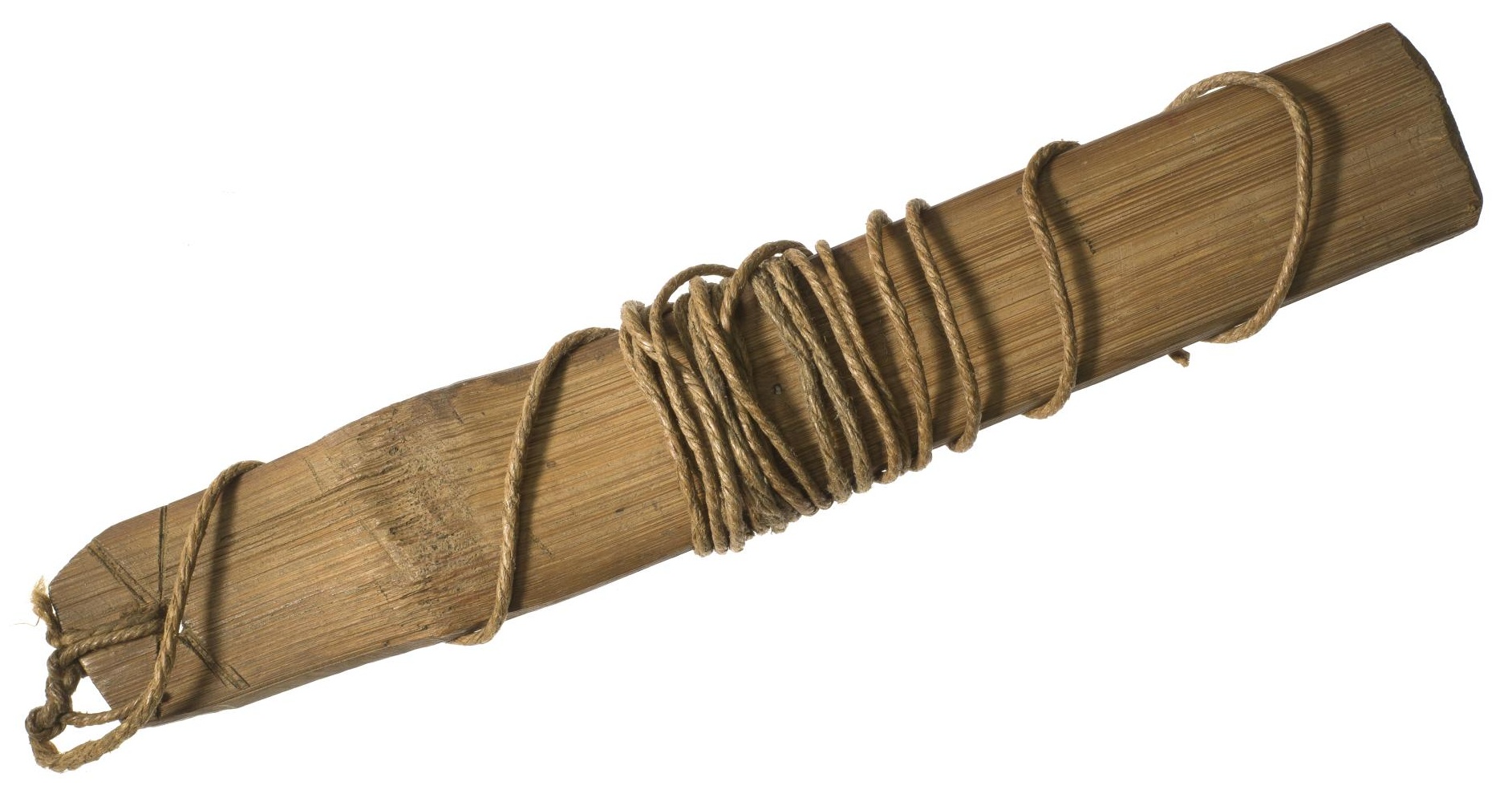
ndumbamwelela
Source term: bullroarer
ndumbamwelela: Luvale bullroarer name; plural vandumbamwelela. The translated notes gloss ndumba as “lion.”
At Solochi Village in August 1983, two ndumbamwelela broke into the women’s Mukanda dance with a growl said to imitate a lion. The dancers stopped, cheered, and answered with shrill cries: the sound announced that the boys’ initiation camp was about to begin. How the roar was made remained one of Mukanda’s carefully guarded secrets.
This is the sound of a 'bullroarer,' called ndumbamwelela. Ndumba means lion, and the instrument is said to imitate a lion's growl. It announces to the villagers that mukanda will soon begin.
Ken'ichi Tsukada, Zambia: The Songs of Mukanda, track 1 notes.
Particulars
- Object
- Bullroarer recorded sounding in a pair; construction not documented.
- Function
- Announces to villagers that Mukanda will soon begin; the notes compare its sound to a lion's growl.
Source
Ken'ichi Tsukada, Zambia: The Songs of Mukanda (Multicultural Media MCM 3008), booklet p. 7, track 1 (recorded Solochi Village, 8 August 1983)