No. GOLDSCHMIDT1976-001Africa
Sebei lion, seized in the dark
Uganda · Mount Elgon, northern escarpment (Kapchorwa · Kween · Bukwo) · East Africa
Restricted
- Spirit voice
- Initiation rite
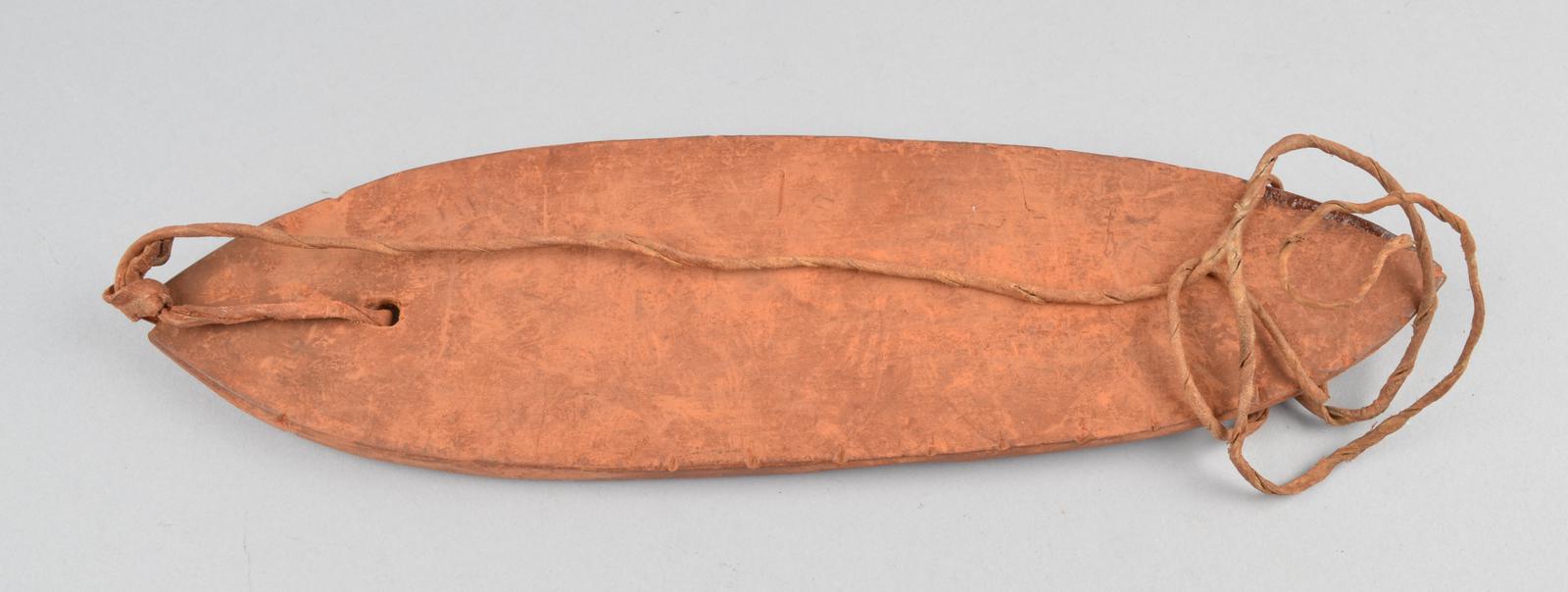
Source term: bull-roarer; "lion"
'lion': the Sebei name for the bull-roarer revealed at the boys' coming-out; the girls' counterpart is the 'leopard' (melilo).
All through their seclusion the newly circumcised Sebei boys heard the lion roaring. At the secret night rite that opened their coming-out, they were taken into the bush, away from the houses, to meet it. While older men whirled the bull-roarer, sponsors hid in the dark with a lion made of monkey skin; each boy, alone, had to take hold of the beast and was scratched with bent thorns for trying. Only then was he shown the roaring board, and made to twirl it himself until he was worn out. If the blade flew off its string, disaster would follow. The girls, shut in a closed house, met a leopard instead.
The lion is a bull-roarer, which makes the sound the initiates have heard in the past, but the source of which they did not know.
Goldschmidt, Culture and Behavior of the Sebei (1976), p. 291
Particulars
- Object
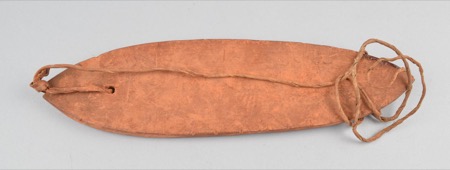
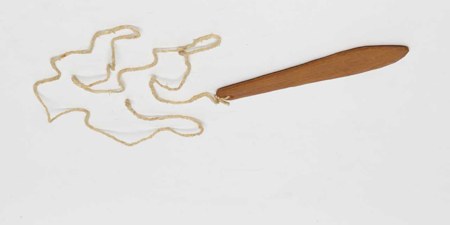
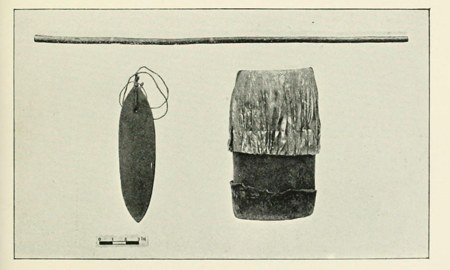
- A flat, blade-like board on a cord that roars when twirled.
- Function
- The roar of the 'lion' that newly circumcised boys hear throughout seclusion, made by older men whirling the bull-roarer. At the secret night rite that opens the coming-out, held in the bush away from the houses, each boy is led alone to face the lion, is scratched with bent thorns when he takes hold of it, and is then shown the bull-roarer and made to twirl it until exhausted.
Discussed in one essay
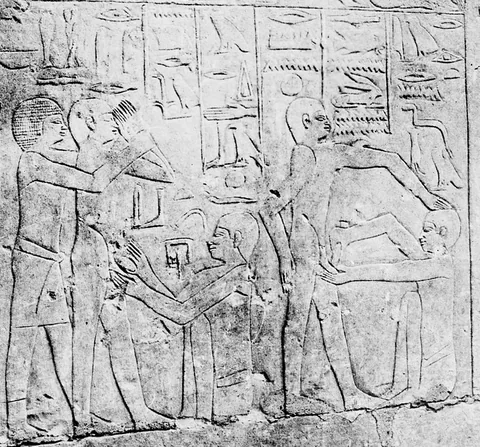 The Bridegroom of Blood
Source
Walter Goldschmidt with Gale Goldschmidt, Culture and Behavior of the Sebei (Berkeley, 1976), pp. 290-291; Walter Goldschmidt, The Sebei: A Study in Adaptation (New York, 1986), 'Hazing'; Jan Jacob de Wolf, 'Circumcision and Initiation in Western Kenya and Eastern Uganda', Anthropos 78 (1983), p. 386; Walter Goldschmidt, The Human Career (Oxford, 1990)
Nearby in the atlas
 Uganda wooden toy bullroarerUganda · Uganda · Play / practical
 Bukusu leopard-voice bullroarerKenya · North Kabras location, Kakamega District / Bungoma–Kakamega Bukusu country, western Kenya · Restricted
 Gusii eng'iti enene, the Big Beast of OutsideKenya · Nyansongo, Kisii highlands, Nyanza Province (now Kisii and Nyamira counties), western Kenya · Restricted
 Kipsigis monster in the menjoKenya · Kericho highlands, Kenya · Restricted
- Marakwet kaptorus beast, the roar round the hutKenya · Marakwet, Cherangani escarpment above the Kerio Valley (Elgeyo-Marakwet County) · Restricted
 Nandi lion, revealed in women's dressKenya · Nandi / British East Africa · Restricted