No. TAUXIER1931-001
Toura Goton, the iron god who speaks
Toura mountains, Biankouma, western Cote d'Ivoire · West Africa
Sacred / spirit
Goton / Godon
Source term: Goton ou Godon
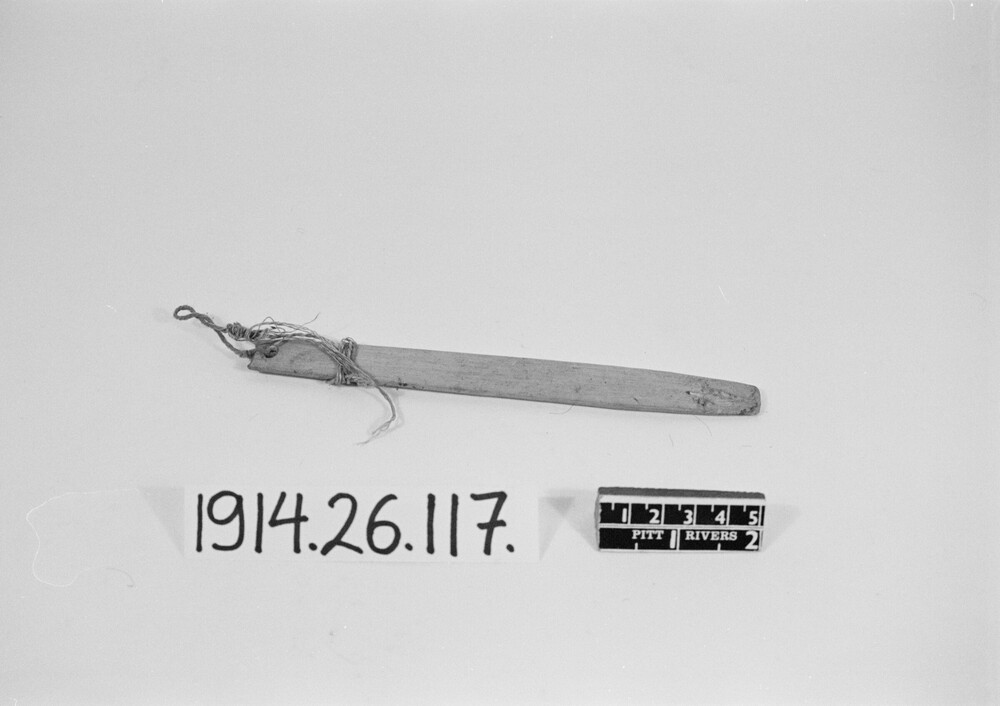
When Goton means to come out, he says so himself: a piece of iron whirled on a cord in the bush, and the fetishers insist it is Goton who speaks. Then he appears - one initiate high on stilts, two dancers on foot beside him - in the last light before dark. Women and children are free to watch. Among the made gods of the Toura that openness is the remarkable thing: their Gue is death for a woman to see, while Goton the stilt-walker performs for everyone.
Ce morceau de fer qu'on fait tourner au bout d'une ficelle est probablement la même chose que le bull-roarer des Australiens, le rhomb sacré, qui existait à l'époque néolithique et qu'on a découvert récemment en divers points de l'Afrique occidentale.
This piece of iron spun at the end of a string is probably the same thing as the bull-roarer of the Australians, the sacred rhomb, which existed in Neolithic times and has lately been found at various points in West Africa.
Louis Tauxier, 'La religion des Touras,' Journal de la Societe des Africanistes 1 (1931), p. 266, n. 1
Particulars
- Object
- A piece of iron whirled at the end of a cord; no dimensions or perforation recorded. It keeps its own hut behind the village, and its keeper bears the title gotonzan.
- Function
- The voice of the divinity Goton, sounded in the bush to announce his own coming-out. The apparition itself is a stilt masquerade: one initiate on stilts with two dancers on foot, out by day, or more exactly in the evening before dark. Women and children may see it, and it does not concern itself with sorcerers, murderers or thieves.
Source
Louis Tauxier, 'La religion des Touras,' Journal de la Societe des Africanistes 1, fasc. 2 (1931): 259-280