No. EXH2026-027
Bafia djé aroumé, mother of the iroumé
Bafia country, middle Mbam, Cameroon · Central Africa
Restricted
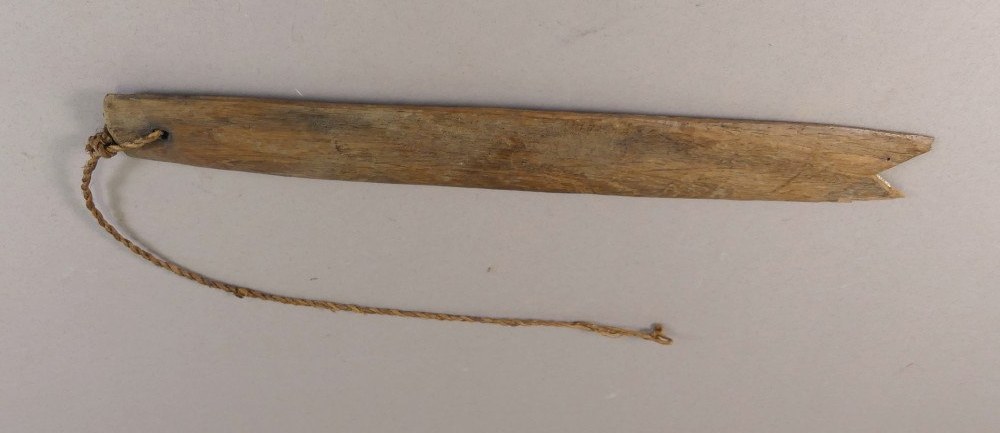
djé aroumé
Source term: Schwirrholz
djé aroumé — 'mother of iroumé': the Bafia name for the wooden rhombes kept in the novices' shelter of the iroumé (Eloumé; Tessmann's elume) confraternity, the chief secret cult of the Bafia and Yambassa.
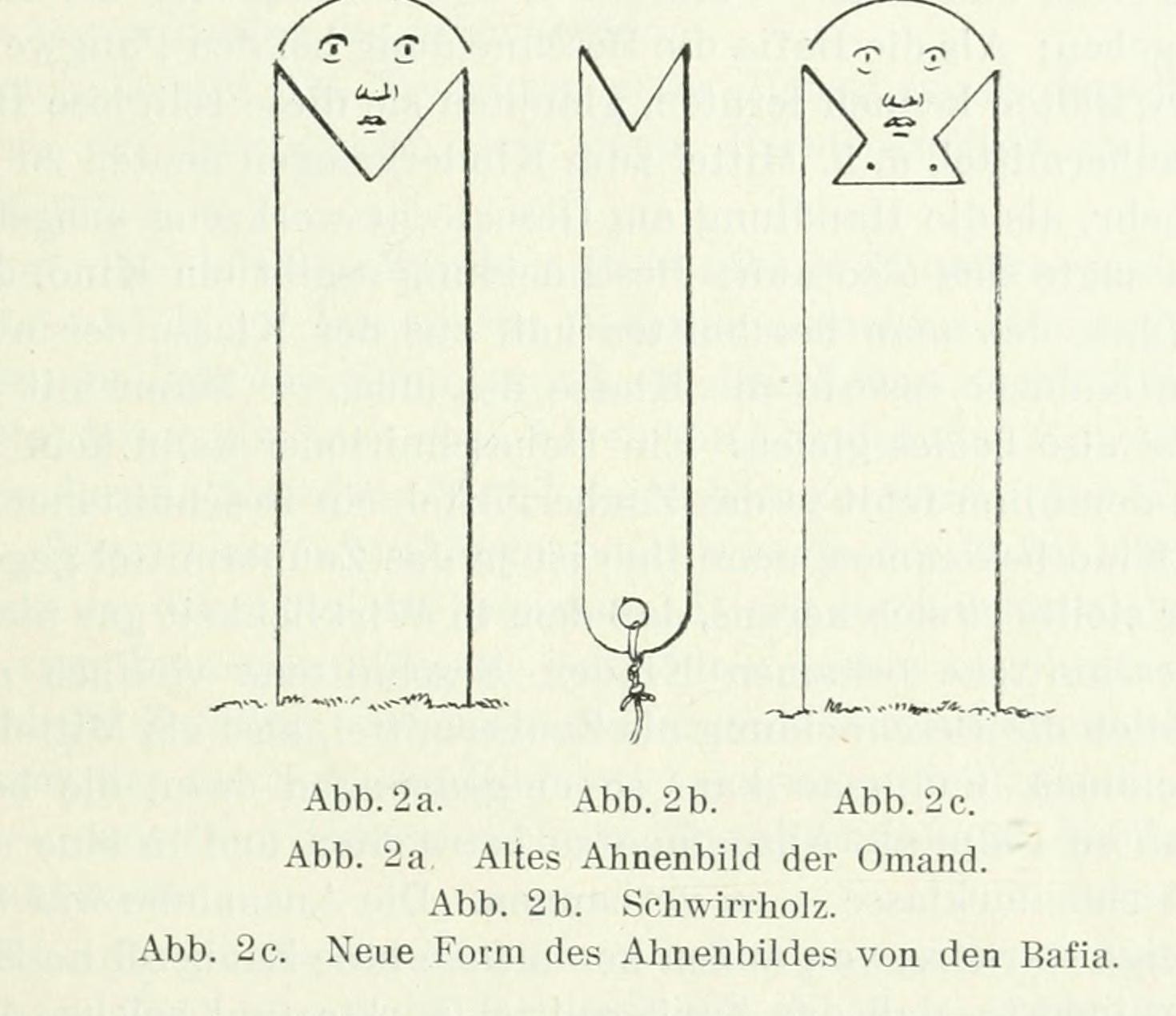
Among the Bafia of the middle Mbam, the wooden roarers were called djé aroumé, "mother of iroumé," and they waited in a palm-leaf shelter where the novices of the iroumé cult were shown its secrets one by one. For each boy a cockerel was killed, and its severed head rubbed across his eyes so that he would see the hidden things; then he was told he would die if he ever revealed them. The whirring wood stood for the ancestor's body, and so its swallow-tail end copied the ancestor figures, the forebear's head imagined between the points. Its companions were carved sticks for the tribal father and mother, mirlitons of human bone whose voice showed the bones returning to life, and a wooden dog, the cult's emblem of sexual intercourse.
Drittens das Schwirrholz. Seinen Ton deute ich ähnlich auch als Wiedergeburtszeichen, insofern das Schwirrholz eigentlich den unsichtbaren Körper des Vorfahren darstellt, der dann wieder bei der Geburt im Kinde auflebt.
Thirdly, the bullroarer. Its tone I likewise interpret as a sign of rebirth, in that the bullroarer actually represents the invisible body of the ancestor, who then lives again at the birth in the child.
Tessmann, "Die Urkulturen der Menschheit und ihre Entwicklung," Zeitschrift für Ethnologie 51 (1919): 144-145
Particulars
- Object
- Swallow-tail-ended blade, the ancestor's head conceived between the tail points.
- Function
- One of the four most sacred, secret implements of the iroumé cult, shown to novices and put into their hands; Tessmann saw in it a further kinship with Australia.