No. HARRIS1938-001
Dakarkari bull-roarer, the Voice of Magirro
Kebbi, north-western Nigeria (Sokoto Province under British administration) · West Africa
Restricted
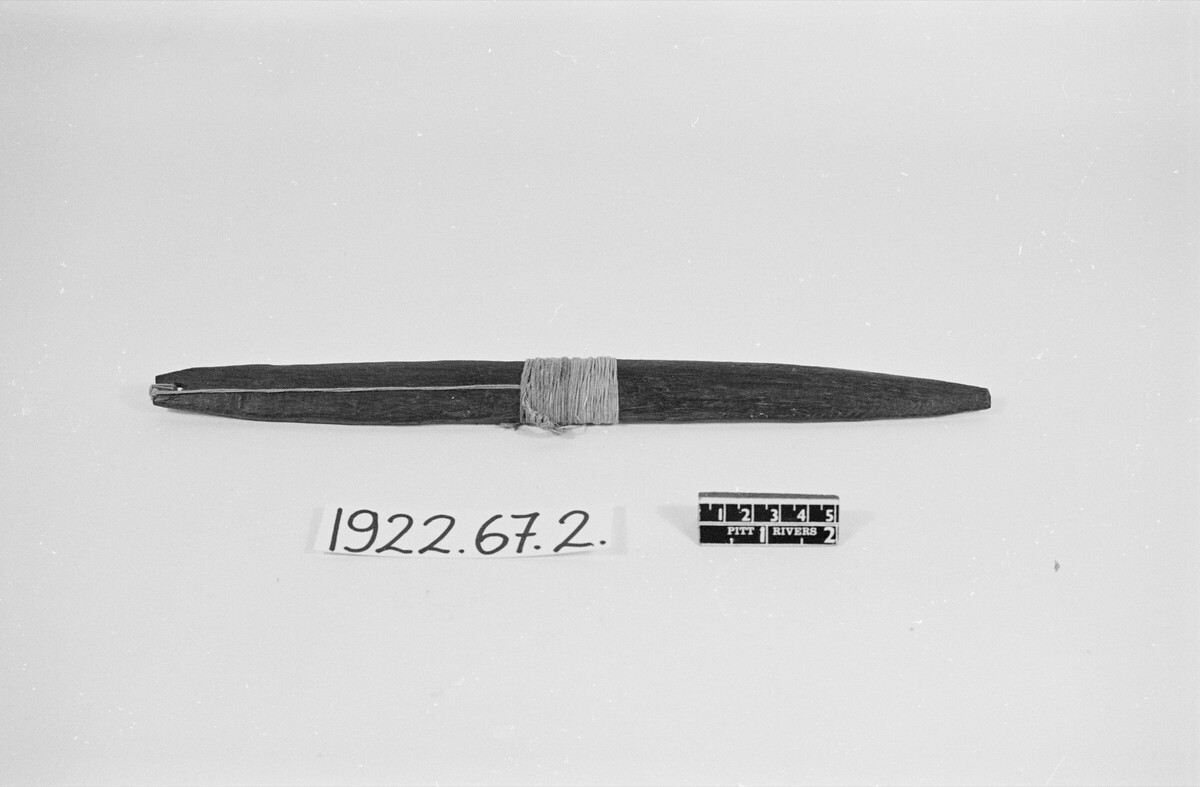
Source term: bull-roarer
Magirro - the being whose voice the bull-roarer is. Sarkin Zaure - the officiant who interprets Magirro's speech to the assembly (a Hausa title in use among the Dakarkari).
Among the Dakarkari of Kebbi the drumming stopped when the bull-roarer started. Its sound came from inside, and it was the voice of Magirro. At funerals the priest, chief and elders walked from Magirro’s house to the open grave, drums and the droning blade accompanying them; they circled the grave and returned. Magirro honored important men, especially those who had given dogs to his priest. The priest’s wife alone among women received this funeral honor. Women of the household still had to keep away, even when she was the one being buried.
...the Voice of Magirro, is heard from the inside, whereupon the drumming stops. The Sarkin Zaure interprets to the assembly what Magirro is pleased to say, the usual remarks being that Magirro has brought rain, Guinea corn and rice, the birth of children...
Harris, JRAI 68 (1938), p. 128.
Particulars
- Object
- Bullroarer; material, dimensions and physical form unrecorded.
- Function
- Voice of Magirro, interpreted to announce rain, guinea corn, rice, births and good hunting. Accompanied processions around open graves at funerals of important men and the priest’s wife. Women were kept away from the ceremonies.
Source
P. G. Harris, Journal of the Royal Anthropological Institute 68 (1938), pp. 127-128 and 146