No. DENNETT1910-001
Bini Oloawon Ovia / Ovato bullroarer
Nigeria · Benin Kingdom · later Edo State · West Africa
Restricted
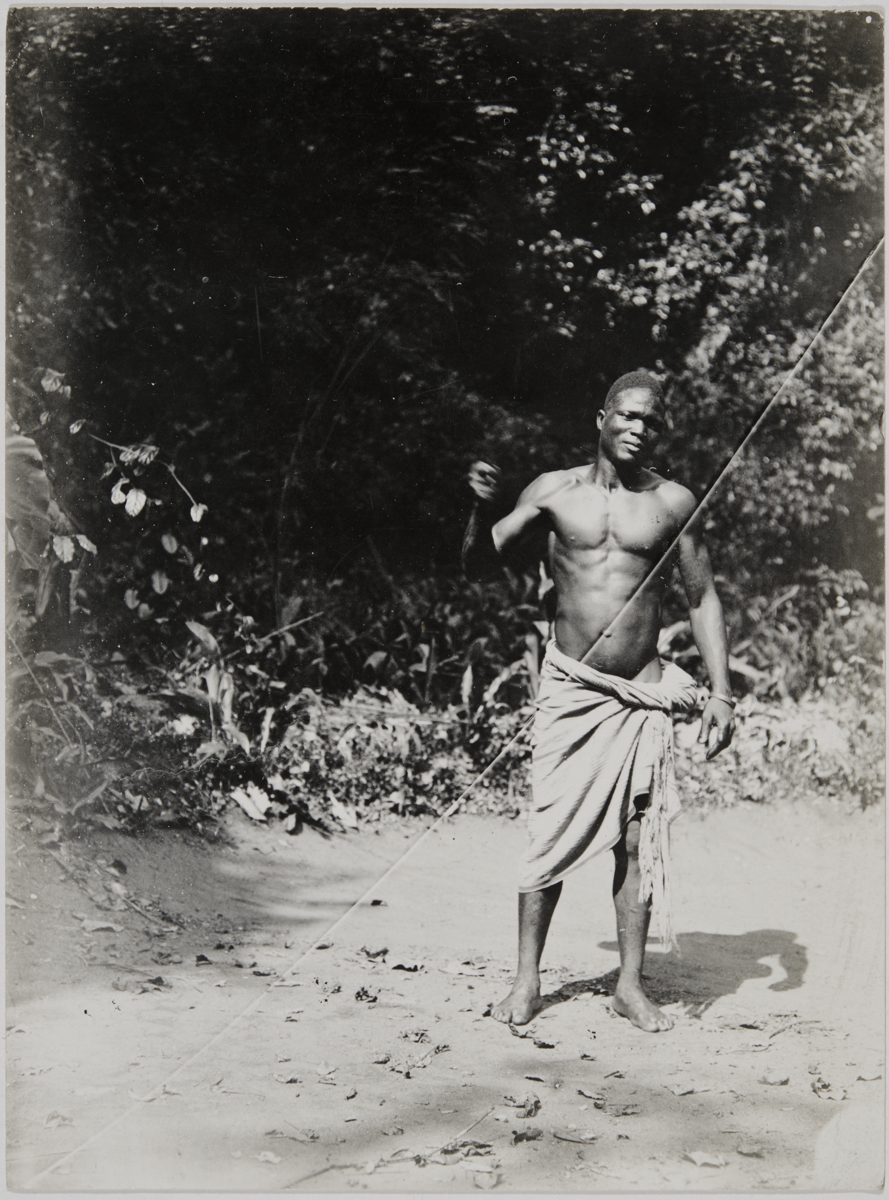
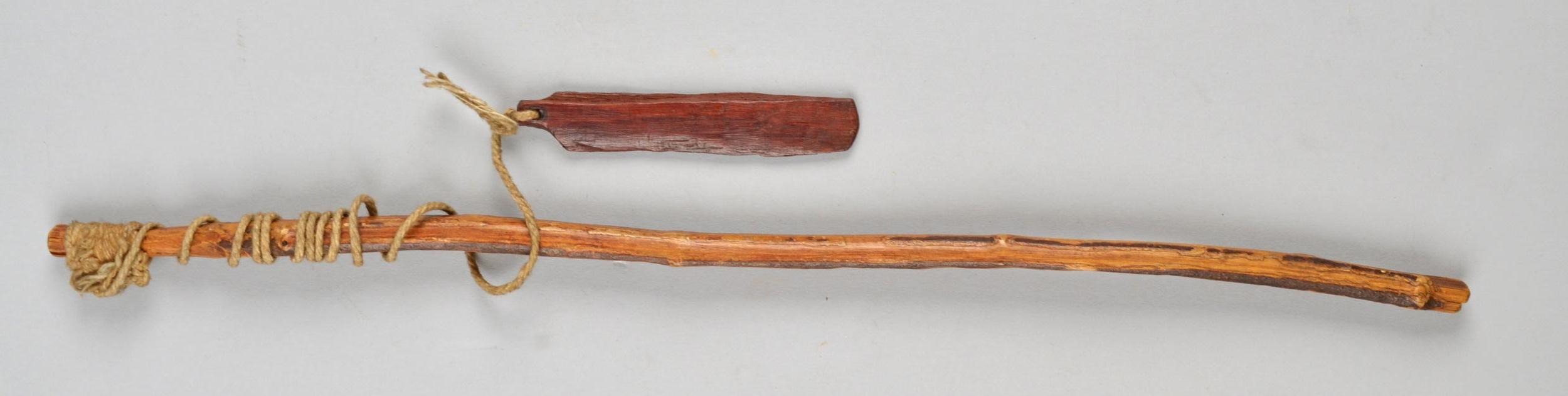
Oloawon Ovia / Oloawon Ovato / Usaokwhaiyi / Elimidu / ɛmil-ovia
Source term: Oloawon Ovia / Oloawon Ovato / Usaokwhaiyi / Elimidu
Oloawon Ovia / Oloawon Ovato / Usaokwhaiyi: Bini names for Oro, the Oloawon of the gods Ovia, Ovato and Okwhaiyi; Oloawon means the owner of the turtle or tortoise. ɛmil-ovia: literally "the cow (ɛmila) of Ovia" — the practice of twirling the bull roarer at the Ovia society.
At the Oba of Benin's new-yam meal, the Elimidu voice rose and women shut themselves indoors. The same bullroarer entered Ovia's annual festival and men's initiation, sounding a boundary between the public town and male ritual knowledge.
the bull roarer is certainly used at Ovia’s yearly festival in Benin territory.
R. E. Dennett, Nigerian Studies (1910), p. 39.
Particulars
- Object
- A bullroarer; no Bini-specific morphology recorded.
- Function
- Ovia annual festival and related Oro events; male initiation; deterrent to women and other outsiders.
Sources
- R. E. Dennett, Nigerian Studies; or, The Religious and Political System of the Yoruba (London: Macmillan, 1910), p. 39. View
- P. Amaury Talbot, The Peoples of Southern Nigeria, vol. 3 (Oxford, 1926), p. 764. View
- Hermann Melzian, A Concise Dictionary of the Bini Language of Southern Nigeria (London: Kegan Paul, Trench, Trubner, 1937), s.v. ɛmila. View