No. MUS2026-131
Nàvúni, the Kassena bird-scarer
Koumbili, Pô subdivision, southern Burkina Faso · West Africa
Weather / fertility magic
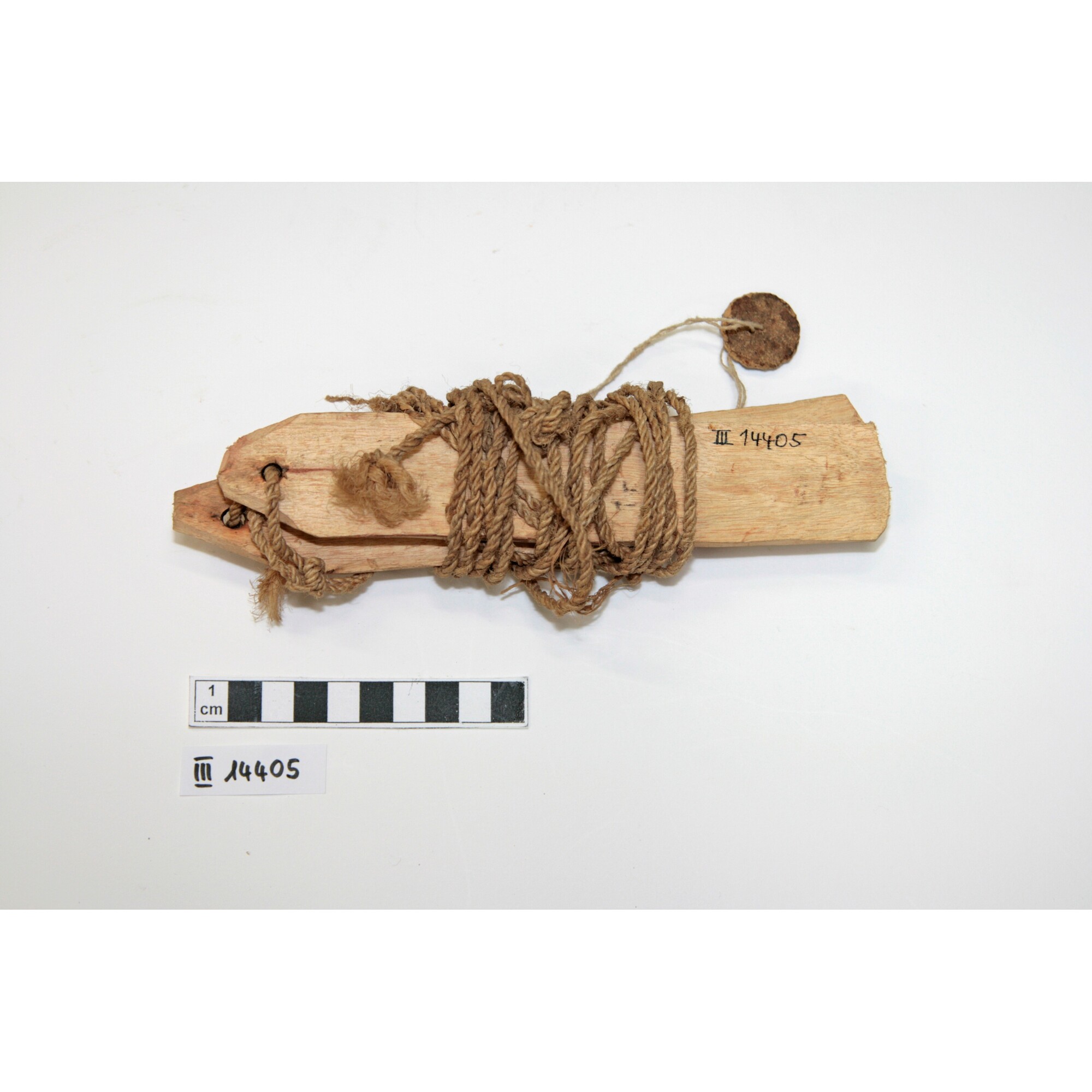
nàvúni
Source term: Schwirrholz
nàvúni: the Kassena name for the bullroarer.
In Kassena country around Pô, boys guarding the ripening fields swung the nàvúni to drive off birds and monkeys — the sound, people said, could pass for a lion's roar. After the harvest, the same instruments came out simply for fun. Basel's pair, collected at Koumbili by Kunz Dittmer in 1956, are flat kapok-wood blades with burnt-in cord holes, their doubled twisted cords running as long as 175 centimetres.
Wird von das Feld hütenden Knaben geschwungen, um Vögel und Affen zu vertreiben (diese sollen den Ton für Löwengebrüll halten). Ferner nach der Ernte zur Belustigung.
Swung by the boys guarding the fields to drive off birds and monkeys (these are said to take the sound for a lion's roar). Also, after the harvest, for amusement.
Museum der Kulturen Basel, digitized collection card for III 14404.
Particulars
- Object
- Two Kassena wooden bullroarers with cord (MKB III 14404 and III 14405), collected by Kunz Dittmer in 1956. III 14404 is a flat kapok-wood slat with a burnt-in cord hole; its doubled twisted cord runs 175 cm; that of III 14405, 110 cm.
Source
Museum der Kulturen Basel, collection records III 14404 and III 14405