No. KUNST2026-001
Bamana lion-voice in wood and iron
Mali · Segou region, middle Niger (eastern Bamana) · West Africa
Sacred / spirit
Source term: жужжалка обрядовая (ritual roarer)
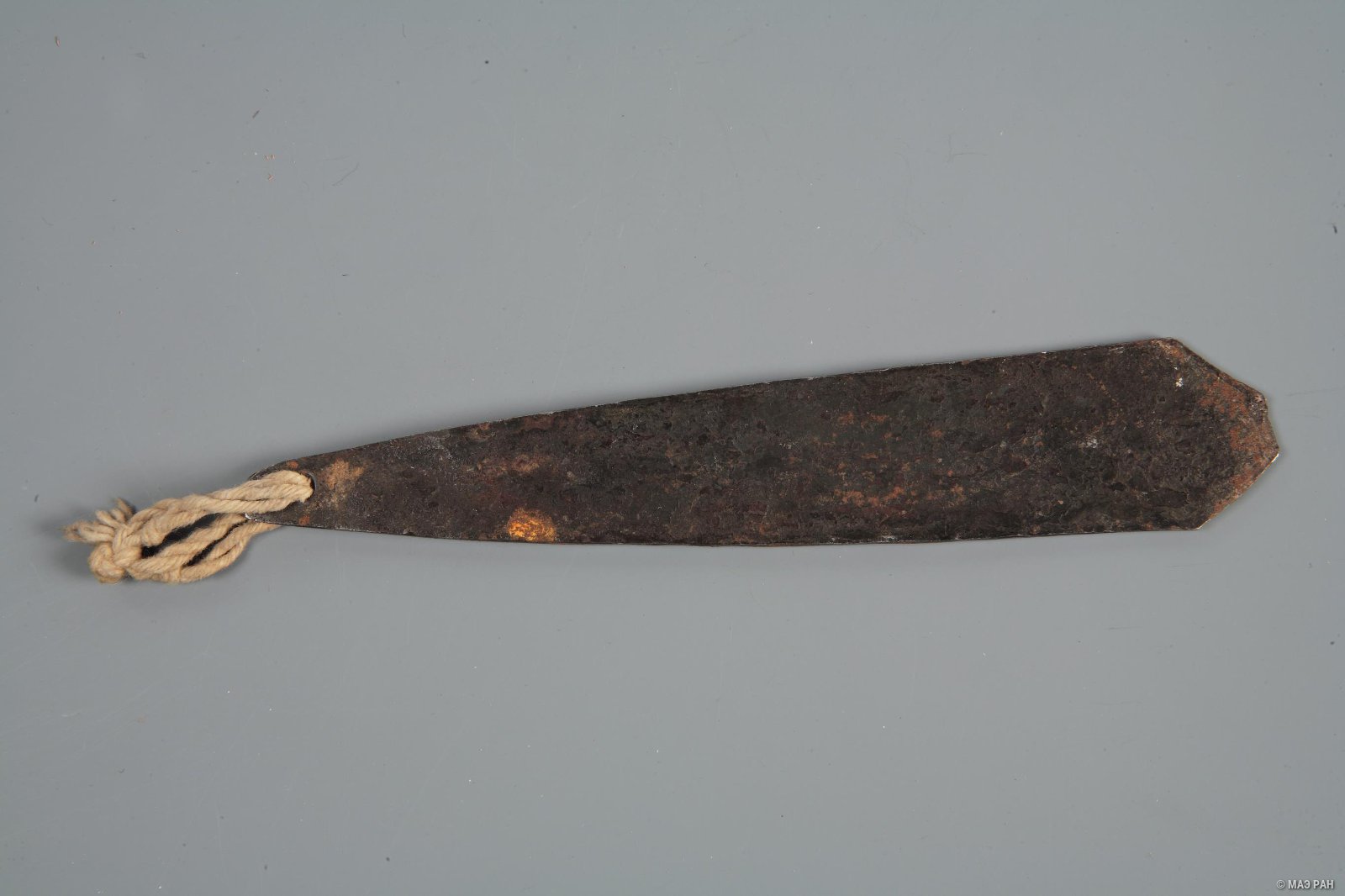
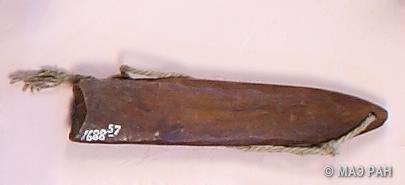
The Bamana likened the bullroarer's drone to the roar of a lion, and told how the first one was born under the hand of the first blacksmith — a boy carving a mask from sacred acacia when a splinter tore loose and flew off booming like the great cat, so he bored it, threaded a cord, and set it spinning. This Kunstkamera pair carries that voice in two bodies: a dark, leaf-shaped wooden blade and, beside it, a smaller one forged in iron, the smith's own element, each still corded through the narrow end. The museum entered them only as sacred roarers.
Una esquirla de madera de acacia se desprendió y saltó lejos produciendo un zumbido semejante al rugido del león. El niño llamó a dos de sus camaradas, tomó el fragmento de madera, abrió un agujero en una de sus extremidades, pasó por allí una cuerda y la hizo girar.
A splinter of acacia wood broke off and flew far away, producing a droning sound like the roar of a lion. The boy called two of his companions, took the fragment of wood, opened a hole in one of its ends, ran a cord through it, and made it spin.
Jean Servier, El hombre y lo invisible, pp. 136-137
Particulars
- Object
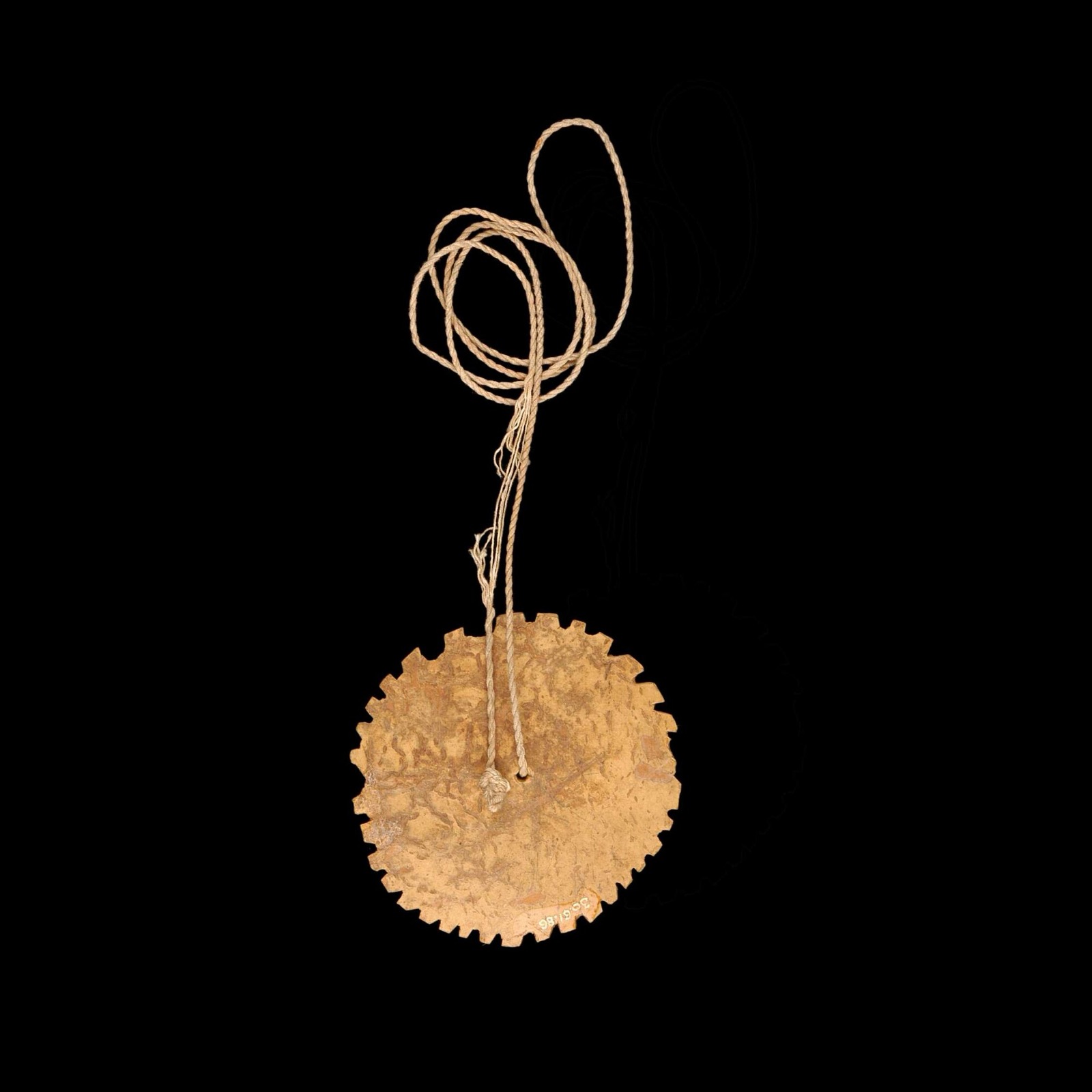
- Pair of eastern Bamana ritual bullroarers: a leaf-shaped wooden blade, 25 × 4.5 × about 2 cm, and a forged tapering iron blade, 17 × 3 × about 0.4 cm, both with cord knotted through the narrow end. A third body for the same voice sits in the musée du quai Branly, Paris: a Bamana roarer cut from the wall of a calabash at Kayes, eleven centimetres across and one thick, its rim notched into teeth, threaded on a single cord, five grams.
- Function
- Catalogued as sacred or ritual roarers; the particular ceremony is not recorded.
Sources
- Peter the Great Museum of Anthropology and Ethnography (Kunstkamera), online collection catalogue, object 16960, МАЭ 1688-57 View · archived
- Peter the Great Museum of Anthropology and Ethnography (Kunstkamera), online collection catalogue, object 16961, МАЭ 1688-58
- Jean Servier, El hombre y lo invisible, pp. 136–137
- Leo Frobenius, Auf dem Wege nach Atlantis (Berlin, 1911), campaign field report