No. FRAZER1913-016
Nandi initiation bullroarers
Kenya · Nandi · British East Africa
Restricted
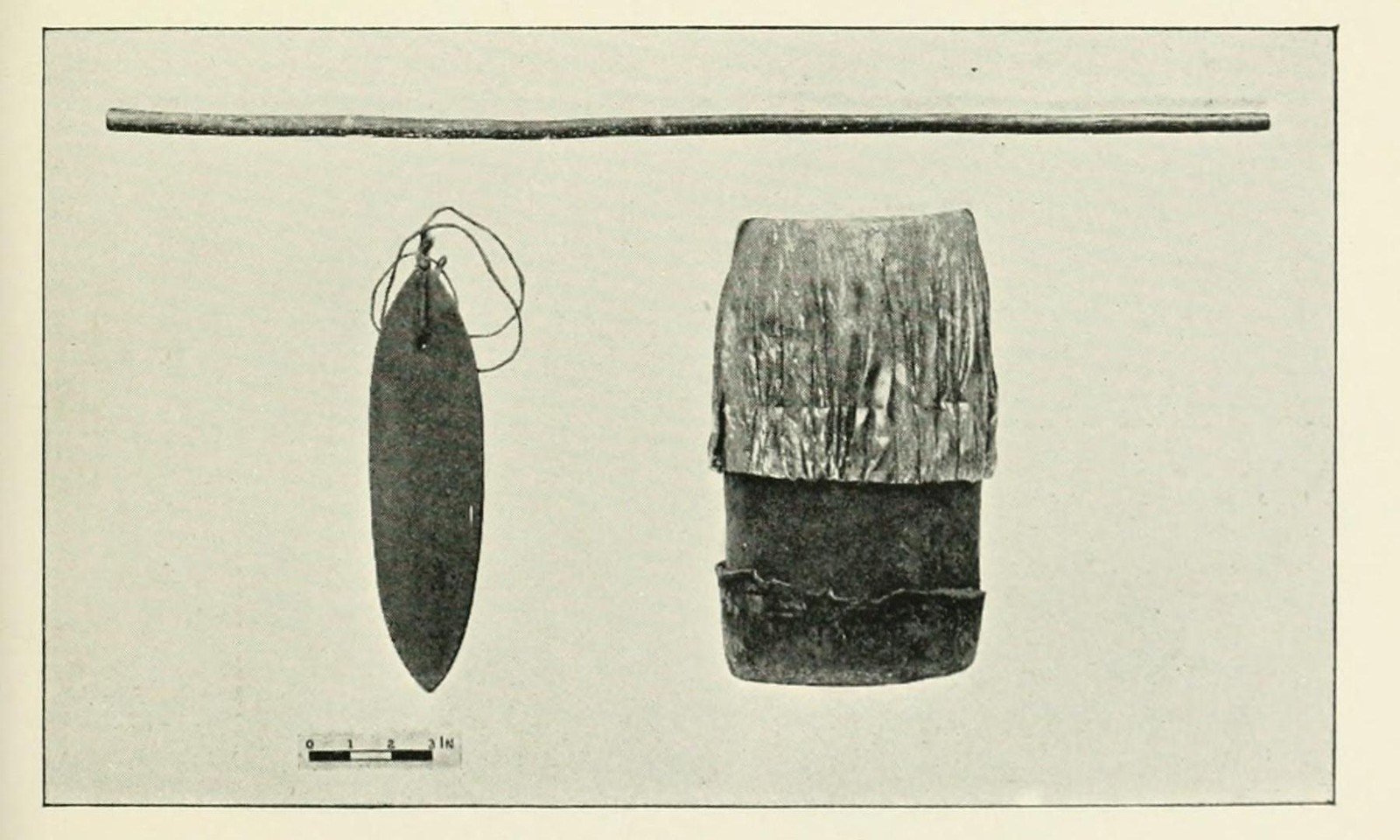
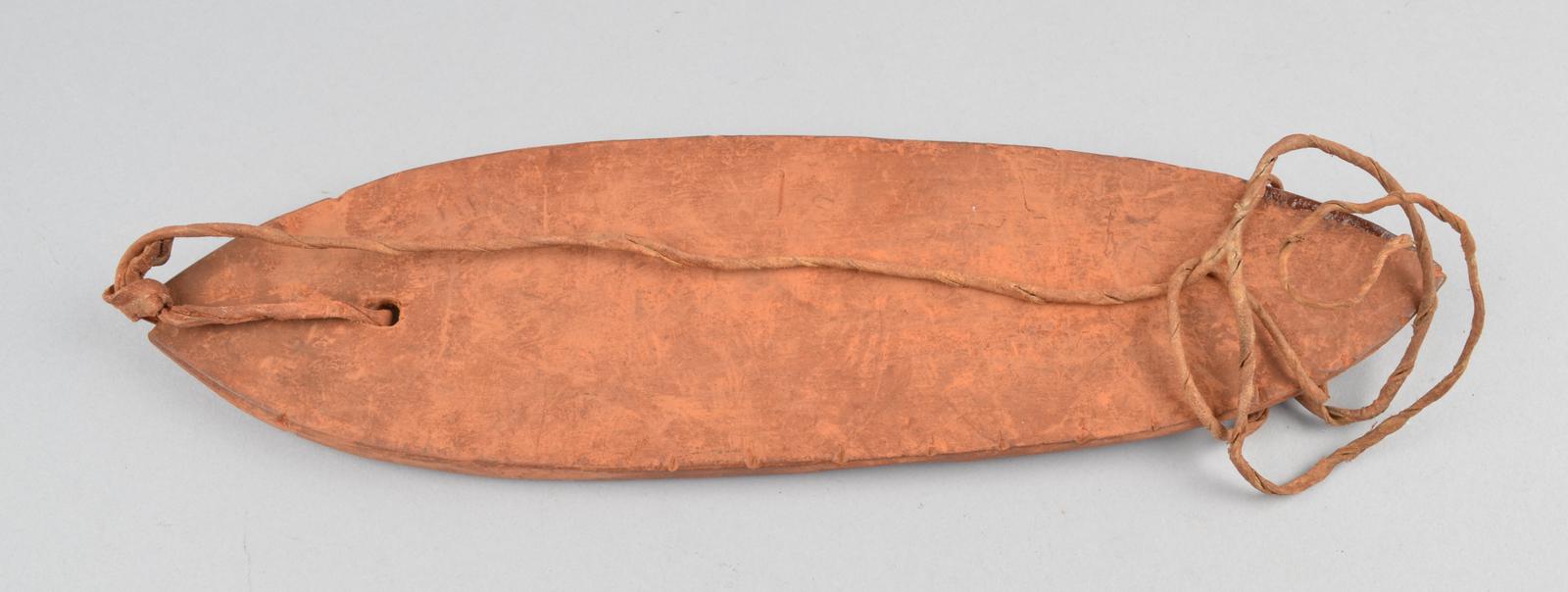
ngetundo / ngetunyik
Source term: bull-roarer
ngetundo (pl. ngetunyik): the Nandi word for "lion," the name given to both the bull-roarer and the friction drum used at circumcision.
Etymology. Singular of the pair: ngetundo is Nandi for 'lion' (plural ngetunyik). The name is given to the circumcision sound-instruments, whose voice is that of a lion.
Among the Nandi of the Kenya highlands, the bull-roarer is called ngetundo, "lion." Warriors armed with these instruments visited the seclusion huts of recently circumcised boys after dark and sounded them, A. C. Hollis recorded in 1909, to make the boys "think that lions are prowling about outside ready to devour them" and so keep them indoors at night. No uncircumcised person and no woman might see one. The boys themselves were only shown the bull-roarers, and taught to play them, at the rikset feast that closed their seclusion, after each had been seized by the hand, had a thong fastened to his little finger, and answered a ritual question known only to the circumcised; the thong was then jerked hard, nearly dislocating the finger, so he would not forget the answer.
There is also a bull-roarer, which is likewise called ngetundo or lion. This is employed by the warriors to frighten boys who have been recently circumcised into staying in their huts after dark. It is made of a small flat piece of wood cut into an oval shape, and it is whirled round the head at the end of a strip of goat's hide. A booming sound is produced, which reminds one of a lion purring and grunting.
Hollis 1909:40 (A. C. Hollis, The Nandi: Their Language and Folk-Lore)
Particulars
- Function
- Restricted boys' circumcision/seclusion instrument: warriors sound it outside the boys' huts after dark, and boys are later shown and taught the bullroarers at the rikset feast.
Source
A. C. Hollis, The Nandi: Their Language and Folk-Lore, Oxford: Clarendon Press, 1909