No. JORO2006-001
Do fulla, mother of the Musey initiation
Chad · Mayo-Kebbi Est, Gounou Gaya (Musey country, extending into northern Cameroon) · Africa
Restricted
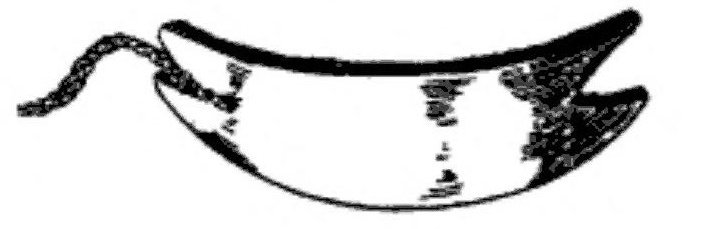
pepet-na (pepeðe-ra); do fulla
Source term: rombe / rhombe de l’initiation
pepet-na: initiation bullroarer, named for its oval shape. do fulla: “mother of fulla.” fulla: 1. the bush, uninhabited floodplain; 2. initiation (kal fulla, “go to initiation”; gor fulina, “those who have been initiated”).
Among the Musey of south-western Chad, the noises of initiation were given out as the voices of its divinities, and the thing that made them was called do fulla, “mother of fulla.” Fulla is the bush, the empty floodplain beyond the villages, and it is also initiation itself: to go to initiation is kal fulla. The instrument’s everyday name, pepet-na, comes from its oval shape. Whirled, it was pictured as a person with wild, tousled hair. Initiation, the Musey say, comes from Bigi.
instrument utilisé pour produire des bruits en disant que ce sont les divinités de l’initiation
an instrument used to produce noises while saying that they are the divinities of the initiation
Lexique Musey (2006), p. 54
Particulars
- Object
- An oval initiation bullroarer, whirled to make its noises; named for its oval shape.
- Function
- Whirled at initiation to make noises presented as the voices of the initiation divinities.
Source
Mission Catholique de Joro (Gunu-Gaya), Lexique Musey: Vee ma sem slenana, 5th rev. ed. (2006), pp. 37, 54, 176