No. SPANNAUS1936-001Africa
Roarers before the Bush-spirit
Liberia · Lofa County, northern Liberia (Gbande country) · West Africa
Restricted
- Initiation rite
- Death and rebirth
- Forbidden to women
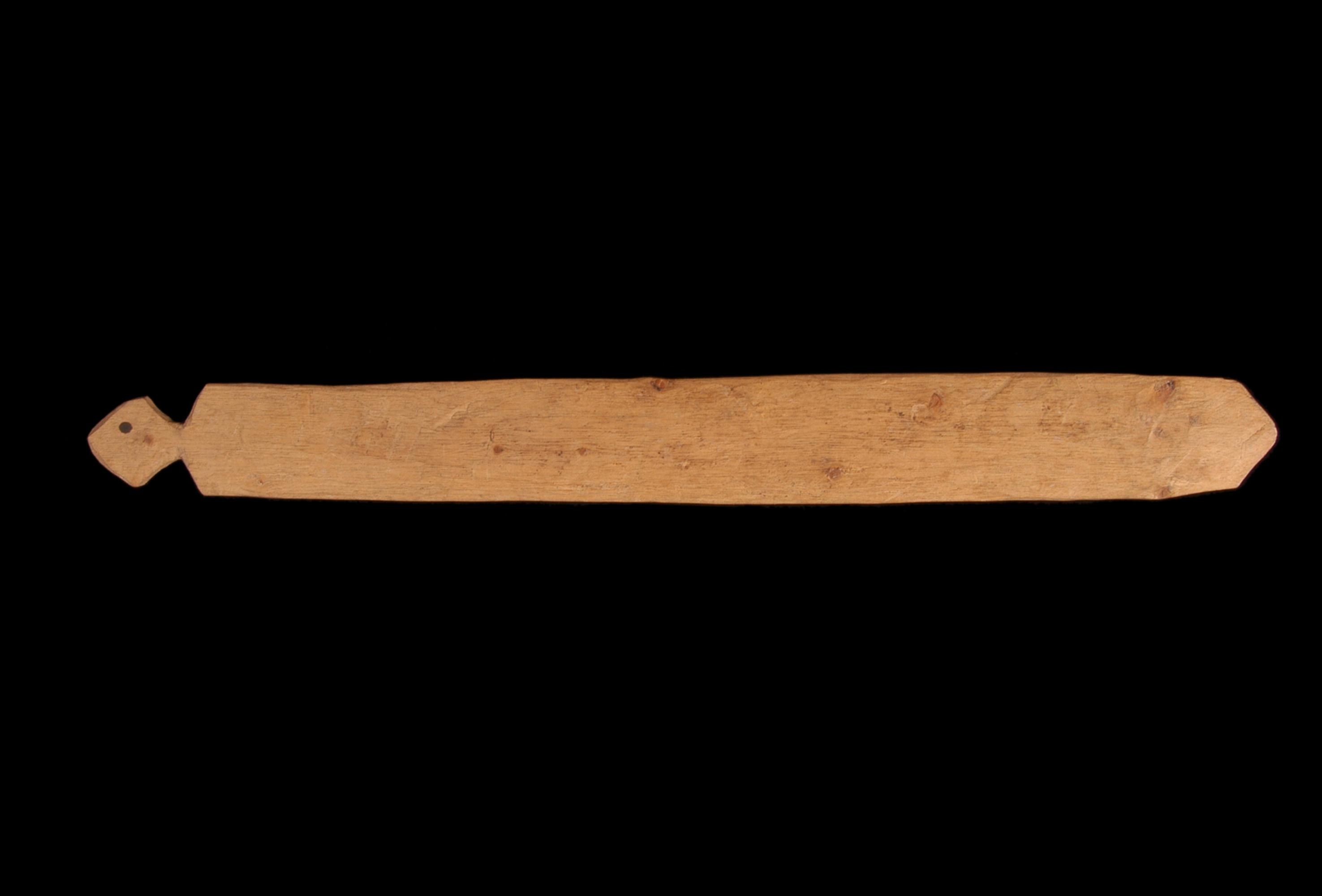
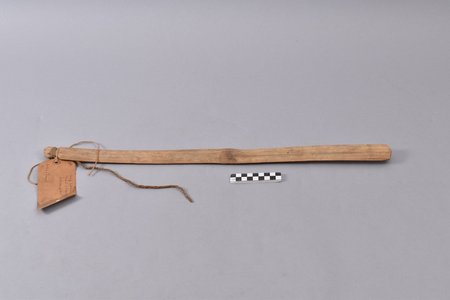
Source term: Schwirrhölzer
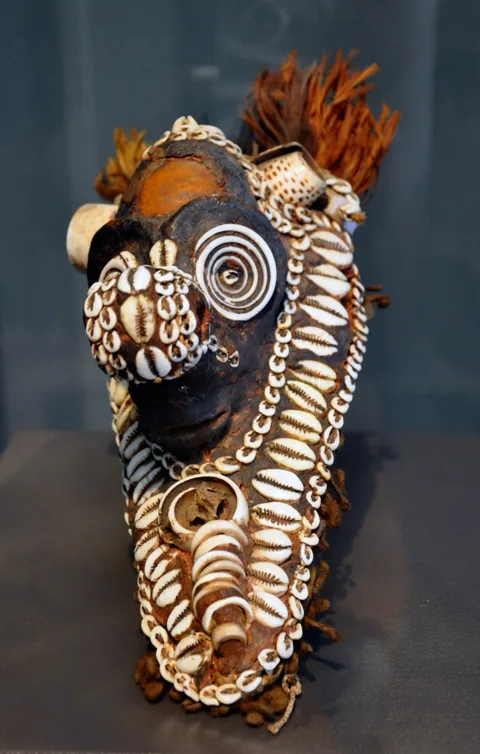
The Gbande Bush-spirit appeared in public in a great wooden mask whose face ran out below the nose into a crocodile's jaw. Its teeth were reddened with kola paste, so that they seemed still wet with the blood of the boys it had swallowed when they came to the bush school. The boys were said to stay a while in its belly and come out newborn. Another mask of the men's society walked on stilts two metres long, and must never fall, lest anyone see that a man moved inside. The masks were kept in secret places outside the villages. Drums, flutes and bullroarers announced their approach, and women, girls and small boys had to flee on pain of death.
Der danebenstehende Mann leitet die Bewegungen des Maskenträgers und vermittelt in einer besonderen Fistelsprache (Geheimsprache) den Verkehr der Maske mit der Umwelt.
The man standing beside it guides the mask-wearer's movements and, in a special falsetto speech (a secret language), carries on the mask's dealings with the world around it.
Günther Spannaus, Masken- und Stelzentänze (Gbande, Nordliberia) (1936), p. 1
Particulars
- Object
- Not described.
Discussed in 5 essays
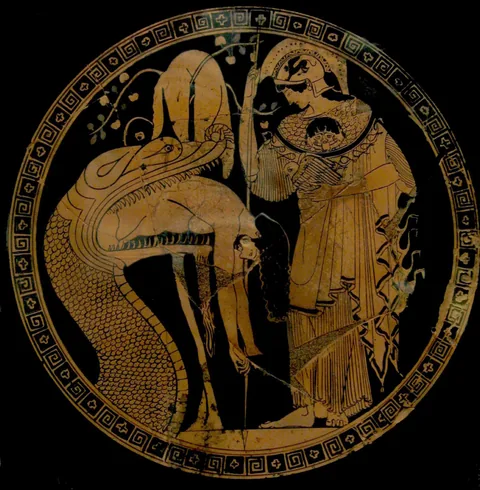 Burnt and Bald
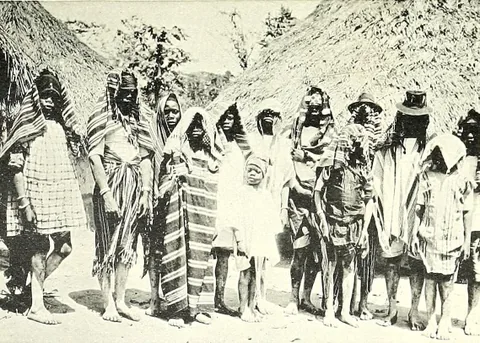 Initiates Used To Die
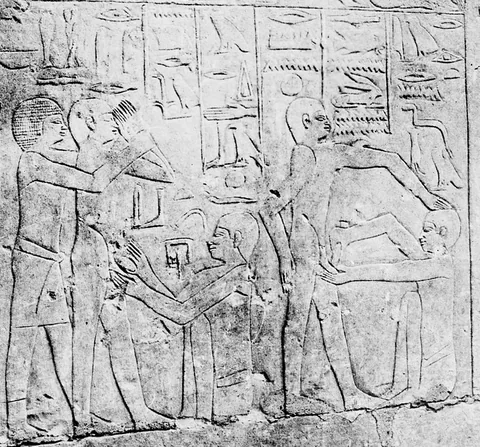 The Bridegroom of Blood
 The Bullroarer’s Younger Brothers
One more essay
Source
Günther Spannaus, Masken- und Stelzentänze (Gbande, Nordliberia), companion text to Hochschulfilm C 69 (Berlin: Reichsstelle für den Unterrichtsfilm, 1936). Film by Paul Germann, shot 1929. DOI 10.3203/IWF/C-69
Nearby in the atlas
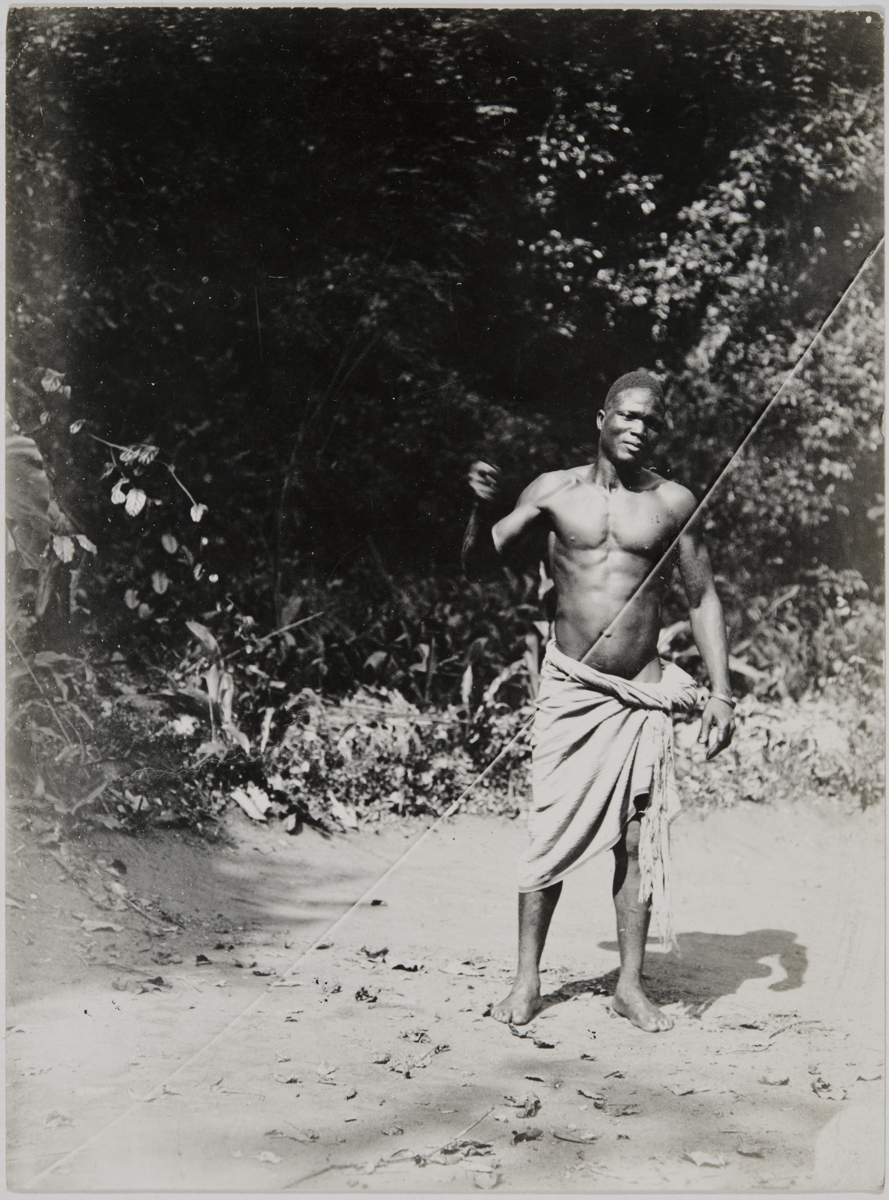 Bale wola heralds the Big DevilLiberia · Western Province / Lofa (Gbunde country) · Restricted
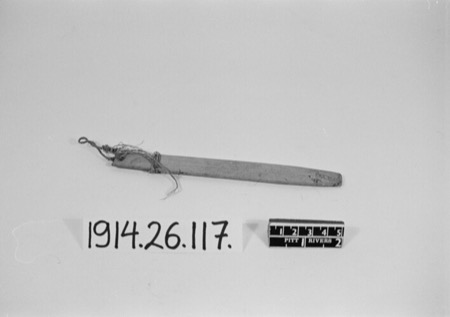 Vu ni and the unmasked high menLiberia · Nimba (Mano country) · Restricted
 Vu ni, the devil who roarsLiberia · Central Province / Nimba (Mano country) · Restricted
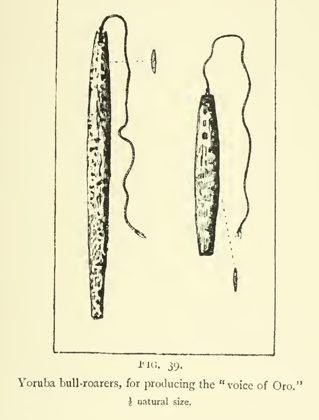 Gio boys "make bull-roarer talk"Liberia · Central Province / Nimba (Gio country) · Restricted
 Monchon's rhombe in the treetopGuinea · Rio Pongo coast, Préfecture de Boffa, Lower Guinea · Restricted
- Ovia, the river queen's voiceNigeria · Benin Kingdom / later Edo State · Restricted