No. JEFFREYS1968-001
Ekpo's cow and dog voices
Nigeria · Calabar, Cross River State · West Africa
Restricted
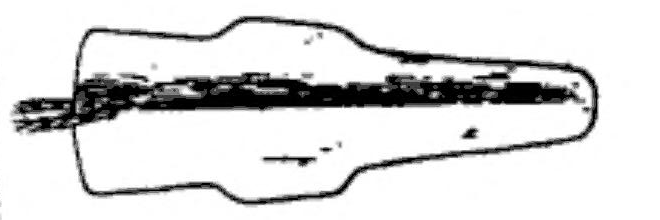
enang ekpri akata; ebua ekpri akata
Source term: bull-roarer
akata: Efik 'bull-roarer'. ebua ekpri akata: 'the dog of the little akata'. enang ekpri akata: 'the cow of the little akata'. Ekpo: 'ghost'.
Akata is the Efik word for the bullroarer, and at Calabar there were two, both sacred: the dog of the little akata and the cow of the little akata. The cow was much the larger, and only members of Ekpo, the society of the ghosts, could sound it. Ekpo held its revels at night, its officiants mostly masked, and the cow's wailing was heard as the voice of a ghost. The roarers were so sacred that outsiders were told nothing about them beyond their names.
the wailing of the enang ekpri akata is regarded as a ghostly voice
M. D. W. Jeffreys, 1968, p. 70
Particulars
- Object
- Two sacred bullroarers, a much larger "cow" and a smaller "dog".
- Function
- The larger, enang ekpri akata, may be used only by members of the Ekpo (ghost) society; its wailing is a ghostly voice at the society's night revels, usually led by masked officiants.
Source
M. D. W. Jeffreys, 'Efik names of some musical instruments,' African Music 4(2) (1968), p. 70