No. HARDING1973-005
Brandberg rock-painting bullroarer depiction
Namibia · Brandberg · Damaraland · Southern Africa
Sacred / spirit
Source term: depicted bull-roarer
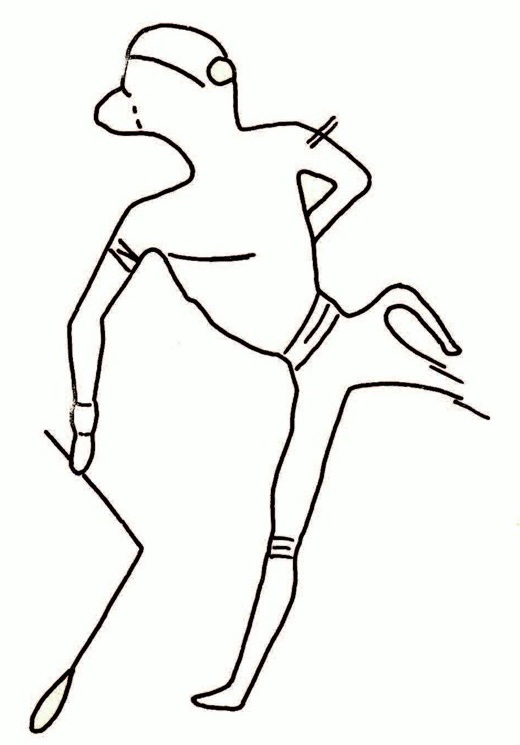
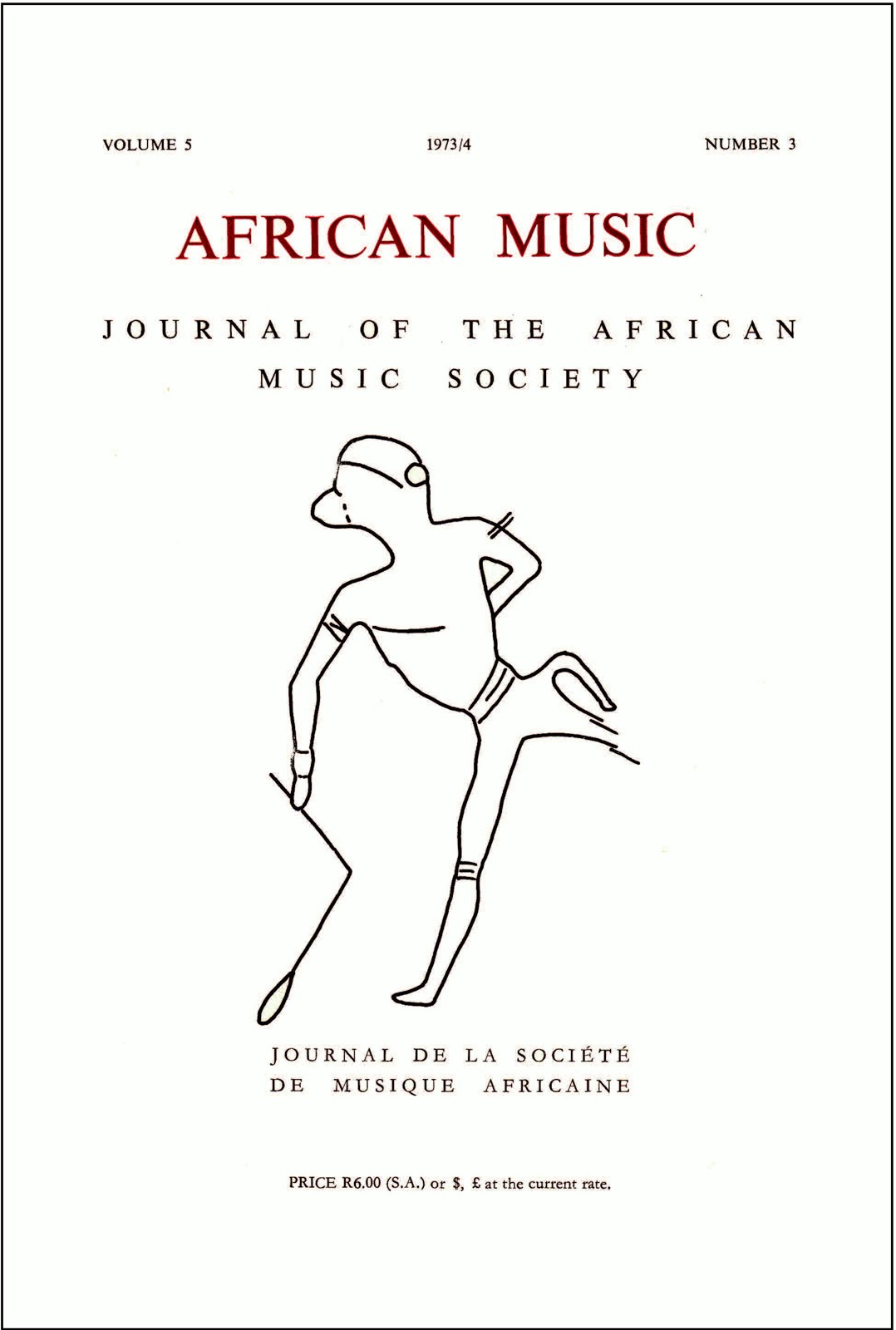
In a frieze painted above and to the right of the famous "White Lady" of the Brandberg massif in western Namibia, a running, white-painted figure carries a bull-roarer in its hand. Abbé Henri Breuil, who copied the panels in the 1950s, called this figure the "Baboon-man" for the tail and snout that he judged were late additions to an originally human body. J. R. Harding, surveying the instrument's history in 1973, pointed to a second bull-roarer Breuil had found on a boulder some distance from the White Lady, carried by one of three men walking in single file, each wearing a helmet crowned by an enormous ostrich plume. Harding read the "dressed-up" character of both groups as a sign that the instrument was being used ceremonially, and set the Baboon-man beside Stow's account of the southern San "Baboon dance," in which dancers costumed themselves as the animal.
Particulars
- Object
- A bull-roarer painted in the hand of a running figure, with a second on a nearby boulder.