No. SUBSAH-002
Sanga's mother of the mask, whom the women fear
Mali · Bandiagara · Sanga · West Africa
Restricted
imina na
Source term: rhombe / imina na
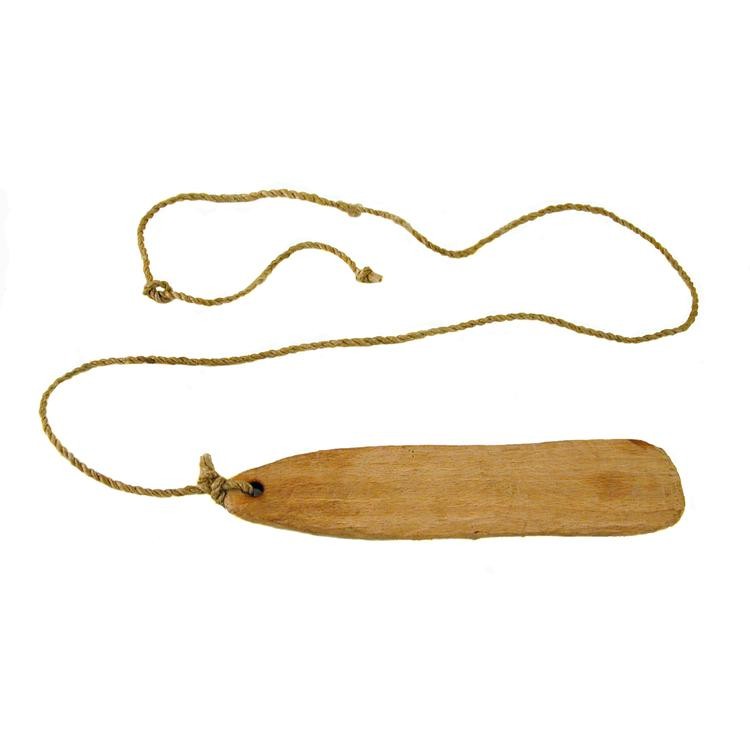
imina na: rendered "Great Mask" by Dieterlen (literally "great" or "mother" mask) — the name of both the carved wooden serpent that is the Awa society's Great Mask and the bullroarers sounded for it.
Etymology. Dogon imina na, "great mask" or "mother of masks" (imina "mask" + na "great"/"mother"): the proper name of the carved serpent-form Great Mask of the Awa society and of the bullroarer voiced as that mask.
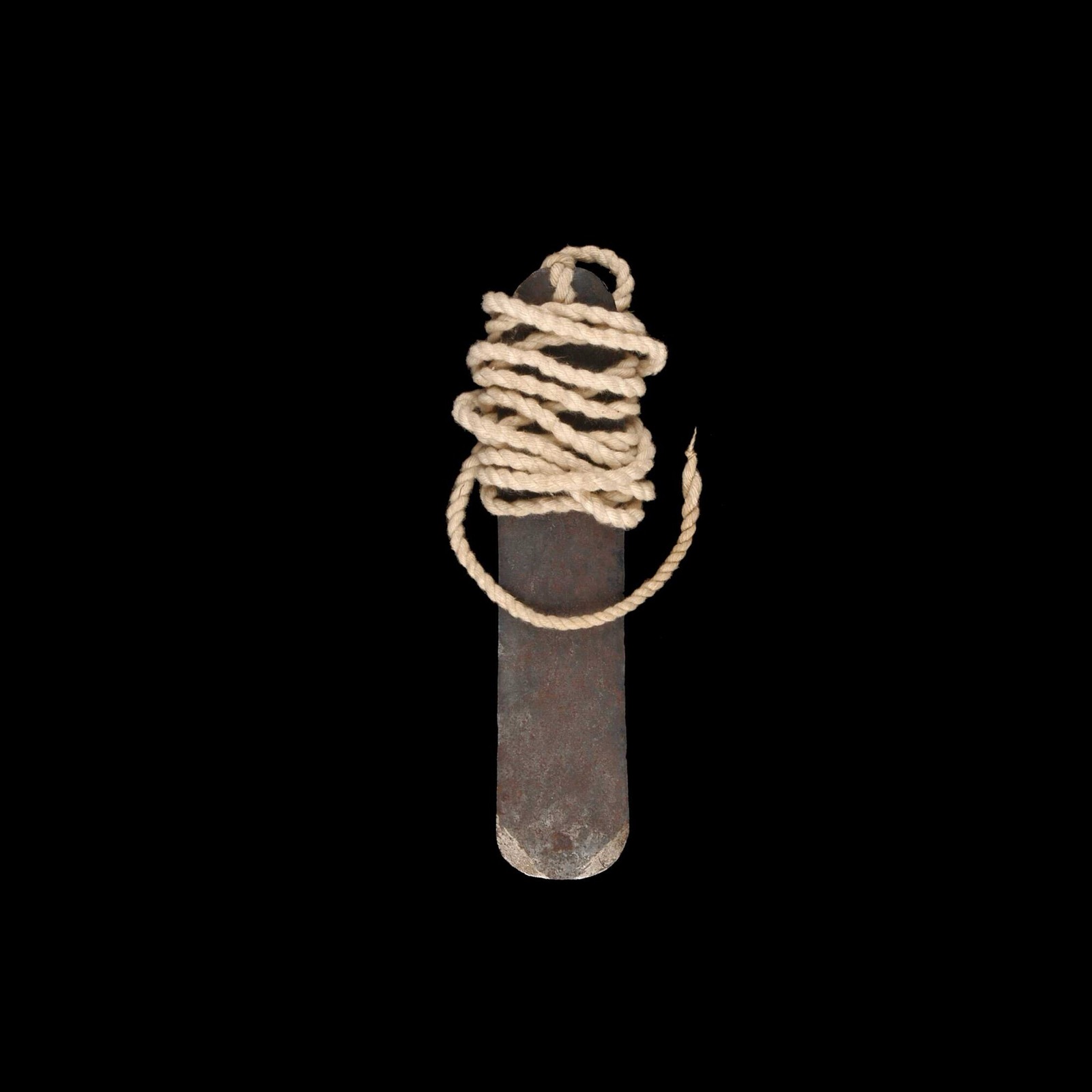
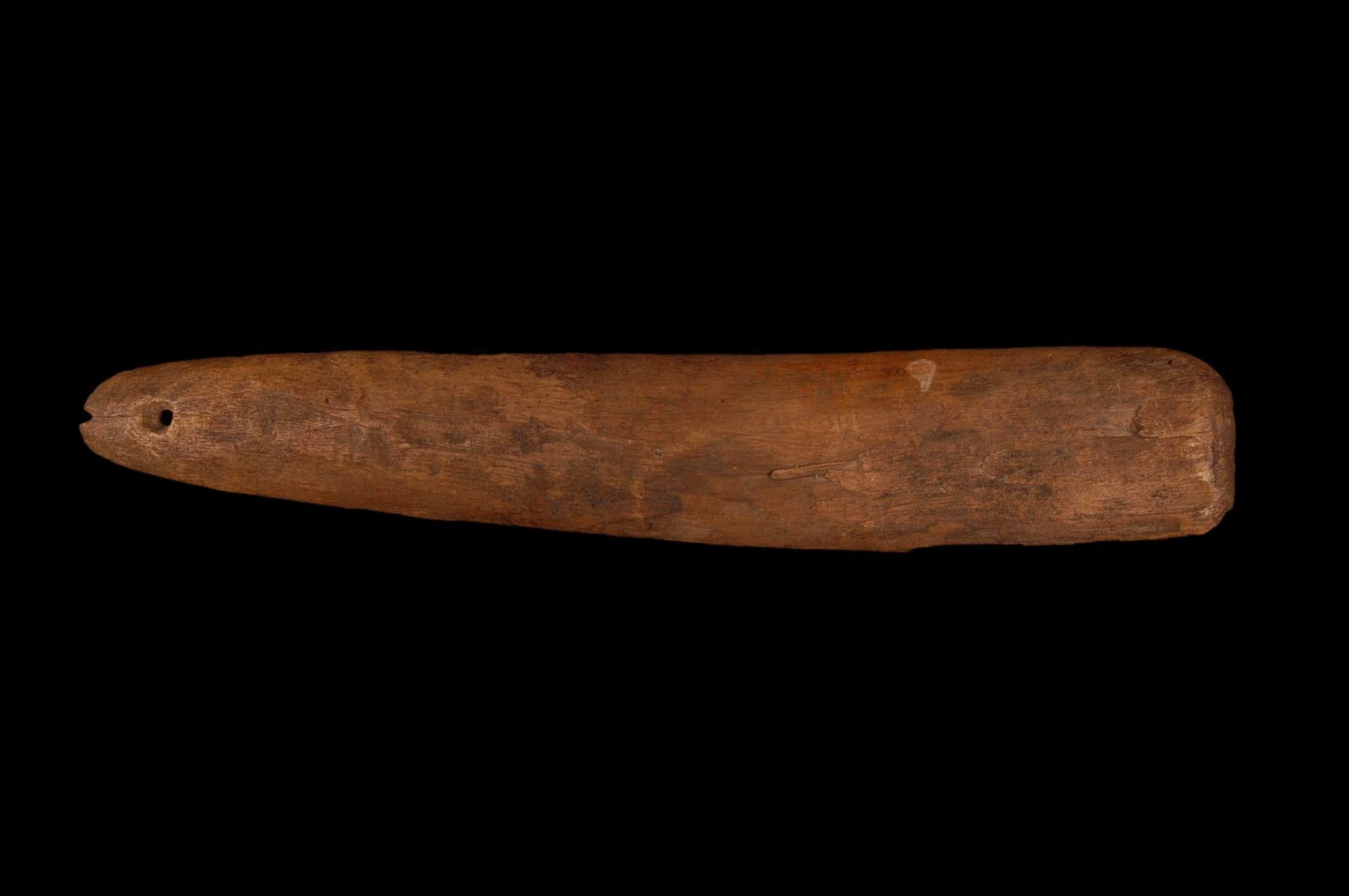
Three bullroarers are carved for each Sigui, the Dogon rite of every sixtieth year, and they bear the name of the carved serpent Great Mask of the Awa society: imina na. On the level of myth, Germaine Dieterlen recorded, each is a tongue — the Fox’s, cut with his larynx; the catfish’s, symbol of the human fetus; and that of Dyongou Sérou, the first ancestor to die, sacrificed to make human life on Earth possible and raised again as the serpent the Mask depicts. The young initiates called olubaru, "masters of the bush," learn the secret sigi language during a long retreat and are charged with sounding the instruments, which they make hum at night through the ceremony. At the climax of the dama funeral the Great Mask goes to the dead man's terrace, where a relative ties a live chicken — the soul finally granted — to its top; the speech it then gives in thanks is what the droning bullroarer translates. The wooden blades are kapok, like the masks, never painted and never cleaned; at the ritual drinking in the cave the chief of the masks pours millet beer over the rhombe before the sirigè, the storeyed-house mask. When a grown man dies, a young man of the mask society is sent to the edge of the village that night. He plants his feet so as not to fall, winds the end of the two-metre cord three or four times round his right hand, and spins the blade flat above his head, slow and then fast, while the men who know the secret language call out encouragement. Women and children must stay in their houses. The rhombe is the mother of the mask — the mother, one man at Sanga explained, because she is the largest, the one who receives the sacrifices and drinks the blood of women and children. Mothers tell a crying child she will eat it, and the old men, in the secret tongue, order her away. In the spring of 1935 the young ethnographer Deborah Lifchitz wrote home from Sanga that the rhombe had been crying every evening for days, waiting for a great funeral; it was very impressive, she said, and one understood very well why the women were afraid of it. Dogon myth holds that a woman of the Andoumboulou was the first to find the red mask-fibers and use them to frighten the men, who seized the fibers from her but named her "sister" of the masks to mark her discovery; the female figure of the satimbe mask commemorates her. A 1935 photograph by Marcel Griaule, held by the musée du quai Branly, shows a man at Sanga whirling such a bullroarer as women approach; Griaule also figured Dogon bullroarers of wood and iron in his Masques dogons.
Pour les Dogon, ces rhombes parlent et disent : « J'avale, j'avale, j'avale les hommes, les femmes, les enfants, j'avale tout. » Car ils sont les témoins de l'apparition de la mort sur la Terre.
For the Dogon, these bullroarers speak, and they say: 'I swallow, I swallow, I swallow men, women, children, I swallow everything.' For they are the witnesses of the appearance of death on Earth.
Germaine Dieterlen, 'Mythologie, histoire et masques,' Journal des Africanistes 59 (1989), p. 34
Particulars
- Object
- A flat oval slat of wood or iron, whirled on a long cord. The Dogon call it imina na, the same name as the carved serpent Great Mask: the bullroarer "too is a mask," and its drone is that mask's voice. Quai Branly 71.1949.44.6 is an Ireli blade so catalogued, 27.8 x 5 x 2.5 cm and 70 g. One of the iron ones survives: the musée du quai Branly, Paris, holds 71.1935.60.20 from Sanga, a smith-forged blade on a cotton cord, 21 by 6 by 3 centimetres and weighing 128 grams. The Sanga blade figured by Schaeffner is quai Branly 71.1931.74.2046, 29.5 by 5 by 1.5 centimetres and 99 grams, taken on 18 November 1931 from the masks' cave at Ogol and catalogued as representing the Mother of the Mask.
- Function
- The whirring is the voice of the dead first ancestor (Dyongou Sérou). Newly-initiated olubaru make and sound it during the Sigui and at the midnight climax of the dama funeral, heralding the Great Mask; women and the uninitiated must shut themselves indoors. Dogon myth holds women owned the masks first, received from the Andoumboulou, before men seized them.
Source
Michel Leiris, 'Rhombes dogon et dogon pignari,' Bulletin du Musée d'Ethnographie du Trocadéro 7 (1934): 3-10; Deborah Lifchitz to Michel Leiris, Sanga, 1 March 1935, in Gradhiva 3 (1987), pp. 48 and 51; Musée du quai Branly - Jacques Chirac, 71.1949.44.6 and 71.1931.74.2046; Germaine Dieterlen, African Arts 22(3) (1989), pp. 34-43, 87; Kate Ezra, Art of the Dogon (1988), p. 25