No. EXH2026-021
Wanyanza
Democratic Republic of the Congo · NE Congo (Babali initiation belt) · Central Africa
Restricted
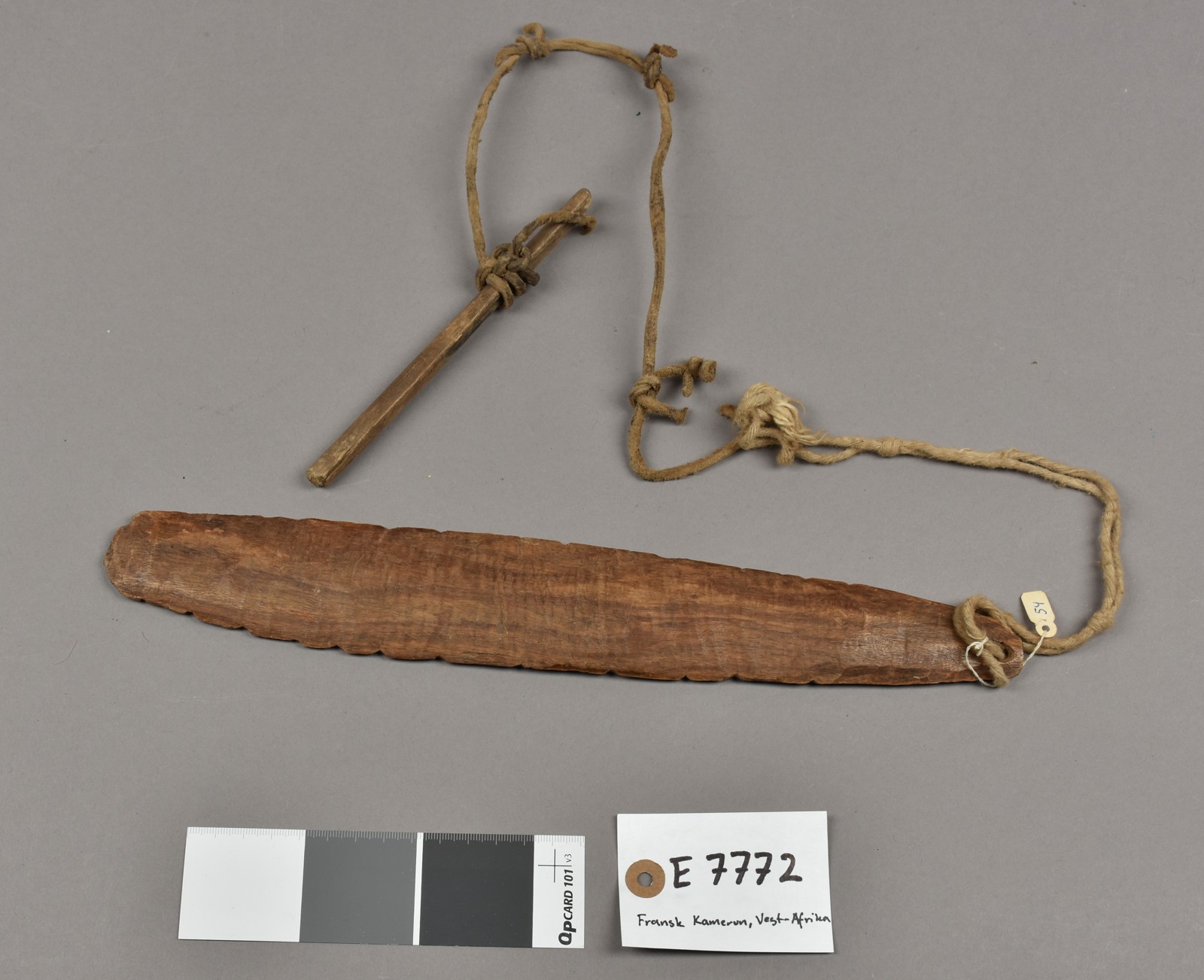
Source term: rhombe
The Wanyanza are little more than a name. Édouard de Jonghe listed them in 1936 among the Babali's neighbours who shared the same droning initiation rite, its sounding board swung on a cord like a sling to frighten the uninitiated. Here the roll-call outlived the people it named.
de Jonghe a souligné que le rhombe est lié au complexe d'initiation tribale qui «se rencontre avec quelques variantes chez les voisins des Babali: Bakumu, Babira, Wanyanza, Bangelima, Barundi, Bapopoi, Wagenia et Lokele».
de Jonghe stressed that the bullroarer is bound to the tribal-initiation complex which "is found, with some variants, among the neighbours of the Babali: Bakumu, Babira, Wanyanza, Bangelima, Barundi, Bapopoi, Wagenia and Lokele."
Soderberg 1956:184, quoting de Jonghe 1936:62-63
Particulars
- Object
- Rhombe of the NE-Congo tribal-initiation complex (de Jonghe list).
- Function
- Listed by de Jonghe among the Babali-neighbour initiation-rhombe peoples.
Source
E. de Jonghe, 'Formations récentes de sociétés secrètes au Congo belge,' Africa 9(1) (1936), pp. 62-63, quoted in Bertil Söderberg, Les instruments de musique au Bas-Congo et dans les régions avoisinantes (1956), pp. 184-185