FROBENIUS1913-005 - ethnographic attestation
Katla goung, wood for girls, iron for the kujur
Sudan - Nuba Mountains, South Kordofan (Dilling - Salara area) - East Africa
Restricted
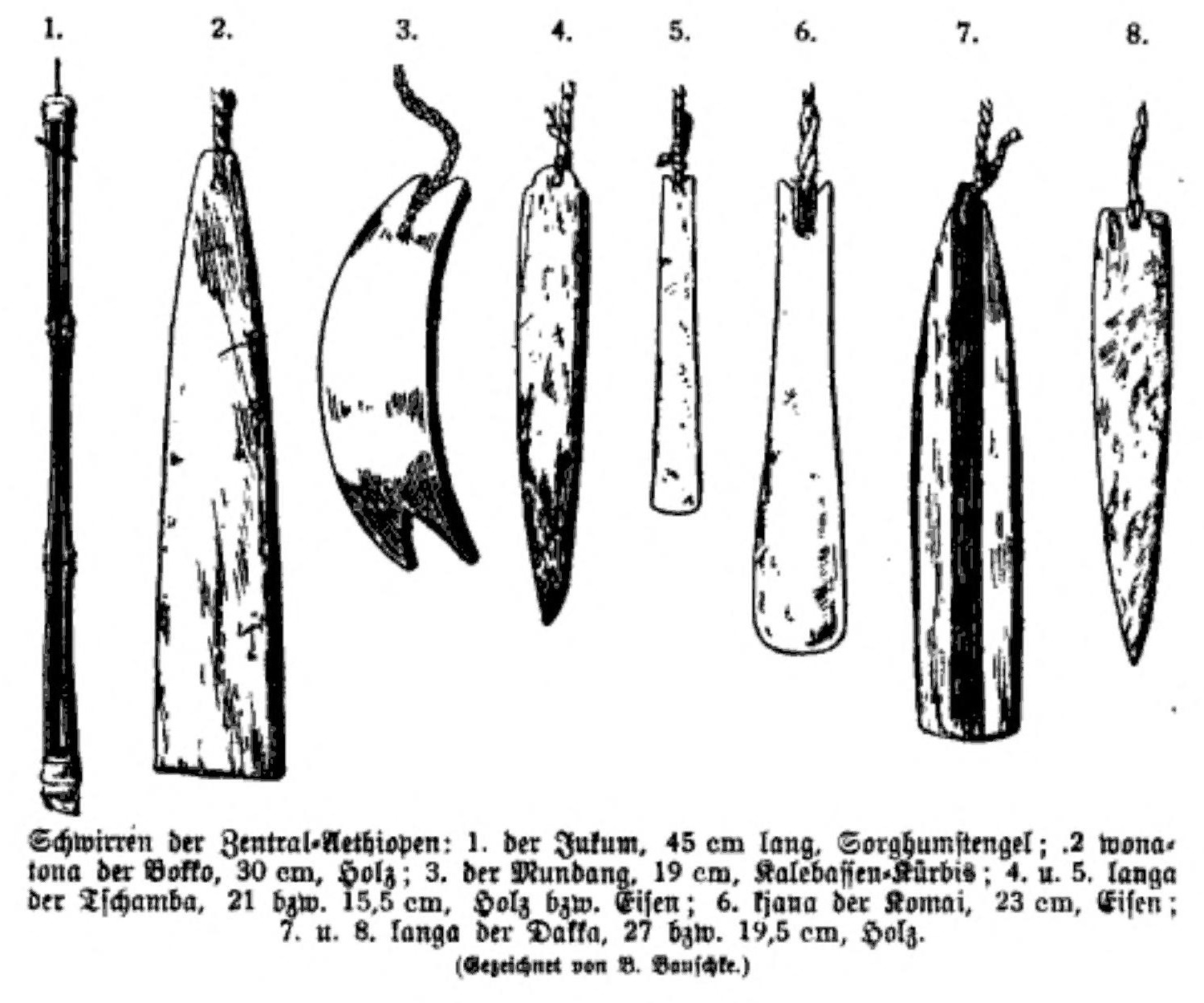
goung (Katla); gururu (Kulfan); kure (Lehaemir); galu-ek (Tallau)
Source term: Schwirre; Schwirren
goung (Katla), gururu (Kulfan), kure (Lehaemir), galu-ek (Tallau): the word for bullroarer in each dialect. kujur: the Nuba priest of rain and harvest. Gombil: title of the Katla high kujur, who was also king.
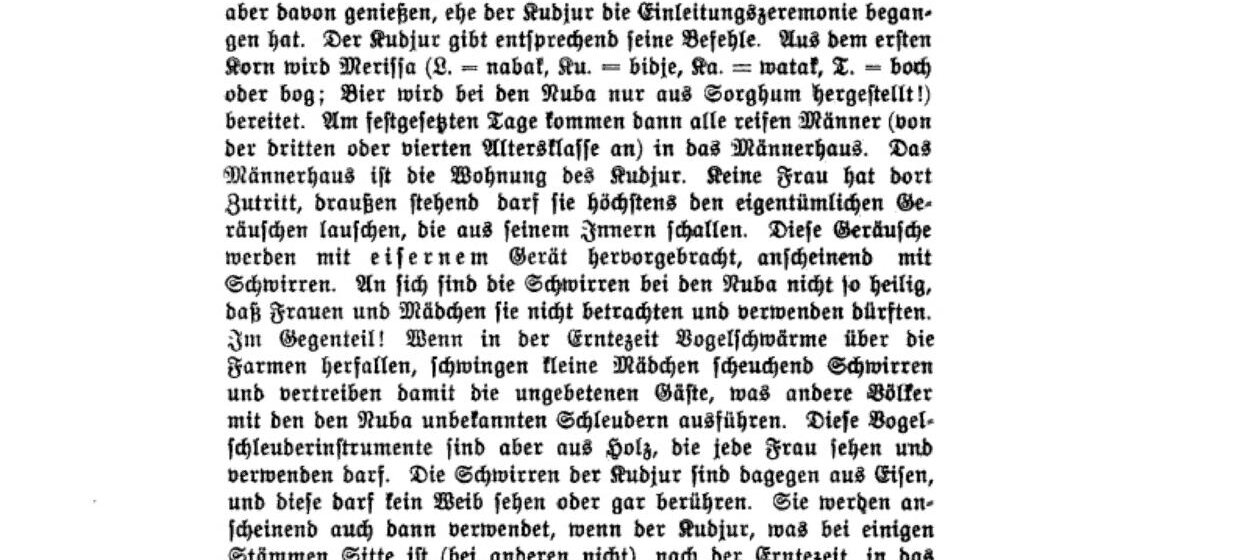
When bird flocks fell on the ripening sorghum, Nuba girls ran into the fields swinging bullroarers and roared the thieves away. Those roarers were wooden, and any woman could see and use them. The kujur's were iron. The kujur was priest of rain and harvest, and his house was the men's house: at the first-fruits rite the grown men carried in beer brewed from the new grain, while the women outside heard only strange noises from within. No woman might see or touch those roarers. Among the Katla the high kujur, the Gombil, was also king, and in older times he died a sacrificial death every few years, or no rain would fall.
Wenn in der Erntezeit Vogelschwärme über die Farmen herfallen, schwingen kleine Mädchen scheuchend Schwirren und vertreiben damit die ungebetenen Gäste.
When flocks of birds fall upon the farms at harvest time, little girls swing bullroarers to scare them and drive off the uninvited guests.
Frobenius 1913:115
- Object
- Two kinds: wooden bullroarers that girls and women may handle, and iron ones belonging to the kujur, the priest of rain and harvest. No sizes are recorded.
- Function
- Little girls swung wooden ones to scare bird flocks off the ripening sorghum; the kujur's iron ones sounded in the men's house at the first-fruits rite and at the boys' circumcision after harvest.
- Source
- Leo Frobenius, Und Afrika sprach…, Bd. III: Unter den unsträflichen Äthiopen (Berlin: Vita, 1913), pp. 101, 113 and 115-116
- Source location
Page references
pp. 101, 113 (term table), 115-116
- Source confidence
- medium
- Location note
- Katla village, Salara, Dilling locality, South Kordofan (OSM/Nominatim). Katla is the one securely located group of the four Frobenius interviewed; representative anchor, not an interview or use site.
Regions: Africa
- Initiation rite
- Forbidden to women
- Women-linked
- Agriculture / crop magic