Herds, storms, seasonal noise and a long history of play
Across Europe, the whirling blade carries a useful disturbance: it frightens animals, answers threatening weather and fills the days when church bells fall silent. Children give it the voices of witches, engines and aircraft. Ancient mystery texts and decorated archaeological blades widen this history, while each use retains its own place and occasion.
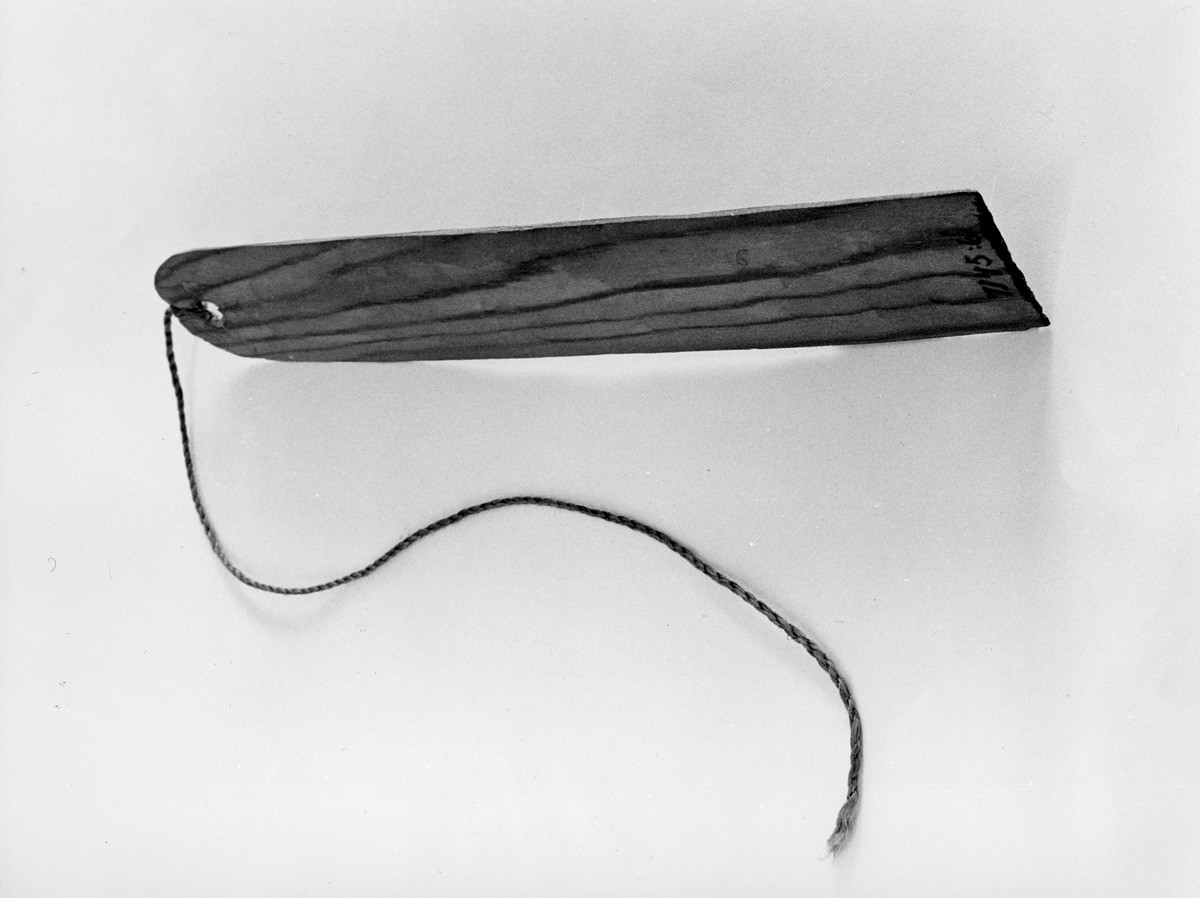
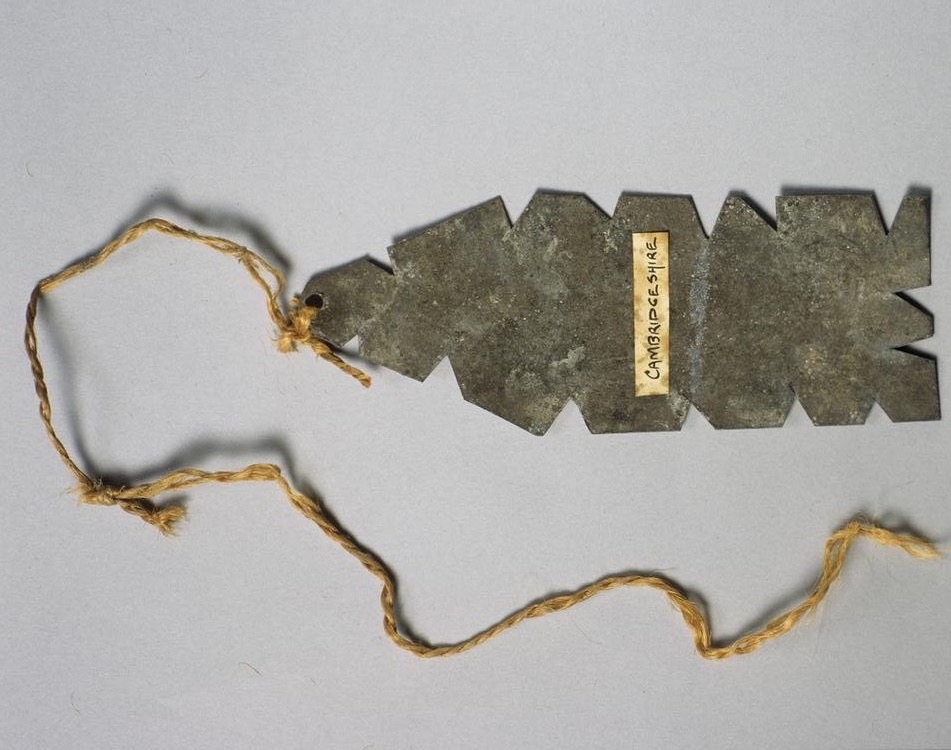
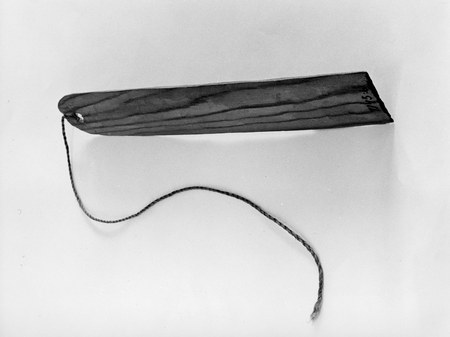
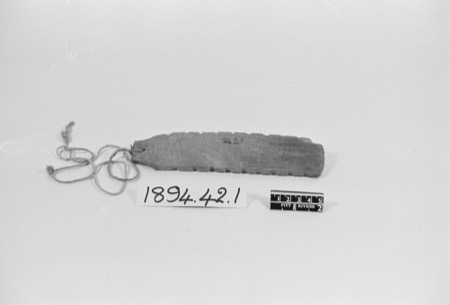
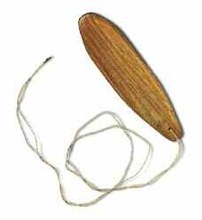
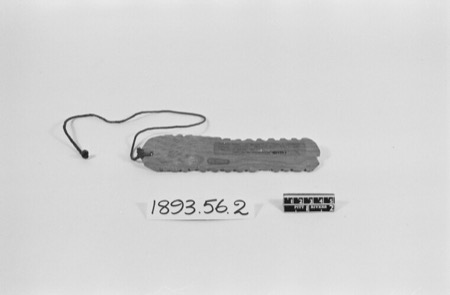
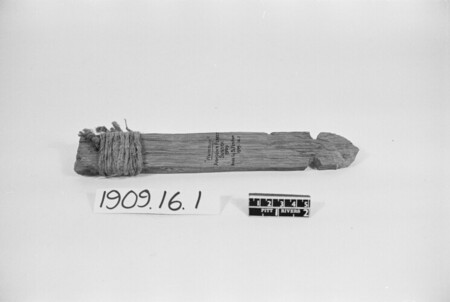
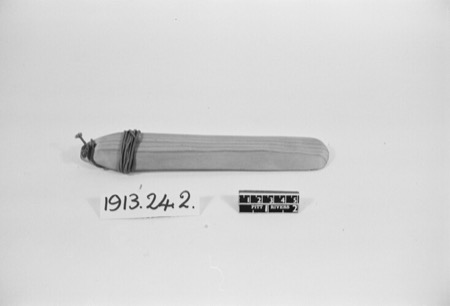
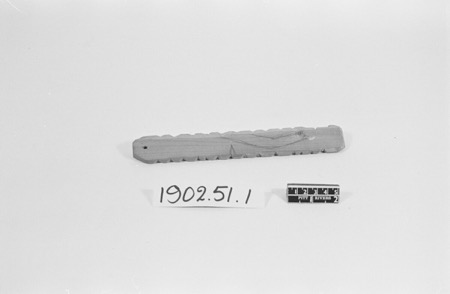
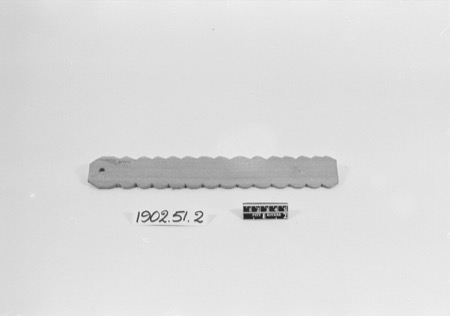
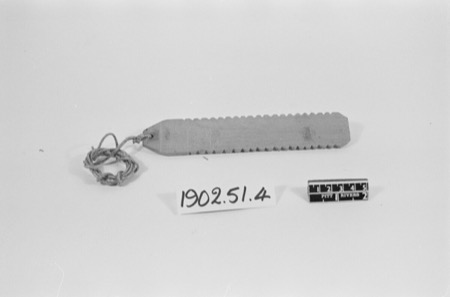
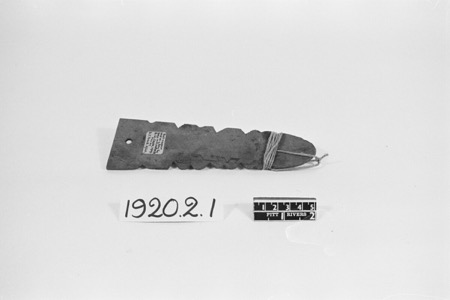
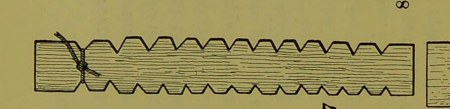
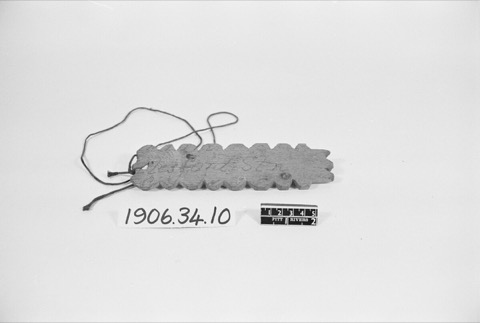
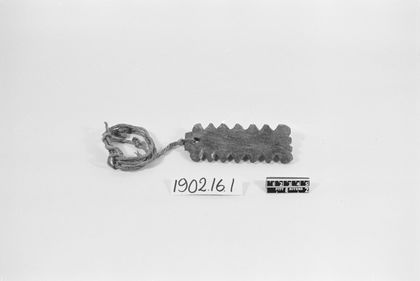
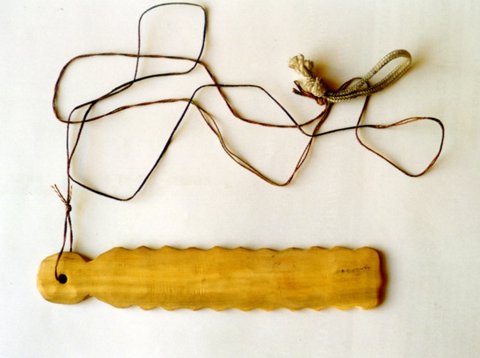
A cow hears the warble fly and bolts. In Cambridgeshire, people exploited that alarm with a metal blade on a cord: its circling drone imitated the insect that troubled their cattle. Far north at Nivala in Finland, a pine suhistuspuu served both children playing and herders frightening cows. These were modest instruments with considerable reach. A blade could move a herd, sound across a street or speak into a thunderstorm. Across Europe, its shared strength was the ability to make the air carry a forceful voice, whether that voice did a day’s work, kept a seasonal appointment or delighted its maker. 1, 2
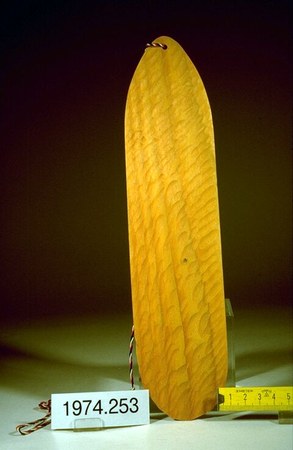
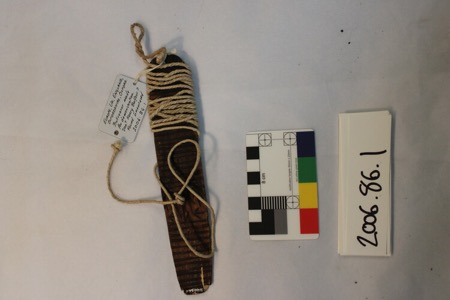
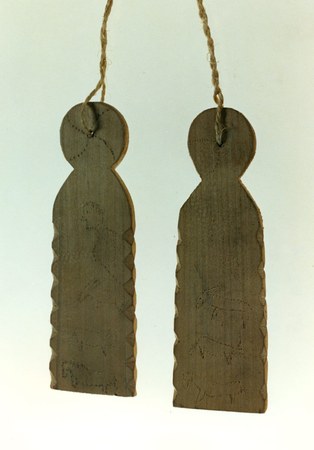
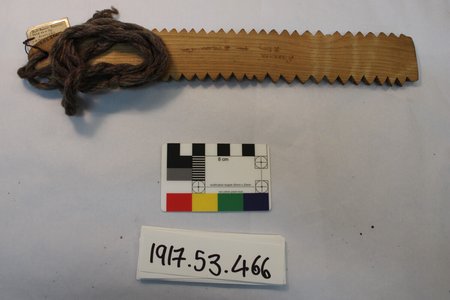
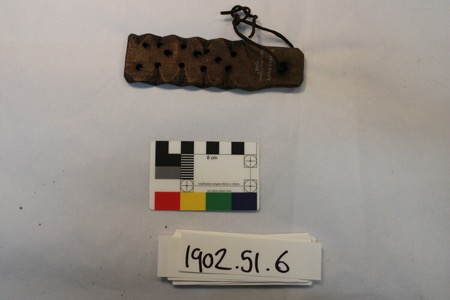
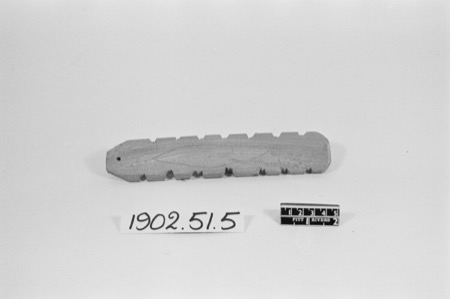
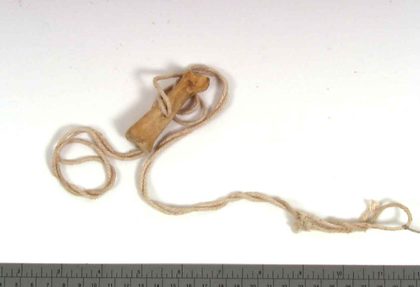
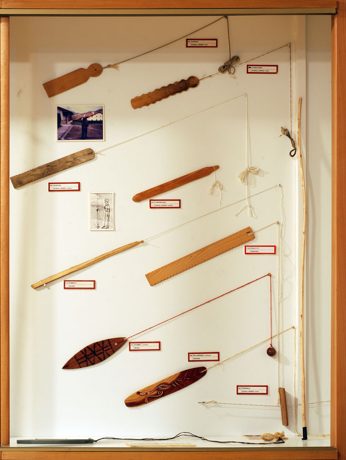
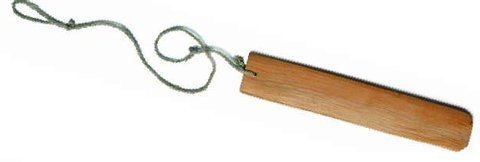
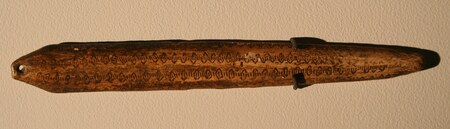
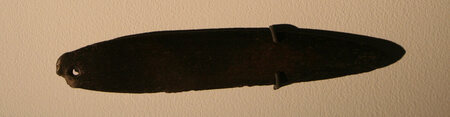
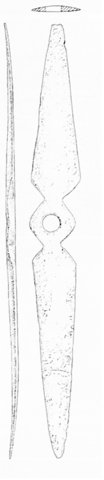
The Cambridgeshire roarer has fourteen notches cut into its blade. Its museum register remembered driving cattle by copying the warble fly’s buzz, a practical piece of knowledge about what an animal hears. Finland’s longer pine blade, twenty-six centimetres from end to end, made amusement and herding neighbours: the catalogue describes children spinning it for fun and shepherds frightening cows. Lithuania’s brūklys likewise belonged to shepherds’ hours. They whirled it for pleasure, competed with it, scared livestock and used it to fend off a bull. The sound might resemble wind, a windmill or insects; its usefulness depended on who was listening. 1, 2, 3
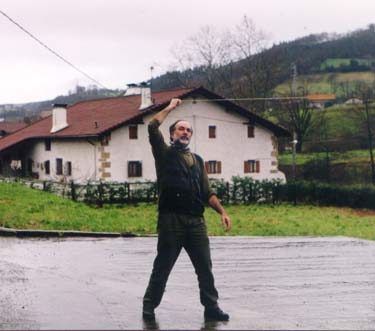
Other listeners stood beyond the pasture. At Guidanson in the Landes, Léonce Mano made and played a long, notched burrumbe for visiting ethnomusicologists in 1965. The local rhombe had driven wild boar away from maize. In the Basque country, the burruna also crossed between children’s play and animal-scaring: an account from Sara remembers frightening animals, while Lekeitio children sounded it during Lent and used it against sparrows at harvest. The same portable disturbance protected what people had planted and amused those who watched over it. 4, 5
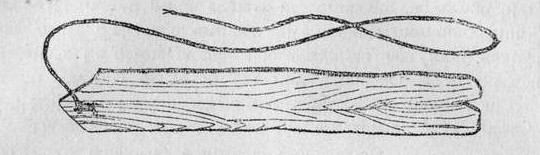
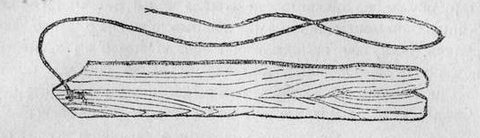
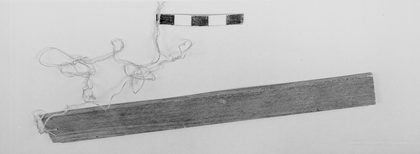
In northeastern Scotland, the blade was a thunder-spell. Boys whirled it during thunderstorms to keep the thunderbolt away or make the thunder cease. Walter Gregor later recalled having used it himself at Keith. Another account describes an Udny herd-boy making a blade in a farm kitchen. Sent to bring cows in for milking, the boy sounded it to frighten them, and they rushed to their stalls as though fleeing the cleg or bot-fly. Protection from the sky and control of the herd met in a noise forceful enough to demand an answer. 6, 15
Cajsa Lund reports a related working concern among Norwegian fishermen: roarers offered magical protection against dangerous fjord winds and signalled that people should gather. Her Scandinavian survey also remembers a startling practice in Scania, surviving into the 1940s. Young men attracted bats with the sound, then killed, dried and powdered them for an aphrodisiac brew. In these accounts the voice acts beyond its maker’s body, upon weather, distant companions or a flying animal. Each sound has a desired consequence. 7
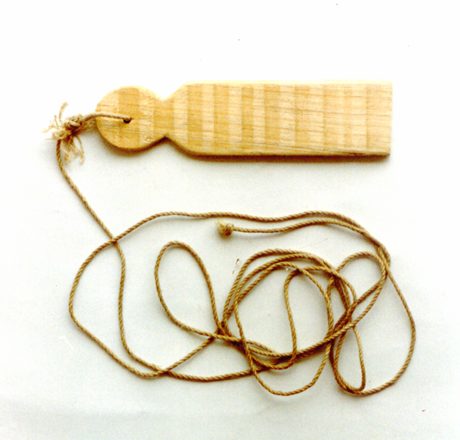
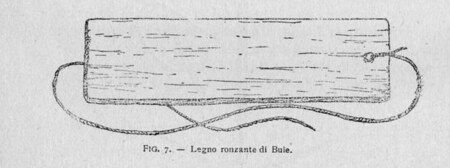
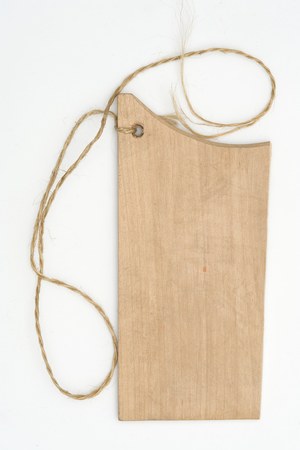
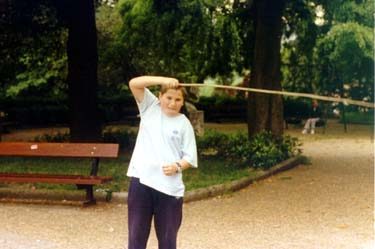
Children made that reach their own. In Trieste, boards cut from orange crates could be thirty to sixty centimetres long. Boys ran through summer streets swinging them; in the district of Rozzol-Settefontane the voice was la striga, the witch. The game itself was called making the wind. Across Istria at Rovinj, children brought out their smaller blades as autumn grew cold, calling the noise the voice of the old woman or witch. The names gave a scrap of wood a speaking character, and the seasons gave its return a place in the year. 8
The voice could acquire the newest sound in town. At Venice’s Fondamente Nuove, Battaglia heard a boy’s roarer at dusk in August 1921 and recovered the blade the following day. It was el motor, cut from a rough softwood board. Venetian boys used that name for an aeroplane, whose engine and propeller made a similar sound. Henryk Śliwa remembered another motor decades later in Bzowica: children’s airplane game used a birch board, braided cord and stick handle. Whirled around the head, the board supplied the aircraft’s sound. Such toys belonged to a living repertoire of imitation, adapting familiar materials to whatever children wanted to make audible. 8, 9
At Sant’Andrea Ionio in Calabria, the rombo kept a precise church calendar. After the Maundy Thursday Mass, when the Host had been placed in the Sepulchre, the bells remained silent until the Gloria on Holy Saturday. During that interval the roarer called people to services. It also sounded the noon and Ave signals on Thursday and Friday, taking over times ordinarily marked by bells. The whirling blade supplied an audible order to the village through the days of the Passion. 10
Far north in the Friulian village of Poffabro, Tucci recorded another Holy Week rombo, also called spatola. It was sounded in fields and streets, never inside the church. The shared occasion made outdoor noise part of the sacred week. A child’s familiar sounding tool could become a calendar instrument, heard collectively at a time when the usual great voices of the village had fallen quiet. 10
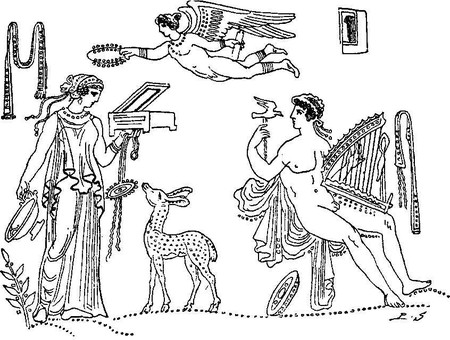
Greek mystery traditions placed sounding toys beside a very different child. Clement of Alexandria retold the Orphic story of Dionysus: the Titans distracted him with toys, then tore him apart. His list included the konos, along with a spinning top, rattles and other alluring objects. A scholiast explained the konos as a little piece of wood attached to a string, whirled in the mysteries to make a roaring noise. That gloss connects the mystery object to the same action familiar from European street toys. In the sacred story, the child’s playthings belonged to a terrible encounter with the Titans. 11, 12
A toy and a mystery instrument could therefore share the power of a circulating voice while occupying very different human occasions. The Greek evidence has its own gods, narrative and ritual vocabulary. Scottish thunder-spells, Calabrian Holy Week signals and Venetian motors bring further occasions into view. Together they show how readily the blade’s sound could enter a consequential story, from a god’s childhood to the remembered childhood of a village. 11, 12, 6, 10, 8
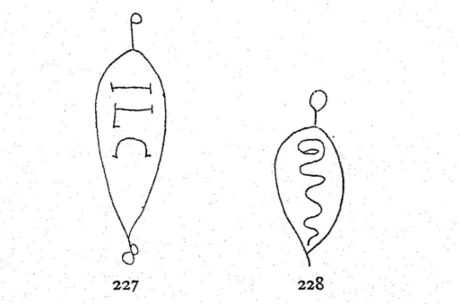
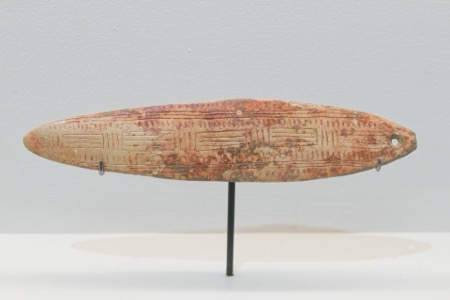
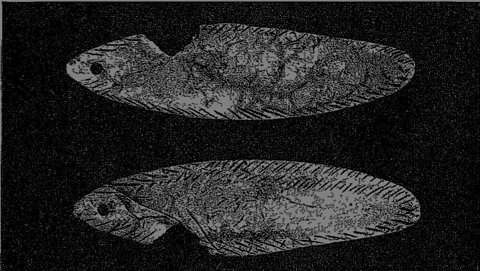
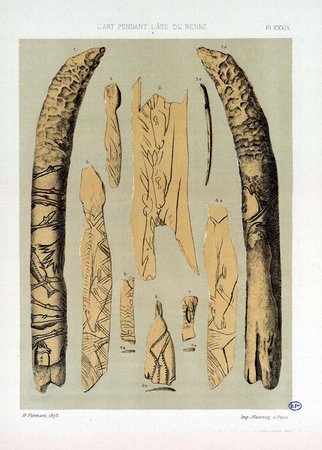
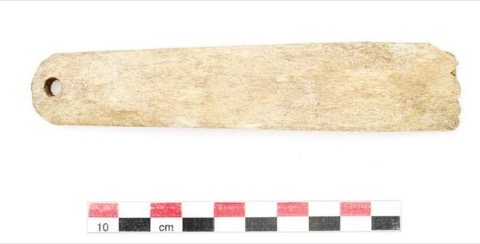
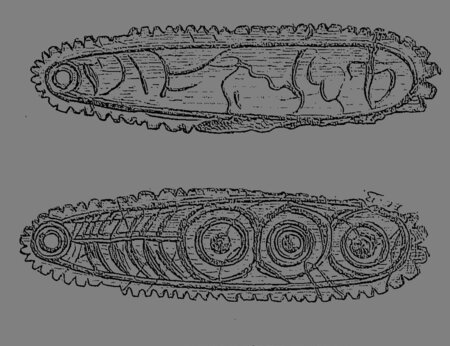
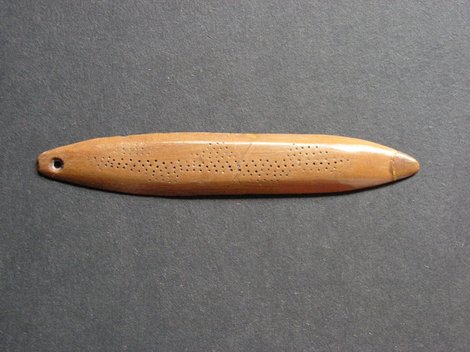
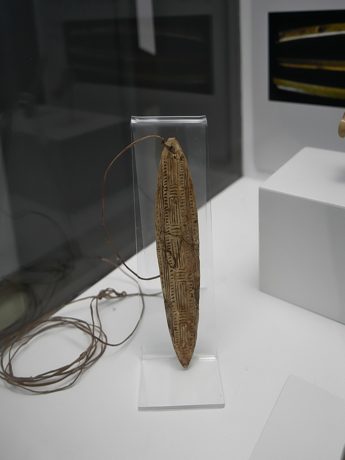
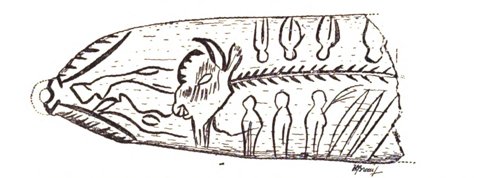
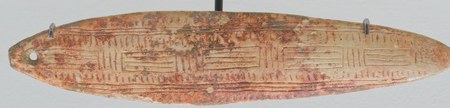
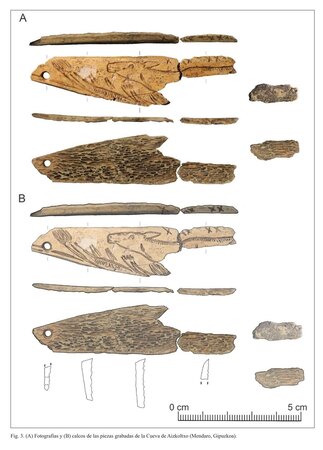
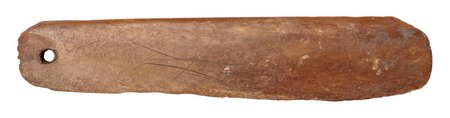
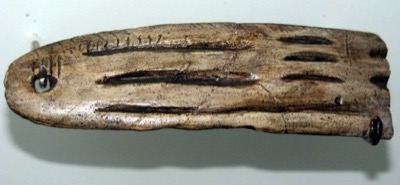
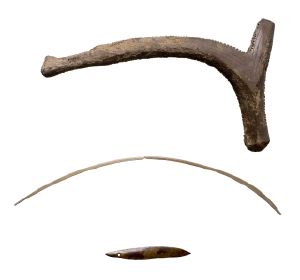
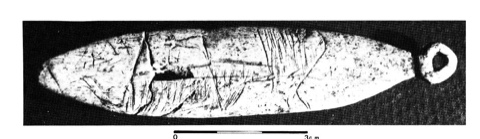
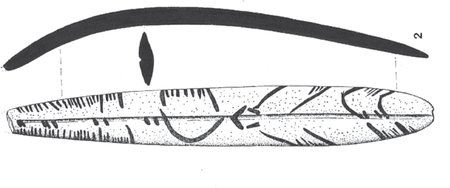
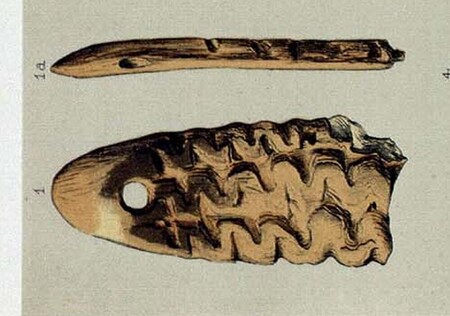
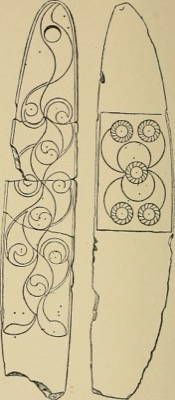
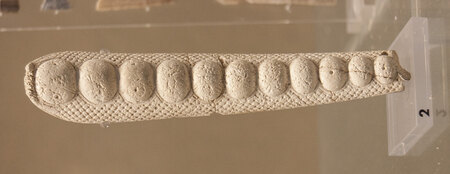
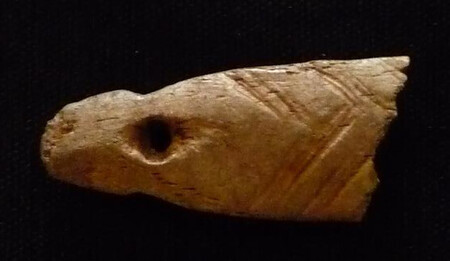
European collections also hold blades made long before these written accounts. At La Roche de Birol near Lalinde, a Magdalenian craftsperson shaped reindeer antler into a thin, suspended blade and covered it with geometric engraving. Peyrony described the piece in 1930 and compared it with Australian sounding blades. Its worked surface and suspension hole are surviving particulars; the maker’s own account of its sound and meaning is lost. Other prehistoric objects in the regional collection retain the different archaeological proposals made for them. 13
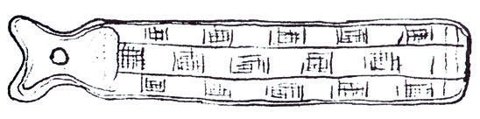
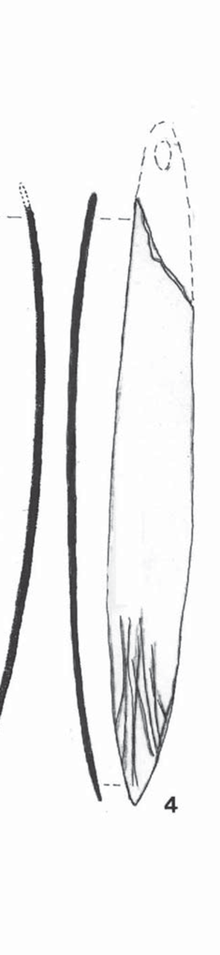
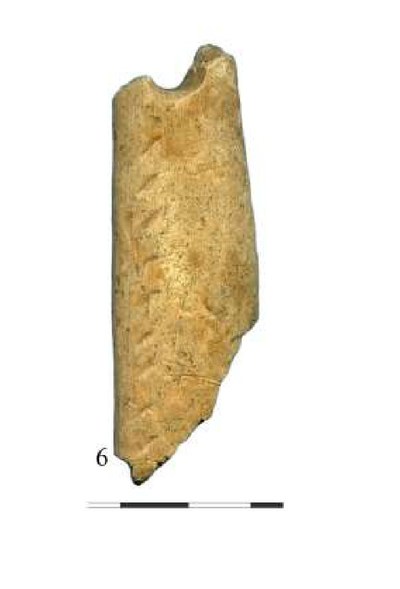
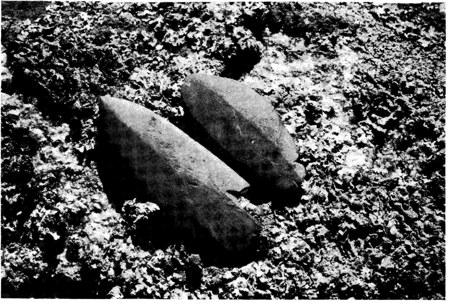
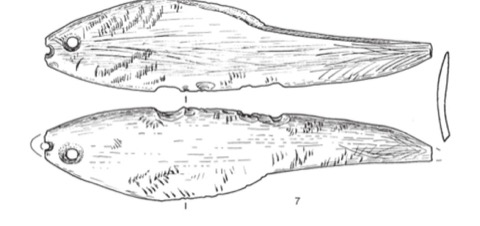
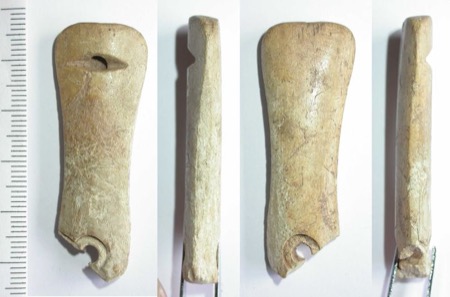
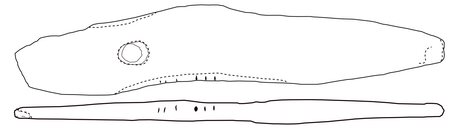
At Cēsis Castle in Latvia, three blades were cut from cattle ribs. One came from the defensive moat by the western bridge wall; the others survived among finds from the castle slope and north tower. A small end hole or side notches could hold a cord, and Āboltiņš identifies them as whirling entertainment objects. Antler from a Palaeolithic cave, ribs from a castle and pine from a herding village give this broad history a tangible shape. People put the moving blade to work with the air, giving its voice their own tasks, pleasures and sacred times. 14, 13, 2
This iron bullroarer was swung not in any rite but to move cattle: its whirring carries the pitch of the warble fly, a biting fly whose drone sends grazing cows into flight. Roughly rectangular, about 155 millimetres long, it has fourteen notches cut around its edge and a length of vegetable-fibre…
Finnish Heritage Agency / Suomen kansallismuseo (K7145:6) · CC BY 4.0
Finnish (Savonian-settled Ostrobothnia), Sarjankylä village, Nivala
Children whirled the suhistuspuu, the "whirring-wood", for fun; herders used its noise to frighten the cows. This one is a pine splint 26 centimetres long on a 77-centimetre braided cord, made before 1928 in Sarjankylä in Nivala and brought to the National Museum that year by Kustaa Vilkuna. Before…
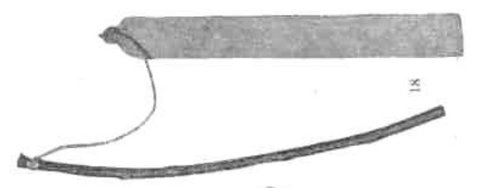
In the north-east of Scotland, when thunder rolled, boys took a thin slat of wood about half a foot long, bored a hole in one end, tied a few yards of twine through it, and whirled it round their heads to throw off a buzzing roar - in the belief that the thunder would cease, or that the thunderbolt…
On 21 June 1965, in his workshop in the Guidanson quarter of Commensacq, in the pine country of the Landes de Gascogne, Léonce Mano made a whirled wooden board and played it for the ethnomusicologists Claudie Marcel-Dubois and Maguy Pichonnet-Andral, who recorded him as he spun it; Marcel-Dubois…
Boys of Trieste (Rozzol-Settefontane and other districts)
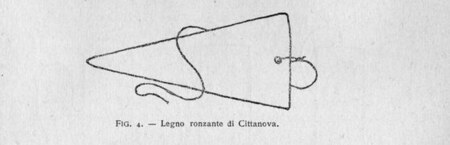
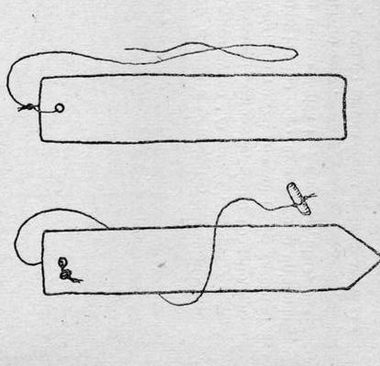
In Trieste the bullroarer was cut from the lightest wood to hand — the slats of orange crates — thirty to sixty centimetres long, a hole at one end, whirled at a run through the summer streets. Sixty years before Battaglia wrote, the children of Rozzol-Settefontane called its dark voice la striga,…
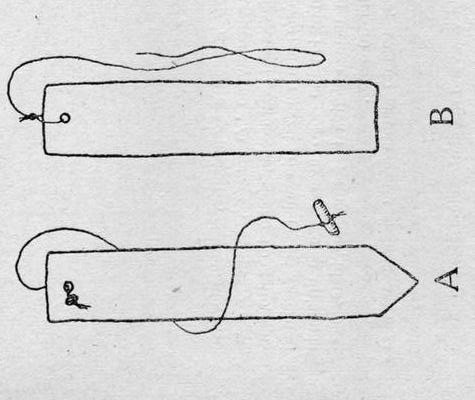
Raffaello Battaglia, SMSR 1 (1925), fig. 1 · Public domain
Boys of Venice (Fondamente Nuove / Calle delle Tre Croci)
One evening late in August 1921, as his gondola drew away from the Fondamente Nuove toward Murano, Raffaello Battaglia heard a deep hum rise from the bank, climbing fast — and knew it at once for the rombo. He turned and saw a small boy whirling the blade. The next day he went looking, and in the…
Henri Breuil, 'Station de l'âge du Renne de Saint-Marcel (Indre)', L'Anthropologie 13 (1902), fig. 4, p. 152; Bibliothèque nationale de France/Gallica · Public domain
Robert Beltz, Die vorgeschichtlichen Altertümer des Grossherzogtums Mecklenburg-Schwerin (1910); reproduced by Heimatverband Mecklenburg-Vorpommern, Musik und Tanz (2019), p. 13
Photo: Marie-Lan Taÿ Pamart; Musée d’Archéologie nationale, MAN 74482, via Wikimedia Commons; cropped and rotated 180° by The Bullroarer Atlas · CC BY 4.0
Édouard Piette, L’Art pendant l’Âge du Renne (1907), pl. LXXV figs. 1 and 1a; drawing by J. Pilloy; Bibliothèque municipale de Périgueux scan via Pôle d’interprétation de la Préhistoire · Public domain
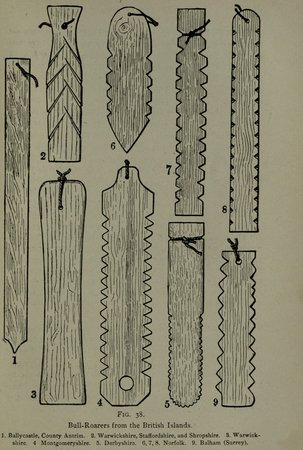
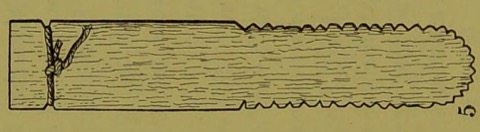
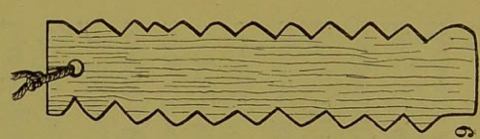
Robert Munro, Archæology and False Antiquities (London: Methuen, 1906), fig. 38, re-cut at half scale after Conwell 1873; Internet Archive Book Images via Wikimedia Commons · Public domain
Julian D. Richards, Dawn Hadley and Mark Randerson, Torksey Viking Camp: Illustrated Artefact Catalogue, 2024, Archaeology Data Service (object 2696535, Other_467-1.jpg) · CC BY 4.0
Grotte du Placard, Vilhonneur, Charente (historic mixed collections, Musee d'Angouleme / Musee de la Societe Archeologique et Historique de la Charente)
Candidate only
Representative — not this record’s object · The Fontalès blade, for comparison; not the Vlasac bullroarer (unphotographed).
Ćiro Truhelka, "Ein Tumulus der La-Tène-Periode in Mahrevići (Bez. Čajnica)," Wissenschaftliche Mitteilungen aus Bosnien und der Herzegowina 12 (1912), p. 17, Fig. 2 · Public domain
Ćiro Truhelka, "Der vorgeschichtliche Pfahlbau im Savebette bei Donja Dolina," Wissenschaftliche Mitteilungen aus Bosnien und der Herzegowina 9 (1904), p. 65, Plate XXXVIII, Fig. 19 · Public domain
Original register and catalogue: Gamlingay, subsequently Over; acquired by 1906. The 6.243 register says this example was no longer used; companion 6.242 at Offord dairy was still used in 1906.
Instrument encyclopedia, Burruna / Bullroarer: Sara animal-scaring, Lekeitio Lent and harvest use; named underlying authorities include Barandiaran and Etniker.
Notes on the Folk-Lore of the North-East of Scotland (1881), p. 153; later Keith storm recollection and the separately observed Udny herd-boy in Gomme, Traditional Games II (1898), p. 291, also transmitted by Haddon (1898), pp. 281–282.
The Bullroarer: A Global and Timeless Sound Instrument, EMAP exhibition volume, printed p. 31. Lund reports fishermen’s wind protection and signalling and the Scania bat-attracting practice; these are her synthesis, without a primary citation on this page.
Sopravvivenze del rombo nelle Provincie Venete, Studi e Materiali di Storia delle Religioni 1 (1925), Venice pp. 192–193; Trieste pp. 197–201; Rovinj p. 208. Sapienza’s scan link here is printed p. 200.
Studi e ricerche sul rombo in Italia, Rivista di Etnografia XXIII (1969), Poffabro p. 366; Sant’Andrea Ionio p. 372 and p. 377 n. 22, quoting Nicodemo Giovinazzo’s letter of 25 August 1954.
Scholium on Clement, printed in Lobeck, Aglaophamus (1829), I, p. 700; translated and discussed in Andrew Lang, Custom and Myth (1884), The Bull-Roarer, note 39. The gloss supplies the wood, string and roaring action.
La Grotte de la Roche près de Lalinde (Dordogne), L’Anthropologie 40 (1930), p. 22 and fig. 3 no. 2; comparative interpretation pp. 24–25. Original blade description and decoration, with the author’s Australian analogy kept distinct.
Cēsu pilī iegūtie dzīvnieku skeleta materiālu priekšmeti, Cēsu pils raksti V (2024), pp. 51–52, fig. 15. Three individually provenanced cattle-rib objects and the whirling-toy interpretation.
The Traditional Games of England, Scotland and Ireland II (1898), p. 291: Gregor’s own storm protection at Keith, a separately observed unnamed Udny herd-boy, and Gregor’s separate vocal cattle formula at Keith.