No. BATTAGLIA1925-007
Porec coa de la cagnea bullroarer
Croatia · Parenzo · Porec, Istria · Southeast Europe
Play / practical
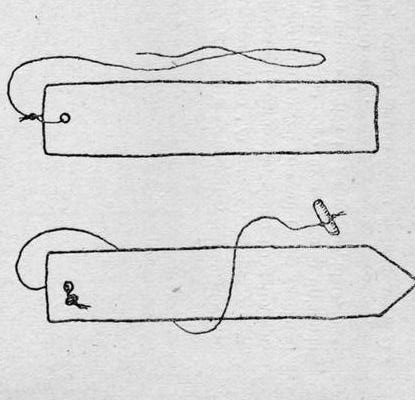
coa de la cagnea
Source term: coa de la cagnea; cord 'el spago sforzin'; handgrip 'la manetola'
coa de la cagnea — 'the shark's tail'; la cagnea is the shark, 'the ferocious and voracious sea monster' (Battaglia 1925:207).
The children of Parenzo named their bullroarer for the most fearsome thing in their sea: coa de la cagnea, the shark's tail. Its cord carried a little wooden handgrip, la manetola, and the game had teeth — a boy grazed a companion's head with the whirling blade and shouted 'la coa de la cagnea te ga beca': the shark's tail has caught you. They played in all weathers, but most of all on days of scirocco, the humid wind that brings the rain; at Villanova nearby, the blades came out when a storm threatened.
Questo legno ronzante era noto col nome di 'coa de la cagnea' ('la coda del pesce cane').
This buzzing wood was known by the name 'coa de la cagnea' — 'the tail of the shark'.
Battaglia 1925:206
Particulars
- Object
- Light slat of 10-15 cm, cut from the thin boards of pasta crates, with a hole at one end; the cord (el spago sforzin) carried a little wooden handgrip, la manetola.
Source
Raffaello Battaglia, 'Sopravvivenze del rombo nelle Provincie Venete,' Studi e Materiali di Storia delle Religioni 1 (1925), pp. 205-207, fig. 5 A-B (informant Francesco Babudri)