No. MUS2026-180
Woodbastwick Norfolk bullroarer
United Kingdom · Norfolk · Woodbastwick · Europe
Play / practical
Buzzer
Source term: Bullroarer
Buzzer: the Norfolk name for the bullroarer, in full the 'humming buzzer.'
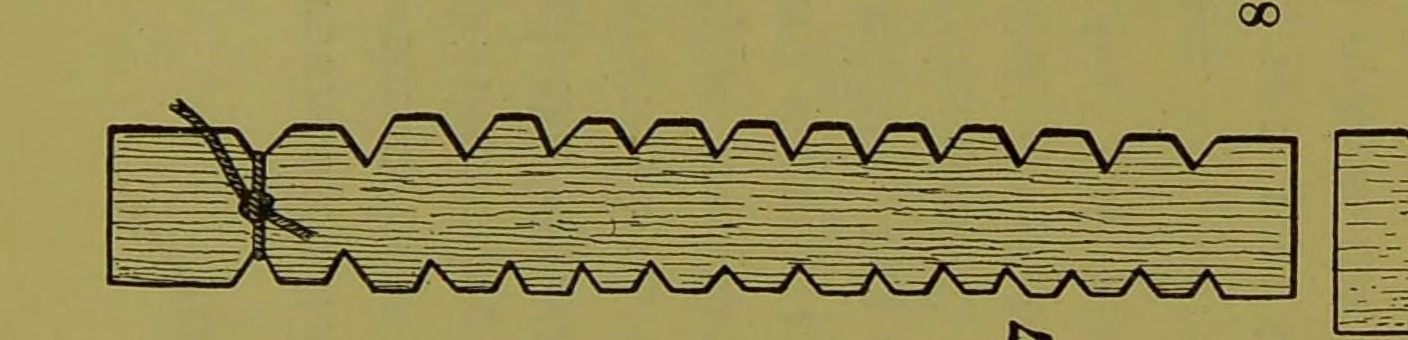
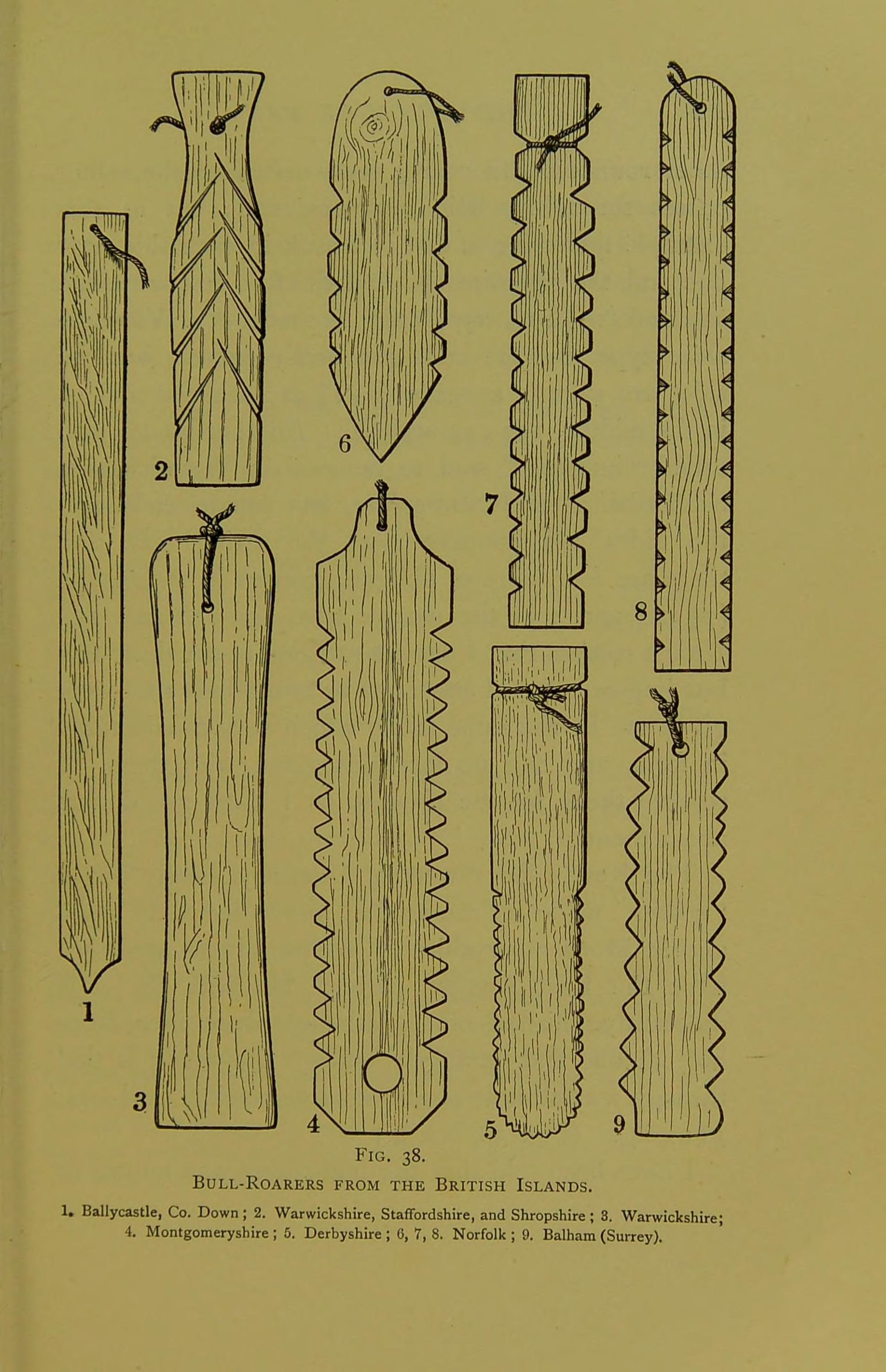
Large trapezoid teeth cut deep into both edges of this board, and its bundled cord is lashed into notches rather than threaded through a drilled hole — a sturdier rig than its Norfolk neighbors. A pencil mark on the wood reads only 'Woodbastwick,' the Broadland village near Wroxham that gave it its name. Its shape and cordage sit squarely within Norfolk's buzzer tradition, the same whirled toy children spun from Hemsby to Norwich to make a summer noise. Haddon engraved his Norfolk buzzers for The Study of Man in 1898 — and the seventh figure on his plate, cord lashed into its notch-waist, is this very board.
Woodbastwick. Norfolk.
MAA 1922.387, pencil marking (Museum of Archaeology and Anthropology, Cambridge)
Particulars
- Object
- Rectangular wooden board with a pointed-oval cross-section, 256 x 35 mm, with large trapezoid serrations along both long edges; a bundled cord is lashed into notches at one end rather than through a drilled hole.
- Function
- Boys' toy — Haddon records the Norfolk 'humming buzzer' among the bullroarer toys of English boys.