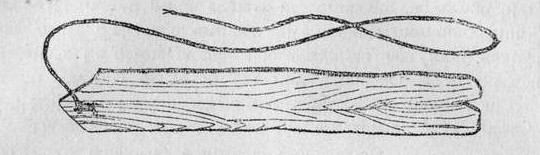
Italian children made the year roar with boards salvaged from orange crates, chair seats and broken rulers, and named the noise the witch, the motor, even death. On the Modena plain a whirled bone helped swineherds guard their pigs; at Poffabro, Sant’Andrea Ionio and Mistretta the blade entered Holy Week, where Sicilians heard in it the wind of Judas. Older still are a bone fish from a Trentino rock shelter and the bossed bone plaques of Bronze Age Sicily.
At Sant’Andrea Ionio, the church bells fell silent after the Maundy Thursday Mass. A board on a cord took over: it called the faithful to services and marked noon and the Ave. In Trieste, boys ran through summer streets with boards cut from orange crates, their companions chasing the noise. In the Marche the game came round in autumn; Calabrian boys gathered in the squares when the end of winter freed the streets from snow and mud. On the Modena plain, young swineherds whirled a bone to keep their pigs out of the sown fields and the wild boar away. 1, 2, 5
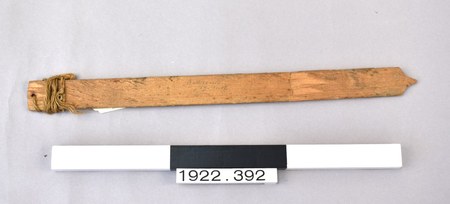
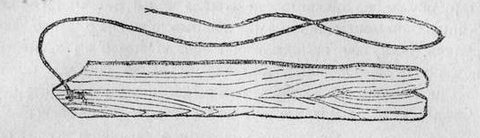
A broken folding ruler could become a Calabrian bullroarer. So could the protective strips from a rush-seated chair or a piece of an old flour sieve. In Calabria, the toe of Italy, boys between eight and fourteen cut the blades themselves; those less handy asked a carpenter’s apprentice or an adult. When winter ended and the streets were free of snow and mud, the boys gathered in the squares and on the village outskirts, spaced themselves in a line or a circle so that every blade had room, and set them roaring together. 1
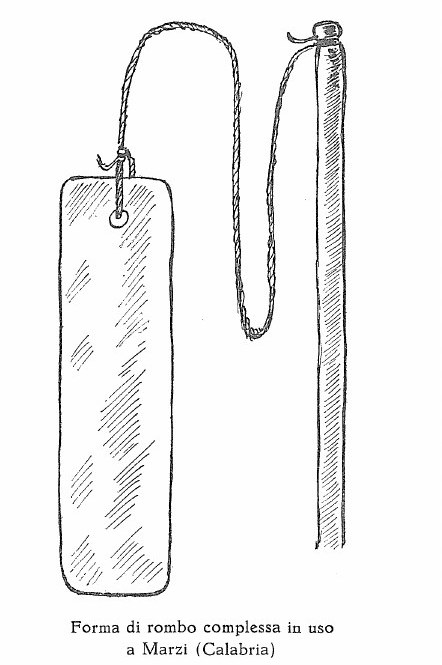
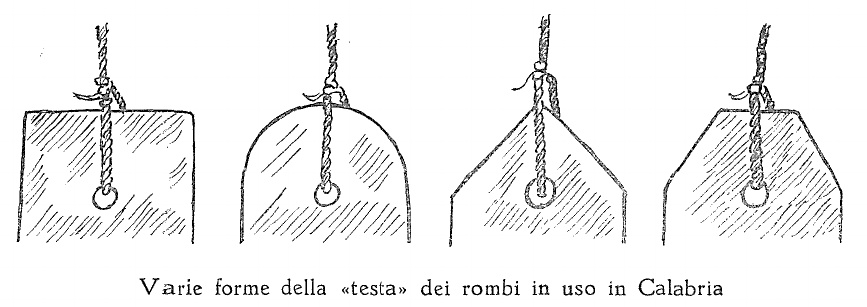
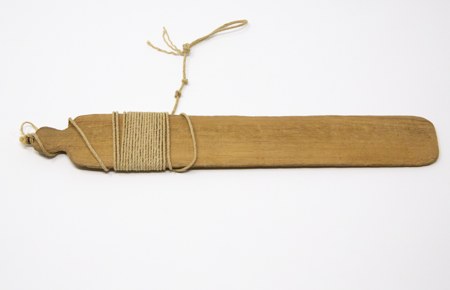
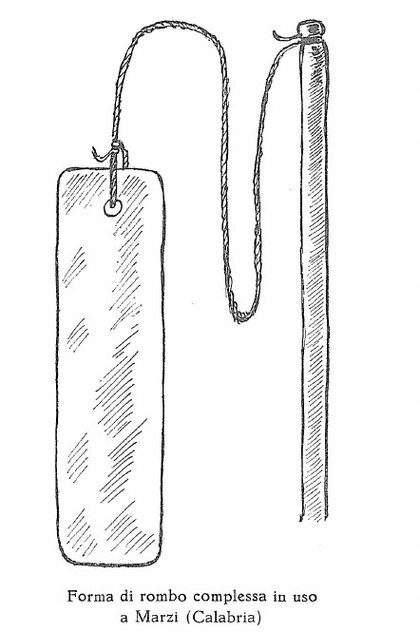
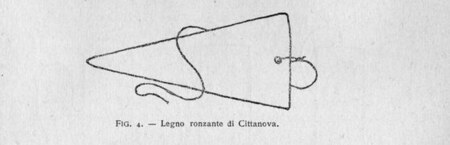
The hole mattered as much as the outline. A rough edge caught and wore through the cord, so a heated piece of old umbrella frame was used to burn a smooth opening; the blade’s head might be cut straight, rounded, pointed or bevelled. At Marzi, in the Cosenza mountains, the corded board was tied to a long handle and swung like a whip. Far to the north at Amaseno, in the Monti Lepini south of Rome, Martino Realacci made the same rig for a game: a rectangular board with smoothed edges, on a cord and rod, sent whirling overhead. At nearby Sezze a round-headed board called the moscone, the big fly, spun straight from the hand at Carnival. 1, 6
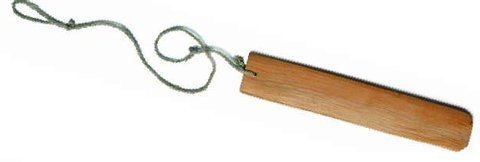
Giovanni Ginobili remembered the svendola from his childhood at Petriolo in the Marche, and had seen the game again in the 1950s at Vallebona outside Macerata. Boys competed to make the greatest noise. They burned the hole through the thin board with a hot knitting needle, wide and smooth so the string would run without fraying or snapping. Any wood would do. 1
The svendola was an autumn game. The cord could be looped round the index finger or pinched between thumb and finger, and the board sent turning in different directions, even overhead. Nearby towns had their own names: svolància at Fabriano, vendola at Macerata. By the late 1960s some communities remembered the game but had lost its name, and others had forgotten both. 1
In Trieste, at the head of the Adriatic, the slats were commonly cut from orange crates, sometimes from chicory-box lids or the reddish wood of American cigar boxes. Boys usually made them themselves. An old tub-mender in Via delle Mura, nicknamed Caregheta, also cut wooden toys to sell to neighbourhood children, sounding boards among them. This was a toy economy of salvaged packaging, household repairs and pocket money. The boards could be thirty to sixty centimetres long; one boy ran swinging his, and his companions followed the sound through the summer streets. 2
In the Rozzol-Settefontane quarter, around the 1860s, children called the board la striga, the witch, and cried out at her voice: “Senti come che ziga la striga” — hear how the witch shrieks. The game was never known across the whole city: some adults remembered it well from their own neighbourhood, while others had never heard of it. By 1925 the witch survived mostly in memory. 2
Near dusk on a late-August evening in 1921, Raffaello Battaglia was leaving the Fondamente Nuove by gondola when he heard a low drone climbing in pitch. On the shore, a boy stood among his companions, whirling a board. Battaglia came back the next day and found it in a dark kitchen off the Calle delle Tre Croci. Its cord had gone, but the nail that fastened it remained. The boy’s mother and friends thought little of the object that had drawn the passenger back across the water. 2
The boys called it el motor, the same word Venetian children used for an aeroplane, whose engine and propeller made a like roar. Older Venetians remembered the game being played near the Ponte delle Guglie. In Trieste the board shrieked as a witch; on the lagoon it had taken the voice of a machine overhead. 2
Young swineherds in the Modena countryside whirled a bone called the frullo, its hum likened to the wings of a bird held back from flight. The drone drove pigs out of the sown fields and frightened off wild boar; it also kept away the harmful beings that threatened herd and herdsman alike. 5
At Ceneselli in the Alto Polesine, in the Veneto lowlands, Cleto Corrain saw a wooden slat with a pig bone tied to the end of its cord. From nearby Badia Polesine the priest Bassiano Paiato remembered an older name for the instrument: la morte, death. 1
At Poffabro, in the Colvera valley of Friuli in the northeast, the rombo, also called spatola, sounded above all in Holy Week, in the fields and the streets. It was never taken into the church. Any wood and any size would serve, and the player held the cord between two fingers. The church door marked where the sound stopped. 1
Sant’Andrea Ionio, on the Ionian coast of Calabria, gave the blade a timetable. From the Maundy Thursday Mass, when the consecrated Host had been laid in the Sepulchre, until the Gloria on Holy Saturday, the bells were silent. Through that interval the rombo summoned the faithful to services on Thursday evening and Good Friday and into the Saturday observances, and it gave the noon and Ave Maria signals on Thursday and Friday. The blade carried the village’s hours until the bells came back. 1
In the hill town of Mistretta, in Sicily, the lapuni passed from children’s hands to adults in Holy Week, whirled while the church bells were tied; Giuseppe Cocchiara described the custom in 1938. The Mistretta slats were rectangular; triangular ones came from nearby San Fratello. The teacher Enzo Romano, a boy at Mistretta around 1940, remembered another name for the instrument: vientu i Giura, the wind of Judas. Its unsettling roar was the noise of the persecutors of Christ in the Passion. 3
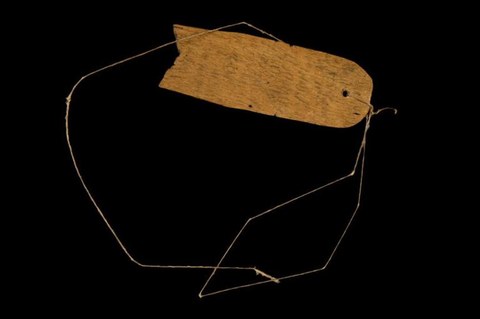
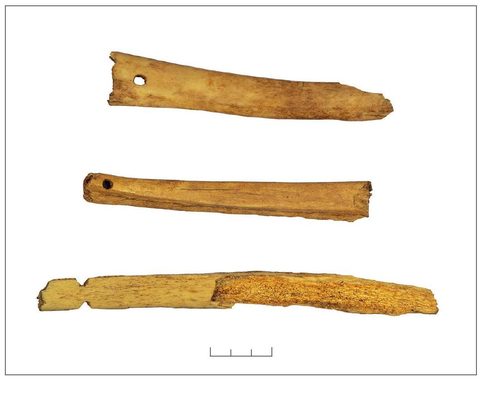
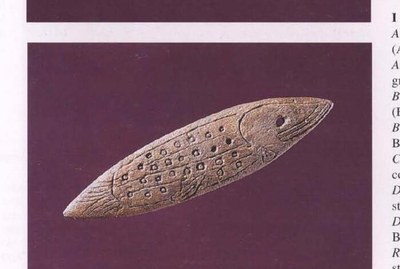
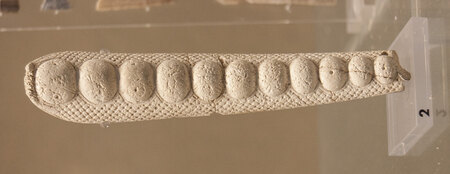
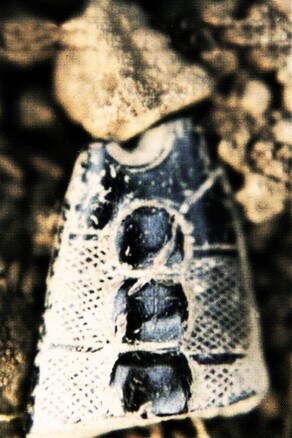
High above the Adige at Trento, the Riparo Gaban rock shelter held the work of some of the finest bone carvers of Italy’s first farming age. Among their pieces is a fish carved on a bone plaque under ten centimetres long, pierced at one end, that may have hung at a throat or spun roaring on a cord. In Bronze Age Sicily, bone plaques carved with rows of swollen bosses have also been read as whirled instruments. At Baravitalla, at the head of the Cava d’Ispica, a black plaque with three raised bosses and incised margins lay in a hearth among the round huts of a walled village; another came from a rock-cut tomb at Castelluccio. 7, 8, 9
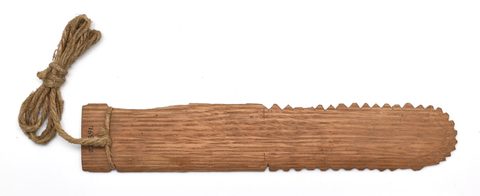
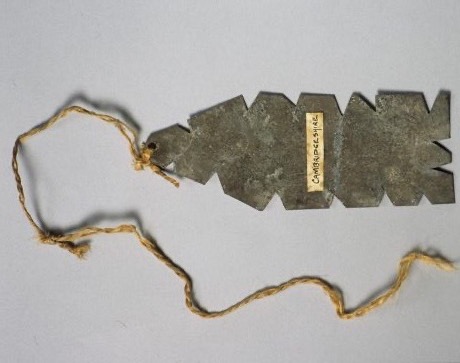
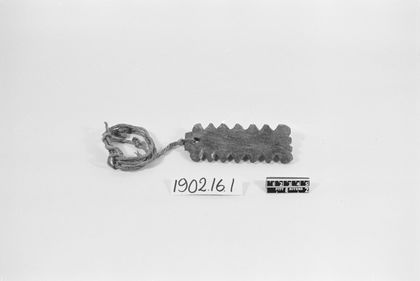
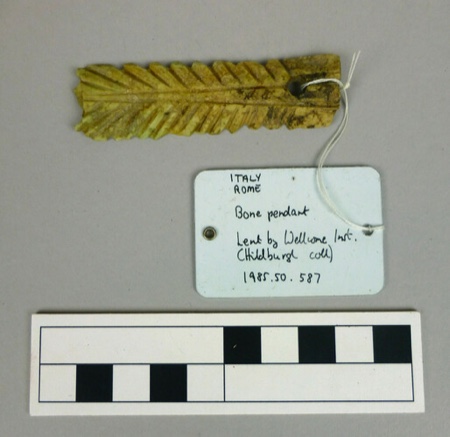
A thin carved bone bought in Rome in 1910 has the same blade shape: chevrons run down one face and a single hole is bored through one end. Its collector took it for an amulet. 10
At Sant'Andrea Apostolo dello Ionio, on the Calabrian coast, the bullroarer served the church. From the Mass of Maundy Thursday to the Gloria of Holy Saturday the bells were bound, and in their silence the rombo called the faithful to the services, struck midday, and sounded the Ave — the whirled…
Representative — not this record’s object · Gavoi burriburri, Sardinia; M. Pira.
At Poffabro, a stone village in the Colvera valley of Friuli, the rombo — locally the spatola, for its spatula shape — belonged above all to Holy Week. Cut from whatever wood was to hand and swung on a cord held between two fingers, it sounded through the fields and streets; but it was never…
Representative — not this record’s object · The Ballycastle bullroarer, a plain pine lath.
When Mistretta’s church bells fell silent for Holy Week, adults took up the lapuni: rectangular wooden slats whirled on long cords, their drone compared in Sicily to the hum of a male bee.
In neighboring San Fratello, the same lapuni took a different shape: small triangular wooden slats rather…
Representative — not this record’s object · Piedmontese folk rombo (MIMO).
At Petriolo in the Marche the svendola was an autumn toy, and making one had its own small craft: the cord-hole was bored wide with a red-hot knitting needle, so that no sharp edge would cut the string in mid-flight. The folklorist Giovanni Ginobili, who grew up with it, remembered it whirled in…
Representative — not this record’s object · Haddon's East Derbyshire bummer: half-serrated oak blade.
Boys of Trieste (Rozzol-Settefontane and other districts)
In Trieste the bullroarer was cut from the lightest wood to hand — the slats of orange crates — thirty to sixty centimetres long, a hole at one end, whirled at a run through the summer streets. Sixty years before Battaglia wrote, the children of Rozzol-Settefontane called its dark voice la striga,…
Representative — not this record’s object · A Kissziget zúgattyú board, Néprajzi Múzeum.
Boys of Venice (Fondamente Nuove / Calle delle Tre Croci)
One evening late in August 1921, as his gondola drew away from the Fondamente Nuove toward Murano, Raffaello Battaglia heard a deep hum rise from the bank, climbing fast — and knew it at once for the rombo. He turned and saw a small boy whirling the blade. The next day he went looking, and in the…
Trabalhos de Antropologia e Etnologia 21, pp. 363–377. Poffabro and Maria Roman Ros: pp. 366, 375 n. 9; Petriolo letters and autumn: p. 369; Calabrian making and group play: pp. 371–372; Marzi board: p. 373 figure; Giovinazzo’s dated letter and Holy Week signals: p. 377 n. 22. Disc buzzers and cylindrical friction instruments elsewhere in the survey are separate forms. Ceneselli and Badia Polesine: p.376 n.16 quotes Corrain1957 p.156 verbatim.
Studi e Materiali di Storia delle Religioni 1, pp. 192–217. Venice eyewitness episode and motor name: pp. 192–193; Trieste neighbourhoods, Caregheta, salvaged material and summer play: pp. 196–197; remembered witch name: p. 200. His proposed ancient survivals and wartime etymology are interpretations, not adopted here.
In Strumenti musicali in Sicilia, p. 64: Cocchiara 1938 pp. 127–128 on adult Holy Week lapuni at Mistretta; San Fratello triangular specimens separately; Enzo Romano’s childhood recollection around 1940, after Romano 1999 p. 272; later adult practice not reobserved.
Études rurales 105–106, pp.181–212, at p.204, transmitting Vecchi 1964 p.157: Modena frullo, young swineherds, pigs, wild boar and harmful beings. Vecchi’s underlying original was not inspected; the bounded Fabre-Vassas passage survives in the local source transcription.
ICCD1200652143: Martino Realacci; wooden blade, cord and rod; function Gioco; handle gripped and blade whirled overhead. Carnival in the historical note belongs to the simpler Sezze type.
Baravitalla section, fig.7: bossed bone plaque in a hearth among huts; black, flat base, suspension hole, three bosses and incised margins. Archaeological context, not evidence for an ethnographic rite.
Object study and interpretation history, including Belgiorno’s proposed ritual rombo interpretation; no continuity to living Italian practice asserted.
Official object record prm-object-22975: amulet, carved/perforated bone, Rome provenance; datePeriod empty; archaeology attribution uncertain. Collecting date1910 is not an object date.