No. BATTAGLIA1925-005
Koper el volo bullroarer
Slovenia · Capodistria · Koper, Istria · Southeast Europe
Play / practical
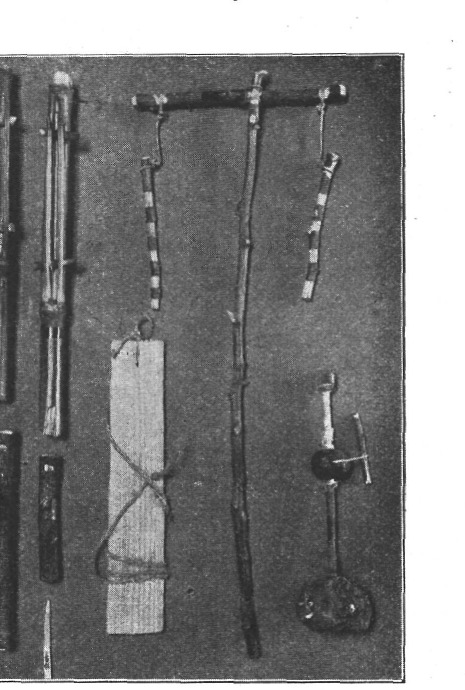
el volo
el volo — 'the flight'; from the blade's rise into the air, a visual analogy to birds in flight (Battaglia's explanation).
In Capodistria the bullroarer was el volo, 'the flight': a small blade of wood or tin that boys watched rise into the air like a bird as it whirled — still flying when Battaglia asked in the 1920s. And they flew it by preference when the bora blew, the icy northeast wind that scours the Gulf of Trieste. Battaglia wondered whether an old weather rite hid behind the habit, but what he could attest was the play itself: boys, wind, and a name taken from flight.
Fanno girare il legno nei periodi di forte vento: 'co' xe bora', quando soffia... il terribile vento gelato di nord-est.
They whirl the wood in periods of strong wind: 'co' xe bora', when the terrible icy northeast wind blows.
Battaglia 1925:202
Particulars
- Object
- Small elongated blade of wood or tin, whirled on a cord; the usual elongated rombo form, rather small.
- Function
- Boys' toy, still played in 1925, whirled by preference in periods of strong wind — 'co' xe bora', when the icy northeast wind blows.
Source
Raffaello Battaglia, 'Sopravvivenze del rombo nelle Provincie Venete,' Studi e Materiali di Storia delle Religioni 1 (1925), p. 202